AI Appraisal Estimate

AI-generated estimates · not official valuations

From the user

What was submitted

Photo and notes provided by the user — not generated by AI

Submitted item photo
Submitted photo · May 18, 2026

User's notes

No additional notes provided.

AI analysis below

AI appraisal

AI analysis & estimate

AI-Generated · Verify before acting

Everything below is generated by AI for informational purposes only. AI can make mistakes — the AI may misidentify items or misattribute them (artist, maker, brand, designer, origin, era). This is not an official valuation and should not be used for insurance, sale, tax, estate, legal, or lending purposes — or any decision requiring a certified appraisal. It is not an authoritative claim about any person, brand, or rights holder — do not share or rely on it as a factual statement about a third party. Always consult qualified professionals before making financial decisions.

Read the full disclaimer

AI Identification

·Not independently authenticated·Verify before acting

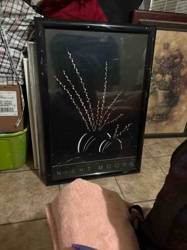
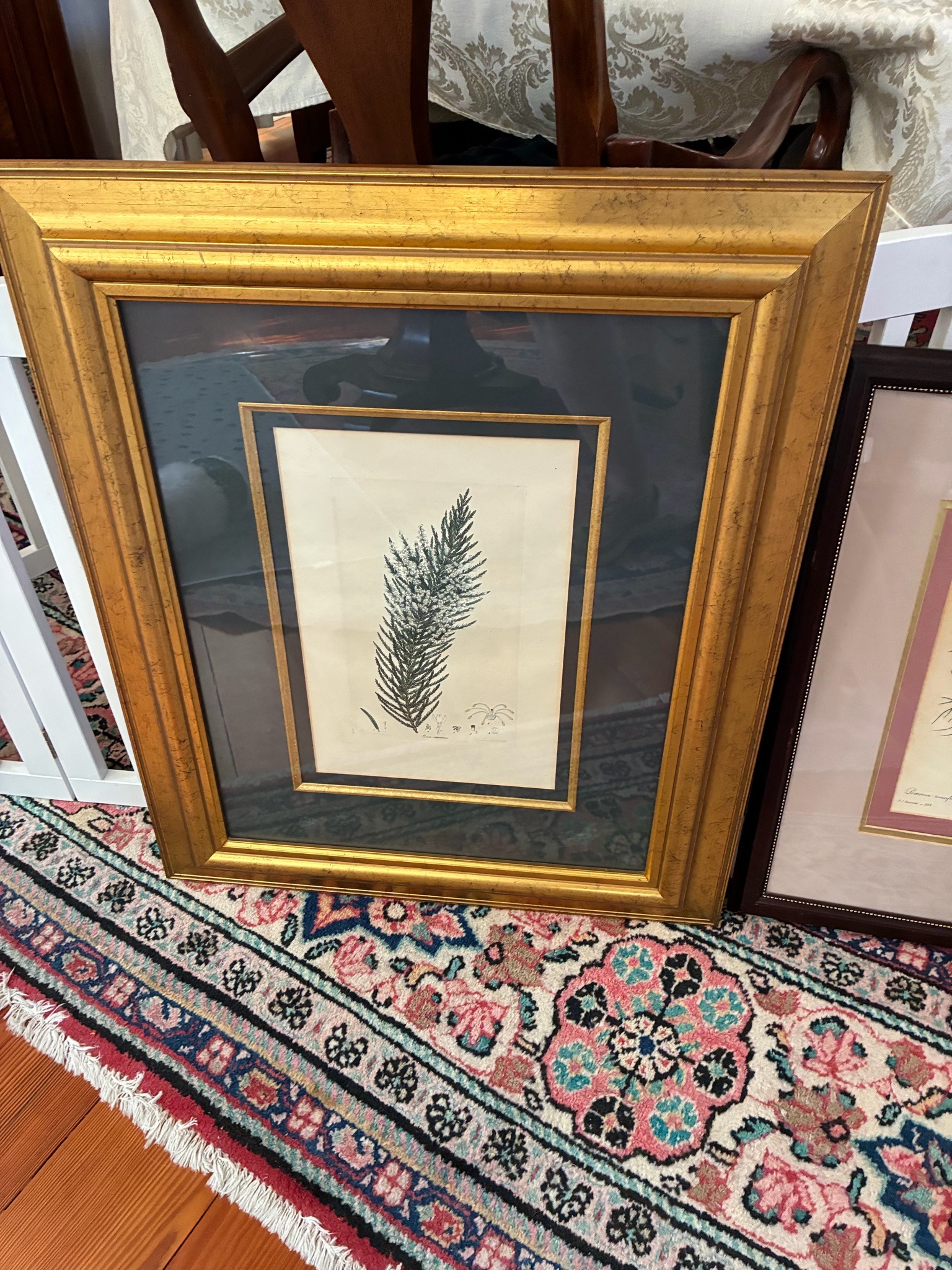
Framed botanical print in the manner of 18th or 19th-century scientific illustrations

Framed Art Prints

AI Estimated Value

·Not an official valuation·Verify before acting

$150-$350

As of May 18, 2026

AI Item Analysis

·AI can make mistakes·Verify before acting
This item is a framed botanical print depicting a coniferous or feathered leaf specimen, possibly seaweed or a specific pine variety. The central image is rendered in a dark green or black ink on an off-white or cream-colored paper, which highlights fine, hair-like details. Below the main specimen are smaller anatomical diagrams or cross-sections, a style characteristic of scientific botanical studies. The print appears to have a platemark, suggesting it may be an engraving or etching. It is housed in a large, ornate gold-finished frame with a deep profile and a wide, dark green or charcoal-colored mat. High-quality framing techniques are observed, including a secondary inner gold fillet. The text at the bottom is small and appears consistent with Latin nomenclature, though it is not clearly legible from the photograph. The overall presentation is consistent with 20th-century reproductions of antique natural history plates. Visible condition appears good with some minor dust on the glass and frame edges. The attribution to a specific era or artist is hedged because no signature or maker's stamp is clearly readable, and the piece is viewed through glass, which can obscure modern printing indicators.

AI Appraisal Report

·AI can make mistakes·Verify before acting
I have examined the provided image of the framed botanical print. Based on what I can see, the piece depicts a botanical specimen in a style consistent with 18th or 19th-century scientific illustrations. The presentation—including the ornate gold-finished frame, deep charcoal matting, and inner fillet—indicates high-quality decorative framing. While I can see a platemark suggesting a traditional printing process, I cannot verify from a photo whether this is a period engraving or a high-quality 20th-century reproduction. The value estimate of $150-$350 is based on the assumption that this is a well-presented contemporary or mid-20th-century reproduction, which is where the bulk of the market value currently lies for such items. In the current market, there is steady demand for large-scale, professionally framed natural history prints for interior design purposes. The condition appears good, with no visible foxing or water damage, though I cannot assess the acid-content of the matting or the type of glass used. To determine a more precise valuation, an in-person examination would be necessary to inspect the paper's watermark, the ink's interaction with the fibers, and any potential signatures or publisher's marks obscured by the frame. If this were found to be a period-original plate from a known 18th-century treatise by a recognized illustrator, the value could increase significantly. Conversely, if it is a modern offset lithograph on standard paper, the value would reside primarily in the decorative frame itself, likely at the lower end of the provided range. Physical inspection and provenance documentation would be required to shift this from a hypothesis to a formal identification of age and origin.

Related Tags

Explore similar items and categories

Get your items appraised

Instant estimates of your treasures with AI-powered appraisals

Browse More Appraisals