French Provincial Style Hutch or Display Cabinet
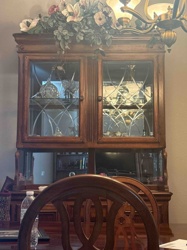
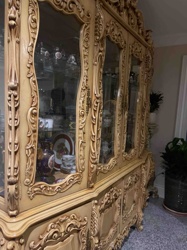
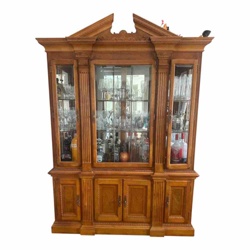
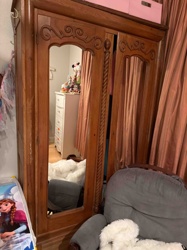
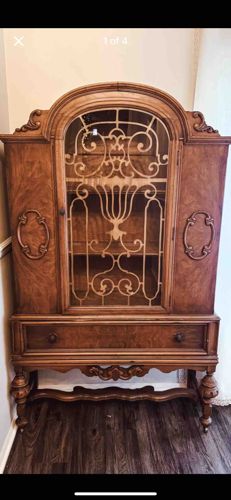
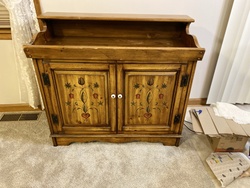
This is a vintage French Provincial style hutch or display cabinet, likely dating from the mid-20th century (circa 1940s-1960s). The piece is constructed from wood—possibly walnut or cherry based on the grain pattern—with a warm medium-brown finish. The focal point is a central arched glass cabinet door featuring intricate scrolling fretwork or gesso overlays that mimic the shape of a classical urn or lyre. This door opens to reveal glass shelves for display. Flanking the central door are two solid wood panels adorned with oval carved moldings. Below the cabinet section is a single long horizontal drawer equipped with two round wooden pull knobs. The base is supported by ornate cabriole-style turned legs connected by a decorative wavy 'X' stretcher. Condition-wise, the cabinet shows signs of age-appropriate wear, including minor scuffing on the base and legs, and potential fading of the finish on the high-contact areas. The craftsmanship reflects typical mass-produced quality for higher-end furniture of its era, characterized by detailed molding work and the use of book-matched veneers on the side panels. The overall aesthetic is formal and traditional, blending Baroque and Rococo influences common in American manufacturing of the early-to-mid 20th century.
AI-Generated Appraisal Disclaimer
Estimated Value
$450 - $750
Basic Information
Category
Furniture - Cabinets & Storage
Appraised On
January 11, 2026
Estimated Value
$450 - $750
Item Description
This is a vintage French Provincial style hutch or display cabinet, likely dating from the mid-20th century (circa 1940s-1960s). The piece is constructed from wood—possibly walnut or cherry based on the grain pattern—with a warm medium-brown finish. The focal point is a central arched glass cabinet door featuring intricate scrolling fretwork or gesso overlays that mimic the shape of a classical urn or lyre. This door opens to reveal glass shelves for display. Flanking the central door are two solid wood panels adorned with oval carved moldings. Below the cabinet section is a single long horizontal drawer equipped with two round wooden pull knobs. The base is supported by ornate cabriole-style turned legs connected by a decorative wavy 'X' stretcher. Condition-wise, the cabinet shows signs of age-appropriate wear, including minor scuffing on the base and legs, and potential fading of the finish on the high-contact areas. The craftsmanship reflects typical mass-produced quality for higher-end furniture of its era, characterized by detailed molding work and the use of book-matched veneers on the side panels. The overall aesthetic is formal and traditional, blending Baroque and Rococo influences common in American manufacturing of the early-to-mid 20th century.
Get Your Items Appraised
Instant estimates of your treasures with AI-powered instant appraisals