AI Appraisal Estimate

AI-generated estimates · not official valuations

From the user

What was submitted

Photo and notes provided by the user — not generated by AI

Submitted item photo
Submitted photo · June 6, 2026

User's notes

No additional notes provided.

AI analysis below

AI appraisal

AI analysis & estimate

AI-Generated · Verify before acting

Everything below is generated by AI for informational purposes only. AI can make mistakes — the AI may misidentify items or misattribute them (artist, maker, brand, designer, origin, era). This is not an official valuation and should not be used for insurance, sale, tax, estate, legal, or lending purposes — or any decision requiring a certified appraisal. It is not an authoritative claim about any person, brand, or rights holder — do not share or rely on it as a factual statement about a third party. Always consult qualified professionals before making financial decisions.

Read the full disclaimer

AI Identification

·Not independently authenticated·Verify before acting

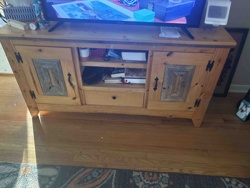
Pennsylvania Dutch Style Painted Dry Sink

Furniture - Cabinets & Storage

AI Estimated Value

·Not an official valuation·Verify before acting

$250 - $400

As of June 6, 2026

AI Item Analysis

·AI can make mistakes·Verify before acting
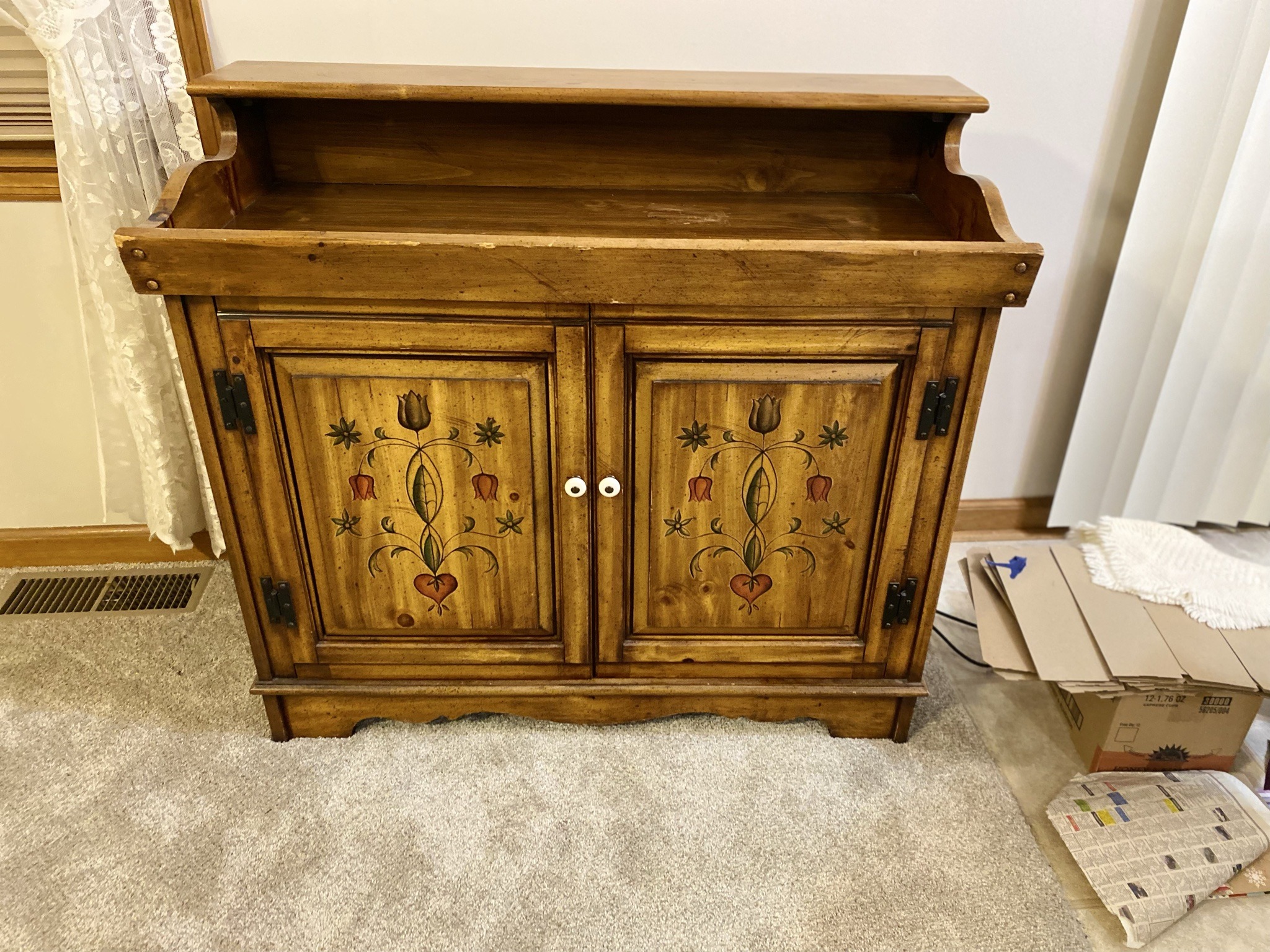
This is a vintage-style wooden dry sink, likely a late 20th-century reproduction in the Pennsylvania Dutch or American Country tradition. The piece is constructed from pine or a similar light-grained coniferous wood with a medium-honey stain and a semi-gloss finish. It features a high gallery back with scalloped side supports and a front 'trough' rail characteristic of traditional dry sinks. The main body contains two recessed-panel cabinet doors, each intricately decorated with hand-painted 'fraktur' style floral motifs including tulips, hearts, and star-shaped blooms in a palette of muted red, green, and ochre. The hardware includes exposed black-finished H-frame hinges and small white ceramic or porcelain knobs. The base is finished with a simple scalloped apron and block feet. Notable condition issues include visible scuffing and finish loss along the top edge of the front trough rail and some surface cloudiness or light staining on the interior flat 'sink' surface. The construction appears sturdy, using visible mechanical fasteners disguised as wooden pegs on the front rail. While no maker's mark is visible from the front view, the uniformity of the staining suggest a mass-produced piece intended for home decor rather than an 18th or 19th-century primitive antique.

AI Appraisal Report

·AI can make mistakes·Verify before acting
I have examined the images of this Pennsylvania Dutch style dry sink. Based on the visual evidence, this is a late 20th-century reproduction piece, likely produced between 1970 and 1990, rather than an 18th or 19th-century antique. My assessment is based on the uniformity of the machine-cut recessed panels, the consistent 'honey' stain finish, and the application of high-gloss lacquer which was not characteristic of authentic period primitives. The painted motifs, while charming, lack the oxidized patina and natural pigment degradation expected in 150-year-old folk art. The condition is fair to good. I observe significant wear on the front 'trough' rail and some staining on the interior deck, which are common for pine furniture of this era. The use of 'H' hinges and porcelain knobs are appropriate for the revival style, though they appear to be modern mass-produced hardware. In the current secondary market, the demand for reproduction 'Country' style furniture has softened compared to previous decades. I have evaluated this against comparable sales from mid-tier auction houses and regional estate sales. Similar mass-produced decorative pieces currently command modest prices, appealing primarily to 'Farmhouse' decor enthusiasts. Note: This appraisal is based solely on digital images. A definitive valuation would require an in-person inspection to examine joinery (looking for machine-cut vs. hand-cut dovetails), wood oxidation on the back and undersides, and check for a manufacturer’s brand or stamp. To authenticate this as a period antique—which would significantly increase value—provenance documentation or a microscopic examination of paint layers would be necessary.

Get your items appraised

Instant estimates of your treasures with AI-powered appraisals

Browse More Appraisals