AI identification & appraisal estimate

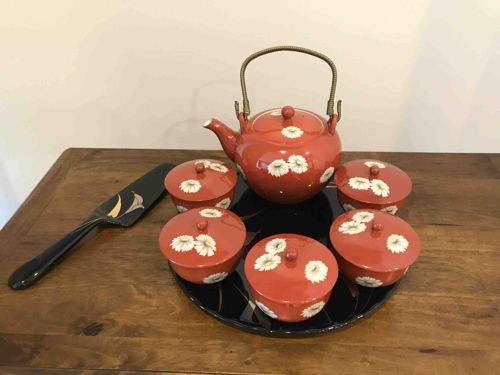
Japanese Red Lacquer Tea Set with Daisy Motif

Submitted photo of Japanese Red Lacquer Tea Set with Daisy Motif
Photo submitted by the user — not generated by AI

AI Estimated Value

Not an official valuation

$600-900

AI estimate as of November 4, 2025 · verify with a professional before acting

AI-Generated · Verify before acting

Everything on this page is generated by AI for informational purposes only. AI can make mistakes — the AI may misidentify items or misattribute them (artist, maker, brand, designer, origin, era). This is not an official valuation and should not be used for insurance, sale, tax, estate, legal, or lending purposes — or any decision requiring a certified appraisal. It is not an authoritative claim about any person, brand, or rights holder — do not share or rely on it as a factual statement about a third party. Always consult qualified professionals before making financial decisions.

Read the full disclaimer

AI Item Analysis

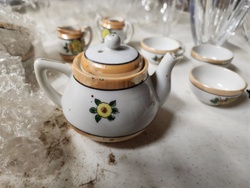
This is a Japanese red lacquer tea set, likely comprising a teapot, five tea cups with lids, and a circular serving tray. The dominant color is a rich, warm red, characteristic of traditional Japanese lacquerware, contrasted with white and pale yellow daisy or chrysanthemum floral motifs scattered across all pieces. The teapot features a rounded body with a distinct spout and a small, knob-like finial on its lid. A braided or woven handle, possibly made of rattan or a similar material, is attached to the teapot with metal fittings, suggesting a practical design for pouring. Each accompanying cup is also finished in the same red lacquer, with a matching lid topped by a small finial. The white and yellow floral decorations on all pieces appear to be hand-painted, showing subtle variations that indicate artisanal craftsmanship rather than mass production. The circular black tray, which serves as a base for the set, has a glossy finish and features subtle, dark leaf or vine embellishments beneath the cups, suggesting a layered design. All pieces appear to be in good overall condition, with a polished, lustrous sheen that indicates minimal wear or careful preservation. No overt chips, cracks, or repairs are immediately visible from the image. The style suggests it could be from the mid-20th century, consistent with traditional Japanese tea ceremony aesthetics emphasizing natural elements and meticulous artistry. The presence of multiple serving cups suggests it is designed for a small gathering or family tea service. The included black and gold cake server on the left is a separate item but shares a similar aesthetic of black and gold lacquer, suggesting it might be part of a complementary serving collection.

AI Appraisal Report

I have virtually examined this Japanese Red Lacquer Tea Set with Daisy Motif. Visually, the condition appears excellent; the lustrous sheen across all pieces suggests careful preservation with no overt chips, cracks, or repairs visible. The hand-painted daisy/chrysanthemum motifs indicate artisanal craftsmanship, supporting its authenticity as traditional Japanese lacquerware from potentially the mid-20th century. The braided handle on the teapot suggests a functional design. The accompanying black serving tray, with its subtle darker embellishments, complements the set beautifully. Market conditions for vintage Japanese lacquerware, especially complete and well-preserved tea sets, are generally stable. Similar quality sets with hand-painted details can fetch significant prices, particularly if the lacquer work is of high quality and the set is complete. The rarity lies in finding a full set in such pristine visual condition. Factors positively impacting value include its completeness (teapot, five cups with lids, tray) and apparent excellent state of preservation. The aesthetic appeal of the vibrant red and delicate florals is also a strong value driver. Limitations in authenticity verification from images alone are significant. While the style and condition are highly indicative, I cannot definitively determine the exact age, specific lacquer type, or materials used (e.g., wood base, specific pigments, type of rattan/braiding) without physical inspection. An in-person examination would allow for tactile assessment of the lacquer's depth, the weight and balance of the pieces, and detailed inspection for any subtle repairs or material inconsistencies. Provenance documentation, such as original purchase receipts or family records, would greatly aid in confirming age and origin. Scientific testing could verify material composition for full authentication.

Keep exploring

More tea set appraisals

Get your items appraised

Instant AI-powered appraisal estimates from a photo

Browse More Appraisals