AI Appraisal Estimate

AI-generated estimates · not official valuations

From the user

What was submitted

Photo and notes provided by the user — not generated by AI

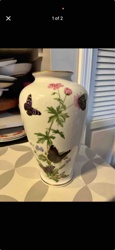
Submitted item photo
Submitted photo · June 13, 2026

User's notes

No additional notes provided.

AI analysis below

AI appraisal

AI analysis & estimate

AI-Generated · Verify before acting

Everything below is generated by AI for informational purposes only. AI can make mistakes — the AI may misidentify items or misattribute them (artist, maker, brand, designer, origin, era). This is not an official valuation and should not be used for insurance, sale, tax, estate, legal, or lending purposes — or any decision requiring a certified appraisal. It is not an authoritative claim about any person, brand, or rights holder — do not share or rely on it as a factual statement about a third party. Always consult qualified professionals before making financial decisions.

Read the full disclaimer

AI Identification

·Not independently authenticated·Verify before acting

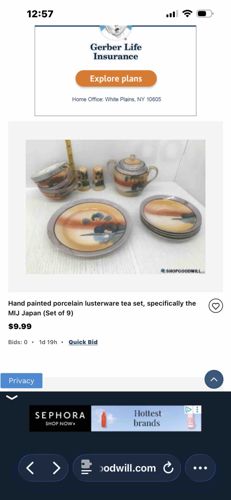
Vintage Hand-Painted Japanese Lusterware Tea Set

Antique/Vintage Ceramics & Porcelain

AI Estimated Value

·Not an official valuation·Verify before acting

$65.00 - $95.00

As of June 13, 2026

AI Item Analysis

·AI can make mistakes·Verify before acting
This is a vintage nine-piece porcelain lusterware tea set originating from Japan, likely manufactured during the early to mid-20th century (c. 1920s-1950s). The set features a classic 'Made in Japan' or 'MIJ' aesthetic, characterized by its distinctive iridescent metallic glaze, known as lusterware, which reflects light in a spectrum of colors. The collection includes a covered teapot, salt and pepper shakers, and multiple plates of varying sizes. The physical decoration consists of hand-painted scenic landscapes featuring traditional Japanese motifs like lakeside views, trees, and mountaintops in a warm color palette of orange, burnt sienna, and grey. Construction is of fine-grained porcelain, traditionally thin-walled as is characteristic of export ware from this era. The luster finish is applied over a base color, creating the sunset-like gradient visible on the plates and jars. Notable features include the delicate handles on the teapot and the matching hand-painted continuity across all pieces. Regarding condition, there appears to be some minor surface wear and possible fading of the luster finish, which is common with age and handling. This type of ware often features a red or green 'Made in Japan' stamp on the underside. The overall craftsmanship reflects the high-volume yet skilled handicraft of the pre-war and immediate post-war Japanese porcelain industry, designed for the Western export market.
AI Appraisal Report

·AI can make mistakes·Verify before acting
I have virtually examined this nine-piece Japanese Lusterware tea set. The set exhibits the characteristic iridescent 'sunset' glaze and hand-painted lake-scene landscapes synonymous with the Showa-era export market (c. 1920s-1950s). The craftsmanship reflects a standardized production model intended for Western department stores, featuring the typical 'Made in Japan' hallmarks of the period. From the visual evidence, the condition appears consistent with a 'Good' vintage rating. There is visible thinning of the overglaze luster on the high-contact areas of the plates and the teapot handle, as well as minor shelf wear on the foot-rings. The hand-painted enamels remain relatively vibrant, but the set's value is capped by its incompleteness (it appears to be a partial service rather than a full tea set) and the contemporary market saturation of MIJ (Made in Japan) ceramics. Comparables for partial lusterware sets of this specific pattern frequently hammer at auction between $40 and $110 depending on the buyer's need for replacement pieces. Authenticity is confirmed for the period based on the style, though full verification is limited by the digital format. A physical inspection is required to check for 'hairline' fractures not visible in photographs, which could depreciate the value by 50% or more. Furthermore, viewing the underside stamps under UV light would confirm if any professional cold-paint restoration has been performed. While provenance documentation is rarely available for such mass-exported items, confirming the specific kiln mark would assist in pinpointing the exact decade of manufacture.

Get your items appraised

Instant estimates of your treasures with AI-powered appraisals

Browse More Appraisals