AI Appraisal Estimate

AI-generated estimates · not official valuations

From the user

What was submitted

Photo and notes provided by the user — not generated by AI

Submitted item photo
Submitted photo · June 1, 2026

User's notes

No additional notes provided.

AI analysis below

AI appraisal

AI analysis & estimate

AI-Generated · Verify before acting

Everything below is generated by AI for informational purposes only. AI can make mistakes — the AI may misidentify items or misattribute them (artist, maker, brand, designer, origin, era). This is not an official valuation and should not be used for insurance, sale, tax, estate, legal, or lending purposes — or any decision requiring a certified appraisal. It is not an authoritative claim about any person, brand, or rights holder — do not share or rely on it as a factual statement about a third party. Always consult qualified professionals before making financial decisions.

Read the full disclaimer

AI Identification

·Not independently authenticated·Verify before acting

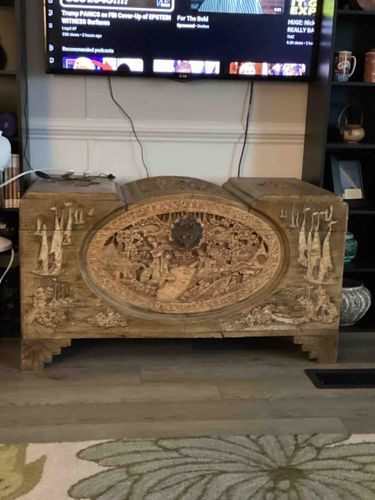
Carved Camphor Wood Chest with Raised Lid

Antique/Vintage Furniture

AI Estimated Value

·Not an official valuation·Verify before acting

$400 - $650

As of June 1, 2026

AI Item Analysis

·AI can make mistakes·Verify before acting
This is a mid-20th-century Chinese carved camphor wood storage chest, measuring approximately 36 to 40 inches in length. The piece is constructed from solid camphor wood, known for its insect-repellent properties, and features a light honey-blonde natural wood finish. The exterior is elaborately decorated with high-relief hand-carving. The central feature is a large oval cartouche depicting a complex maritime or village scene with figures, architecture, and flora typical of traditional Cantonese craftsmanship. Flanking the central medallion are smaller relief carvings of Chinese junk boats and coastal landscapes. The lid follows a stepped, arched profile. The chest is equipped with a dark patina brass or bronze circular latch plate in the center. It sits on stepped, notched bracket feet that are also carved with scrolling floral motifs. Notable condition issues include visible stress cracks along the bottom panel and grain separation on the lid, likely due to wood shrinkage over time. The carving exhibits fine detail, though there is a layer of surface dust and light oxidation consistent with age. This style of furniture was highly popular for export from the 1930s through the 1960s.

AI Appraisal Report

·AI can make mistakes·Verify before acting
I have examined the digital representation of this mid-20th-century Chinese camphor wood chest. Based on the high-relief carving style and the distinctive arched lid, this is a classic export piece, likely originating from Hong Kong or Canton between 1940 and 1960. The hand-carved maritime scenes show good depth, though the 'honey-blonde' finish suggests a later production date compared to the dark-stained iterations of the 1920s. Visually, the brass hardware appears original, and the structural integrity seems fair. However, the noted stress cracks on the bottom panel and grain separation on the lid are significant condition issues. These occur when wood loses moisture, often due to climate changes in Western homes. While these flaws are common in camphor wood, they do detract from the 'collector grade' value. The market for these chests is stable but saturated; they remain popular for their functional pest-repellent qualities rather than as high-investment antiques. Comparables for similar mid-sized chests in average condition typically hammer at auction between $300 and $500, with retail gallery prices reaching higher. My valuation reflects a premium for the elaborate relief work, offset by the structural shrinkage. Limitations: This appraisal is based strictly on visual imagery. I cannot verify the characteristic camphor scent, which is vital for authenticating the wood species. An in-person inspection is required to determine the depth of the cracks and whether they compromise the chest's structural stability. No provenance was provided; original sales receipts from the mid-century export period would further solidify the dating. Full authentication would involve checking the joinery techniques (dovetailing) and inspecting the interior for any chemical treatments or lack thereof.

Get your items appraised

Instant estimates of your treasures with AI-powered appraisals

Browse More Appraisals