AI Appraisal Estimate

AI-generated estimates · not official valuations

From the user

What was submitted

Photo and notes provided by the user — not generated by AI

Submitted item photo
Submitted photo · June 16, 2026

User's notes

No additional notes provided.

AI analysis below

AI appraisal

AI analysis & estimate

AI-Generated · Verify before acting

Everything below is generated by AI for informational purposes only. AI can make mistakes — the AI may misidentify items or misattribute them (artist, maker, brand, designer, origin, era). This is not an official valuation and should not be used for insurance, sale, tax, estate, legal, or lending purposes — or any decision requiring a certified appraisal. It is not an authoritative claim about any person, brand, or rights holder — do not share or rely on it as a factual statement about a third party. Always consult qualified professionals before making financial decisions.

Read the full disclaimer

AI Identification

·Not independently authenticated·Verify before acting

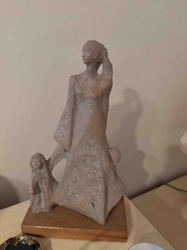
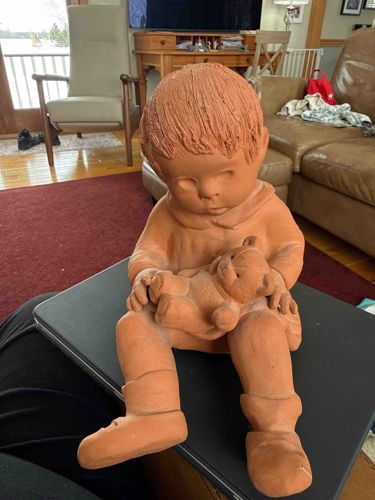
Terracotta Child with Teddy Bear Sculpture

Sculpture and Figurative Art

AI Estimated Value

·Not an official valuation·Verify before acting

$150 - $250

As of June 16, 2026

AI Item Analysis

·AI can make mistakes·Verify before acting
This item is a medium-sized figurative sculpture depicting a seated young child holding a teddy bear, crafted in an unglazed, reddish-brown terracotta or earthenware clay. The piece stands approximately 10 to 12 inches tall and features a rustic, hand-molded aesthetic typical of mid-to-late 20th-century decorative outdoor or sunroom art. The child is depicted with short, textured hair rendered with expressive, linear gouges in the clay. Notable stylistic features include the blank, concave eyes and a small, pursed mouth. The child's clothing consists of a simple tunic and thick, boot-like shoes. The teddy bear is clutched in the lap, showing rounded ears and simple limb definition. The overall construction appears solid yet features intentionally rough, textural surfaces rather than a fine, polished finish. Condition-wise, the sculpture shows a light whitish patina or mineral efflorescence, particularly on the lower legs and teddy bear, which is common in terracotta exposed to moisture. There is a visible small scuff or chip on the toe of the right shoe, and the surface displays general dust accumulation and mild surface wear consistent with age and probable display as garden ornament. While no maker's marks are visible from this angle, the style is reminiscent of artisan boutique pottery from the 1970s or 80s.

AI Appraisal Report

·AI can make mistakes·Verify before acting
I have examined the images of the Terracotta Child with Teddy Bear sculpture. This piece, likely dating to the 1970s or 1980s, reflects the amateur-to-mid-tier artisan pottery movement characterized by expressive, hand-modeled textures and unglazed earthenware. The condition is fair to good; the mineral efflorescence (whitish patina) and the chip on the right boot are consistent with exposure to outdoor elements, which is common for garden-style terracotta. While the lack of a maker's mark complicates attribution, the style is reminiscent of boutique studio work rather than mass-produced cast-molds. The market for anonymous mid-to-late 20th-century figurative terracotta is currently stable but modest. It appeals primarily to decorative collectors rather than fine art investors. Comparables for unsigned pieces of this size and subject matter typically sell at boutique auctions or vintage marketplaces within the $100 to $300 range. Its value is driven by its charming subject matter and nostalgic aesthetic rather than rarity or artist pedigree. Critically, this appraisal is based solely on digital images. A definitive valuation would require an in-person inspection to determine if the sculpture is hand-built or a unique slip-cast produced in a limited run. I would also need to examine the underside for obscured signatures or gallery labels that could link it to a specific potter, which would significantly increase its marketability. Scientific testing (such as thermoluminescence) is not warranted for a modern piece of this type, but provenance documentation—such as original purchase receipts or gallery catalogs—would be necessary to elevate it from a decorative object to a cataloged work of art.

Get your items appraised

Instant estimates of your treasures with AI-powered appraisals

Browse More Appraisals