AI Appraisal Estimate

AI-generated estimates · not official valuations

From the user

What was submitted

Photo and notes provided by the user — not generated by AI

Submitted item photo
Submitted photo · June 26, 2026

User's notes

No additional notes provided.

AI analysis below

AI appraisal

AI analysis & estimate

AI-Generated · Verify before acting

Everything below is generated by AI for informational purposes only. AI can make mistakes — the AI may misidentify items or misattribute them (artist, maker, brand, designer, origin, era). This is not an official valuation and should not be used for insurance, sale, tax, estate, legal, or lending purposes — or any decision requiring a certified appraisal. It is not an authoritative claim about any person, brand, or rights holder — do not share or rely on it as a factual statement about a third party. Always consult qualified professionals before making financial decisions.

Read the full disclaimer

AI Identification

·Not independently authenticated·Verify before acting

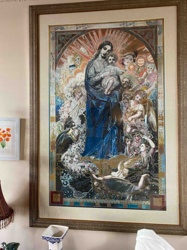
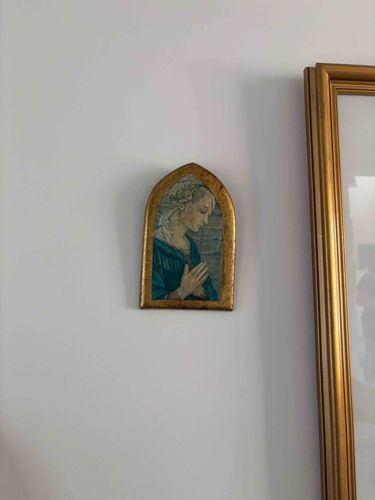
Gilt Arched Wood Plaque Featuring Fra Filippo Lippi's Madonna and Child (Detail)

Religious Art & Collectibles

AI Estimated Value

·Not an official valuation·Verify before acting

$45.00 - $75.00

As of June 26, 2026

AI Item Analysis

·AI can make mistakes·Verify before acting
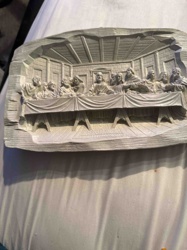
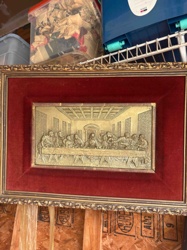
This item is a decorative arched wooden wall plaque featuring a print or decoupage reproduction of a detail from Fra Filippo Lippi's Renaissance masterpiece 'Madonna and Child with Two Angels'. The central image shows the profile of the Virgin Mary in prayer, wearing a teal-blue garment and a delicate white headpiece with pearls. The plaque is constructed from wood, likely a composite or soft wood, and finished with a gold-toned, gilt-style textured border that follows the Gothic pointed arch shape. The texture on the gold frame is irregular, suggesting a hand-applied gold leaf or metallic paint over a textured substrate to simulate age. The piece appears to be a mid-to-late 20th-century souvenir or devotional object, possibly produced in Italy (Florence). In terms of condition, there is some visible wear along the edges and small pits in the gilded surface consistent with age and handled use. The application of the image shows some slight silvering or fading in the upper regions, but the colors remain relatively vibrant. The craftsmanship is typical of commercial decorative arts rather than fine art, intended for residential display or as a religious collectible.

AI Appraisal Report

·AI can make mistakes·Verify before acting
I have examined the provided images of this arched wooden plaque featuring a reproduction of Fra Filippo Lippi's 'Madonna and Child'. Based on visual analysis, the item is an Italian devotional souvenir, likely mid-century (circa 1950–1970). The piece utilizes a high-quality chromolithograph or decoupage print applied to a wooden substrate, finished with a textured gesso and gilt-paint (or Dutch metal leaf) border to simulate the aesthetic of a Renaissance triptych or altarpiece. The condition is 'Good' to 'Very Good' for its age. There is typical oxidation and minor pitting in the gilded areas, along with slight edge wear on the wood, which is consistent with its role as a household devotional object. The image shows minor silvering, which is a common aging characteristic of mid-century printing processes. These items were mass-produced for the tourist and religious markets in Florence and are not unique or rare. Market demand remains stable but modest, primarily driven by decorators and collectors of mid-century religious kitsch. Values are determined by the size and the integrity of the gilding. Comparable sales of similar 'Florence-style' plaques typically fall beneath the $100 mark unless they are part of a larger set or feature hand-painted highlights. Limitations: This appraisal is based solely on digital images. Without an in-person inspection, I cannot confirm if the gold is genuine 22k leaf or a metallic alloy. Furthermore, scientific testing (such as infrared reflectography) would be required to rule out a painted foundation, though the visual evidence strongly suggests a mechanical print. Verification of a maker’s stamp on the reverse would further solidify the provenance.

Get your items appraised

Instant estimates of your treasures with AI-powered appraisals

Browse More Appraisals