AI identification & appraisal estimate

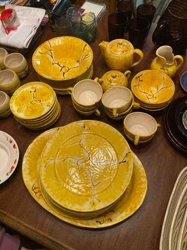
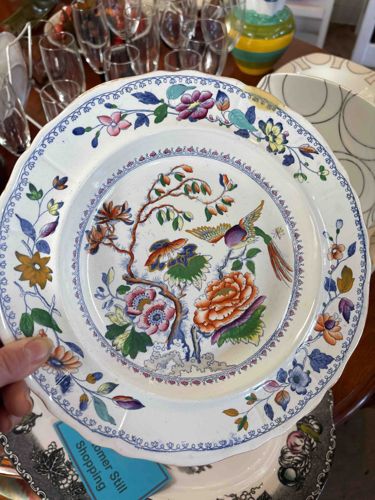
Davenport 'Imari' Pattern Dinner Plate

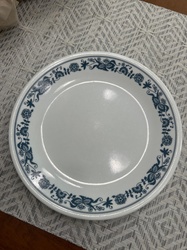
Submitted photo of Davenport 'Imari' Pattern Dinner Plate
Photo submitted by the user — not generated by AI

User's notes

Davenport

These notes were written by the person who submitted this item. Appraiser.AI has not verified them, and the AI's identification and estimate may rely on them.

AI Estimated Value

Not an official valuation

$60-90

AI estimate as of September 17, 2025 · verify with a professional before acting

AI-Generated · Verify before acting

Everything on this page is generated by AI for informational purposes only. AI can make mistakes — the AI may misidentify items or misattribute them (artist, maker, brand, designer, origin, era). This is not an official valuation and should not be used for insurance, sale, tax, estate, legal, or lending purposes — or any decision requiring a certified appraisal. It is not an authoritative claim about any person, brand, or rights holder — do not share or rely on it as a factual statement about a third party. Always consult qualified professionals before making financial decisions.

This analysis also relies on unverified notes provided by the user, which may be incomplete or inaccurate and could affect the result.

Read the full disclaimer

AI Item Analysis

This is a ceramic dinner plate, likely made of earthenware or ironstone, featuring a vibrant polychrome 'Imari' style decoration. The plate has a scalloped or rococo-edged rim with a delicate blue-patterned border. The central design depicts a classic 'Japan' or 'Imari' pattern, characterized by a stylized tree with flowering branches in shades of orange, pink, purple, and yellow, alongside leafy elements in green and blue. A prominent bird with colorful plumage, including shades of blue, green, and orange, is depicted in flight or perched amongst the branches. Another, smaller bird, possibly a hummingbird or finch, is also visible. The colors are rich and distinct, applied over an underglaze blue transfer print, a common technique for this style and era. The overall ground color of the plate is a creamy white. While specific dimensions are not provided, it appears to be a standard dinner plate size, approximately 10 inches in diameter. The visible condition suggests some age, with potential for minor crazing or utensil marks, though these are not clearly discernible in the image. The hand holding the plate indicates its approximate size relative to a human hand. The craftsmanship appears to be of good quality, typical of English pottery manufacturers of the 19th century who produced 'oriental' inspired patterns. The term 'Davenport' associated with the image context suggests the manufacturer.
AI Appraisal Report

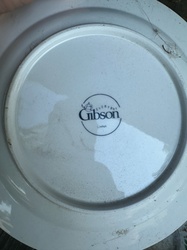
Upon visual examination of the image provided, the item is identified as a Davenport dinner plate in a 'Japan' or 'Imari' style pattern. My assessment is based on the characteristic design elements, including the scalloped rim, underglaze blue transfer print, and the distinctive polychrome palette featuring cobalt blue, iron red-orange, and gilt accents. The central motif of stylized flora and fauna is typical of English interpretations of Japanese Imari ware from the early to mid-19th century. Based on the image, the plate appears to be in good to very good condition for its age, with strong color retention. No significant chips, cracks, or repairs are visible, though I cannot rule out fine crazing or minor utensil marks without physical inspection. The market for 19th-century English ironstone, including Davenport, is stable but subject to decorative trends. Individual dinner plates in this pattern are relatively common. Comparable sales for single Davenport plates in similar condition typically fall within the $50 to $100 range at auction and online marketplaces. The primary value driver is decorative appeal rather than extreme rarity. A full dinner service would command a significantly higher value, but as a single plate, its value is more modest. It is crucial to note that this appraisal is based solely on digital images. A definitive authentication requires physical examination to inspect for a maker's mark (e.g., an 'anchor' mark with 'Davenport' or 'Davenport Longport Staffordshire') on the reverse. I would also need to feel the weight and texture of the paste and glaze to confirm its period authenticity and assess for any restoration not visible in photos. Without in-person inspection, I cannot completely verify its origin or rule out a high-quality reproduction.

Keep exploring

More dinnerware appraisals

Get your items appraised

Instant AI-powered appraisal estimates from a photo

Browse More Appraisals