AI identification & appraisal estimate

Granite Boulder

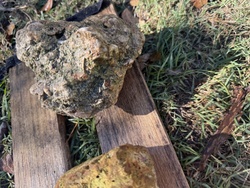
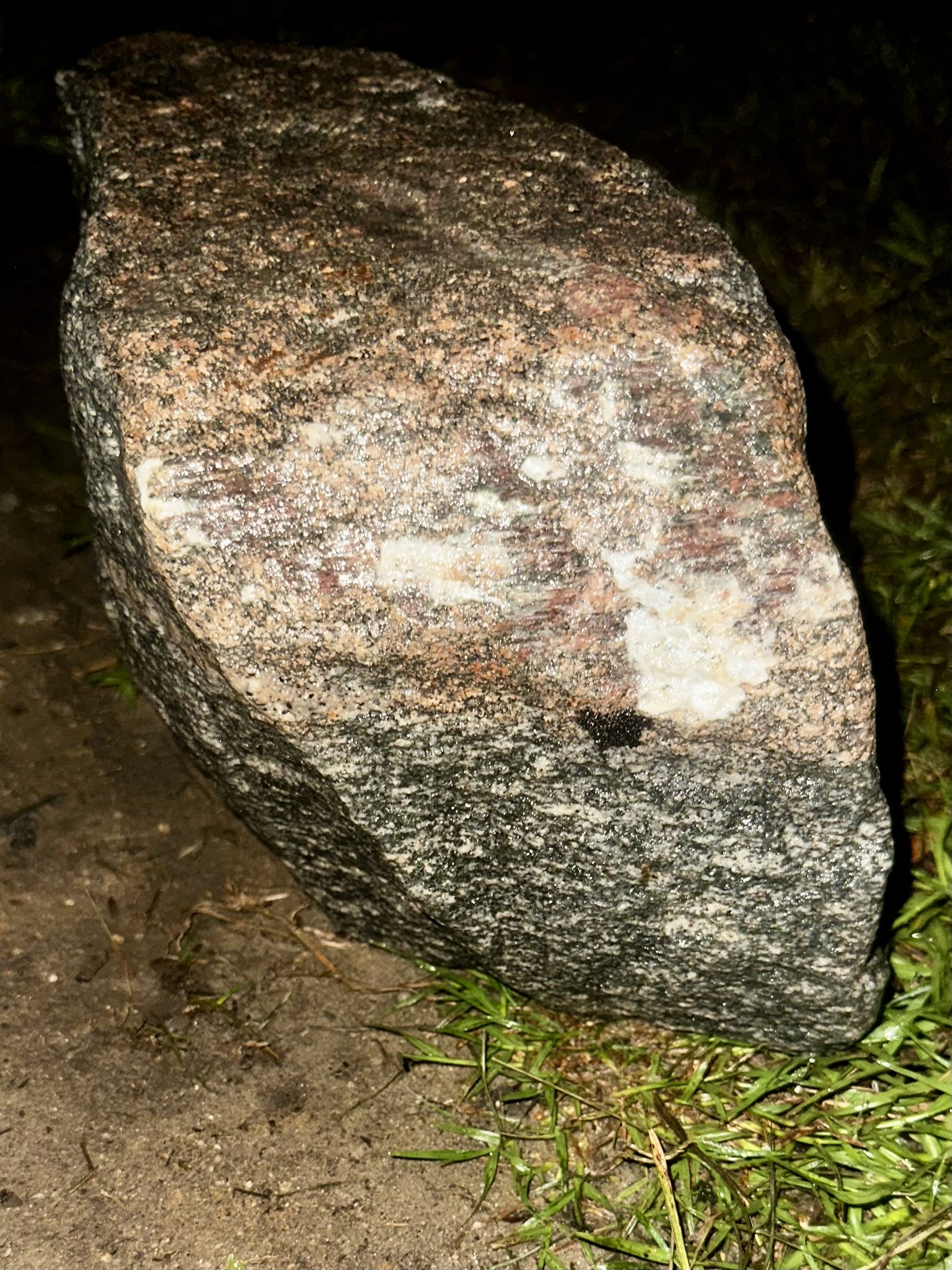
Submitted photo of Granite Boulder
Photo submitted by the user — not generated by AI

AI Estimated Value

Not an official valuation

$50 - $150

AI estimate as of October 20, 2026 · verify with a professional before acting

AI-Generated · Verify before acting

Everything on this page is generated by AI for informational purposes only. AI can make mistakes — the AI may misidentify items or misattribute them (artist, maker, brand, designer, origin, era). This is not an official valuation and should not be used for insurance, sale, tax, estate, legal, or lending purposes — or any decision requiring a certified appraisal. It is not an authoritative claim about any person, brand, or rights holder — do not share or rely on it as a factual statement about a third party. Always consult qualified professionals before making financial decisions.

Read the full disclaimer

AI Item Analysis

This specimen appears to be a naturally occurring granite boulder, displaying a roughly hewn, irregular block shape resting on soil and grass. The physical characteristics include a distinctly coarse-grained crystalline texture with a visible foliation or banded structural pattern, showing alternating lighter and darker mineral layers. The color palette transitions vertically from a dark, biotite-rich or amphibole-dominated dark greyish-green lower section to a pinkish-red and grey upper zone, punctuated by prominent irregular patches of milky white quartz and feldspar phenocrysts. The surface exhibits a wet sheen indicating recent moisture exposure, highlighting natural rough weathering, micro-fractures, and mineral cleavage planes typical of unpolished, raw geological stones. There are no visible maker's marks, signatures, or human-applied inscriptions. The visual characteristics are consistent with a weathered plutonic igneous rock or gneissic granite from a terrestrial geological formation. The item shows natural weathering, pitting, and uneven surfaces indicative of environmental exposure. The attribution rests entirely on visual observation of mineral composition and rock texture.

AI Appraisal Report

Based on what I can see in the photograph, the specimen appears to be a naturally occurring granite boulder or gneissic rock exhibiting coarse-grained crystalline textures and mineral banding. I cannot verify the exact geological origin, mineral assay percentages, or structural integrity from a photo alone; physical inspection, laboratory mineralogical testing, and potentially thin-section analysis would be needed to confirm its precise composition. The estimated value range reflects typical market conditions for decorative landscaping stones and raw geological specimens of similar size and visual appeal. Demand for unworked natural boulders is generally driven by local landscape design and decorative garden use rather than high-value collector markets, as raw stones of terrestrial geological formations are widely available. If this specimen were determined to be a common locally sourced landscape rock rather than a rare or specialized geological formation, the value would remain modest, tied primarily to local transport and handling costs. Conversely, if it proves to be a standard decorative garden boulder, its value is largely decorative rather than intrinsic or artifactual. Because this is a raw natural stone lacking human artistry, maker's marks, or historical provenance, the concept of a reproduction or copy does not apply in the traditional sense; however, any misrepresentation of its mineral rarity or sourcing would significantly impact its commercial appeal. A thorough in-person examination by a qualified geologist or stone supplier would be necessary to fully assess its weight, integrity, and fair market value.

Keep exploring

More geological specimens appraisals

Get your items appraised

Instant AI-powered appraisal estimates from a photo

Browse More Appraisals