AI Appraisal Estimate

AI-generated estimates · not official valuations

From the user

What was submitted

Photo and notes provided by the user — not generated by AI

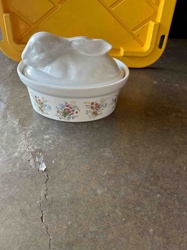
Submitted item photo
Submitted photo · May 27, 2026

User's notes

No additional notes provided.

AI analysis below

AI appraisal

AI analysis & estimate

AI-Generated · Verify before acting

Everything below is generated by AI for informational purposes only. AI can make mistakes — the AI may misidentify items or misattribute them (artist, maker, brand, designer, origin, era). This is not an official valuation and should not be used for insurance, sale, tax, estate, legal, or lending purposes — or any decision requiring a certified appraisal. It is not an authoritative claim about any person, brand, or rights holder — do not share or rely on it as a factual statement about a third party. Always consult qualified professionals before making financial decisions.

Read the full disclaimer

AI Identification

·Not independently authenticated·Verify before acting

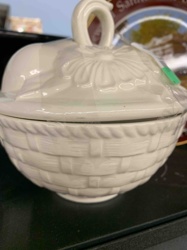
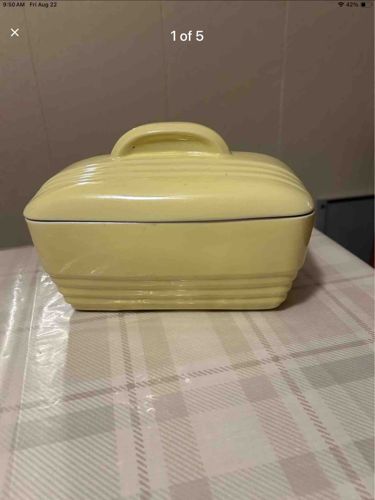
Yellow Ribbed Ceramic Lidded Dish

Kitchenware / Serveware

AI Estimated Value

·Not an official valuation·Verify before acting

$20-40

As of May 27, 2026

AI Item Analysis

·AI can make mistakes·Verify before acting
This item is a rectangular lidded casserole dish or butter dish, made from what appears to be glazed ceramic or stoneware. Its primary color is a soft, pastel yellow, suggesting a mid-century or vintage aesthetic. The overall form is boxy with gently rounded corners. Both the lid and the base feature horizontal ribbed or fluted details along their sides, adding textural interest and a decorative quality. The lid is fitted with a simple, integrated arched handle, designed for easy lifting. There are no visible maker's marks or signatures from the provided image, but the design suggests a mass-produced item. The glaze appears uniform and glossy, though there might be minor surface wear or light scratches consistent with use, particularly on the top surface of the lid and the upper edges of the base where the lid rests. No significant chips, cracks, or repairs are immediately apparent. The craftsmanship appears to be of good quality for its type, with smooth lines and a consistent glaze application. Based on its style and color, it likely dates from the mid-20th century, possibly the 1950s or 1960s, reflecting the popular pastel palettes of that era in kitchenware. It could be used for serving butter, small side dishes, or as a decorative storage container.
AI Appraisal Report

·AI can make mistakes·Verify before acting
Upon examining the provided image of this yellow ribbed ceramic lidded dish, I find it to be a charming example of mid-20th century kitchenware. The pastel yellow color and ribbed texture are consistent with designs prevalent in the 1950s or 1960s, suggesting a vintage aesthetic. The condition, based purely on visual inspection, appears very good; the glaze is uniform and glossy, and I see no obvious chips, cracks, or significant repairs. There might be minor surface wear as expected with age and use, particularly where the lid meets the base. This item likely falls into the collectible vintage kitchenware market. While attractive, it appears mass-produced rather than a unique artisan piece. Similar mass-produced ceramic or stoneware lidded dishes from this era, especially without specific maker's marks, typically command modest prices. Current market conditions for vintage kitchenware are steady, with demand for charming, functional pieces remaining consistent. However, without a known designer or manufacturer, its rarity is not particularly high. Factors impacting value positively include its good apparent condition and appealing color. Negative factors include its mass-produced nature and lack of specific identification. Authenticity verification from images alone has limitations. A physical examination would allow me to assess the exact weight, feel the texture of the glaze, inspect for hairline cracks not visible in photos, and confirm the absence of any hidden marks. Provenance documentation, though unlikely for such an item, could also add value. Scientific testing is not typically applied to items of this type unless there's a need to confirm material composition for a specific historical context.

Get your items appraised

Instant estimates of your treasures with AI-powered appraisals

Browse More Appraisals