AI estimate as of September 3, 2025 · verify with a professional before acting
AI-Generated · Verify before acting
Everything on this page is generated by AI for informational purposes only. AI can make mistakes — the AI may misidentify items or misattribute them (artist, maker, brand, designer, origin, era). This is not an official valuation and should not be used for insurance, sale, tax, estate, legal, or lending purposes — or any decision requiring a certified appraisal. It is not an authoritative claim about any person, brand, or rights holder — do not share or rely on it as a factual statement about a third party. Always consult qualified professionals before making financial decisions.
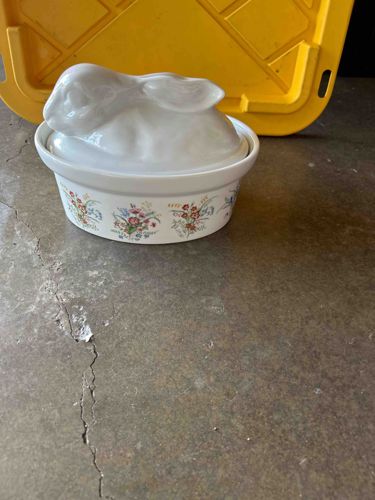
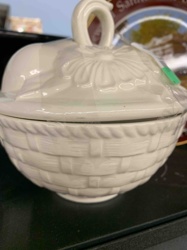
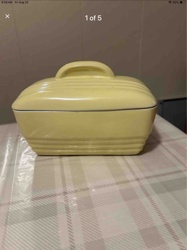
This item is a decorative covered dish, likely a butter dish or small casserole dish, crafted from white ceramic or porcelain. The lid of the dish is molded in the realistic form of a resting bunny, featuring distinct ears, eyes, and snout, providing a charming and whimsical top to the piece. The body of the dish is cylindrical with slightly flared sides, and its exterior is adorned with a delicate floral pattern. This pattern consists of small clusters of colorful flowers in shades of pink, blue, red, and green, interspersed symmetrically around the circumference. The overall color scheme is predominantly white with pastel accents from the floral motifs. The glaze appears smooth and glossy, indicative of good quality ceramic production. There are no visible chips, cracks, or significant wear on the surface, suggesting it is in good to excellent condition. The craftsmanship appears to be a combination of molded and hand-decorated details, particularly with the applied floral decals or hand-painting. Though no specific maker's marks are visible in the provided images, the style suggests a contemporary decorative item, possibly from the late 20th or early 21st century, often associated with seasonal or holiday-themed serveware, particularly for Easter or spring. The detailed bunny lid adds a unique and distinguishing element, enhancing its decorative appeal.
AI Appraisal Report
Based on my visual examination of the provided image, this Ceramic Bunny Covered Dish appears to be in good to excellent condition. The glossy glaze and lack of visible chips, cracks, or significant wear suggest careful handling. Its authenticity as a decorative, contemporary kitchenware item is supported by its design; the charming, realistically molded bunny lid and delicate floral pattern are consistent with decorative serveware, likely produced in the late 20th or early 21st century for seasonal or themed use, particularly Easter or spring. Without a physical inspection, however, I cannot definitively confirm the material (ceramic vs. porcelain), the complete absence of hairline cracks or subtle imperfections, or the method of floral application (decal vs. hand-painting).
Market conditions for similar contemporary decorative serveware indicate a modest value. Comparable items, often found at home goods stores, online retailers, or antique malls specializing in decorative rather than antique pieces, typically retail in the $20-$60 range depending on brand and specific design. While the bunny lid is charming and adds a unique element, this item is not exceptionally rare, nor does it appear to be from a highly collectible manufacturer, given the lack of visible maker’s marks. Demand for such items is generally steady, driven by seasonal decorating trends rather than investment potential. Factors impacting value positively include its appealing aesthetic and excellent condition; however, the lack of provenance, a known manufacturer, or any significant age limits its top-end value.
For full authentication and a more precise appraisal, a physical examination would be necessary to identify any maker's marks on the base, assess the craftsmanship nuances more closely, and confirm the exact material. Provenance documentation, if available, could also provide insight into its origin and history.