AI Appraisal Estimate

AI-generated estimates · not official valuations

From the user

What was submitted

Photo and notes provided by the user — not generated by AI

Submitted item photo
Submitted photo · June 20, 2026

User's notes

No additional notes provided.

AI analysis below

AI appraisal

AI analysis & estimate

AI-Generated · Verify before acting

Everything below is generated by AI for informational purposes only. AI can make mistakes — the AI may misidentify items or misattribute them (artist, maker, brand, designer, origin, era). This is not an official valuation and should not be used for insurance, sale, tax, estate, legal, or lending purposes — or any decision requiring a certified appraisal. It is not an authoritative claim about any person, brand, or rights holder — do not share or rely on it as a factual statement about a third party. Always consult qualified professionals before making financial decisions.

Read the full disclaimer

AI Identification

·Not independently authenticated·Verify before acting

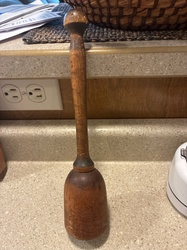
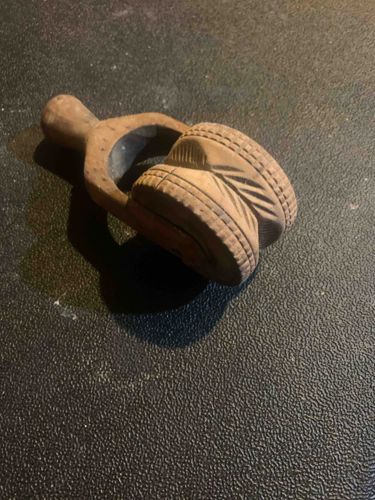
Antique Hand-Carved Wooden Butter Stamp Roller

Antique Kitchenware / Primitives

AI Estimated Value

·Not an official valuation·Verify before acting

$45 - $75

As of June 20, 2026

AI Item Analysis

·AI can make mistakes·Verify before acting
This is a vintage or antique hand-carved wooden butter roller, traditionally used in dairy production to impart decorative patterns onto the surface of butter. The item consists of two primary components: a hand-turned wooden frame with an ergonomic handle and a rotating wooden cylinder. The roller itself features intricate geometric and diagonal fluted carvings designed to create a repeating aesthetic pattern. Constructed from a dense hardwood, possibly maple or beech, which was favored for kitchen implements due to its resistance to absorbing odors and flavors. The piece displays a deep, naturally aged patina with significant surface wear consistent with age and regular utilitarian use. There is visible dust accumulation and fine surface abrasions, but the wood appears structurally sound without significant splitting. The craftsmanship indicates a hand-made origin, likely from the late 19th to early 20th century. Notable characteristics include the rounded grip for ease of use and the primitive yet effective joinery of the roller to the frame. The overall condition is fair to good for a functional antique, exhibiting authentic historical character and signs of artisanal manual labor.

AI Appraisal Report

·AI can make mistakes·Verify before acting
Based on my examination of the digital images provided, I have evaluated this hand-carved wooden butter roller. The piece exhibits characteristics consistent with late 19th-century American or European farmhouse primitives. The use of a dense hardwood—likely beech—is appropriate for the period, as its tight grain resisted moisture and bacterial growth. The handle displays ergonomic hand-turning, and the cylinder shows 'v' groove geometric carvings that were common for creating decorative patterns in domestic dairy production. The condition appears fair to good. I observe a rich, oxidized patina and surface wear that suggests decades of use. However, the presence of dust and heavy oxidation suggests the wood has dried out; without proper hydration, it remains at risk of splitting. The mechanical joinery appears intact, allowing the cylinder to rotate freely, which is a key factor for collectors of functional primitives. The market for 'kitchenalia' remains stable, though prices have softened from the peaks seen in the early 2000s. Similar examples of unadorned, utilitarian rollers typically sell in the $40-$60 range, while those with more complex figural carvings (such as wheat or thistles) command higher premiums. Limitations: Verification of authenticity is based solely on visual indicators of age. A physical inspection is required to confirm the absence of modern machine-tool marks or synthetic finishes that might indicate a high-quality reproduction. To reach a definitive valuation, I would need to inspect the 'end-grain' for natural shrinkage patterns and investigate any provenance documentation linking the piece to a specific dairy or region. Scientific wood-dating or microscopic analysis of the residue would be necessary to confirm the exact species of wood and age beyond visual estimation.

Get your items appraised

Instant estimates of your treasures with AI-powered appraisals

Browse More Appraisals