Antique Primitive Woodworking Bow Saw
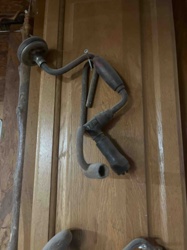
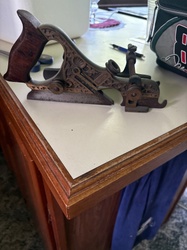
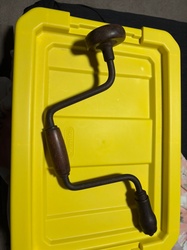
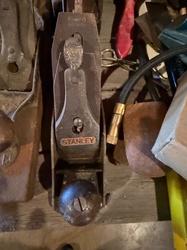
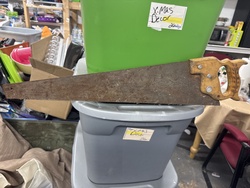
This is an antique bow saw, a classic primitive woodworking hand tool measuring approximately 24 inches in height by 13.5 inches in width. The frame features an H-shaped construction characteristic of traditional bow saws. It consists of two vertical wooden arms (the cheeks) connected by a central horizontal wooden stretcher. The frame is crafted from a hardwood, likely ash or oak, showing a darkened, aged patina with significant grain visibility. The tensioning system appears to be a traditional cord and toggle arrangement at the top (though mostly obscured or replaced by metal components in this view), which pulls the tops of the arms together to tighten the steel blade at the bottom. The steel blade is narrow and shows visible serrations, indicating it was intended for fine or curved cuts. The handles are turned wood, showing smooth wear consistent with long-term manual use. Condition-wise, the wood exhibits minor surface abrasions, staining, and a rich oxidation typical for tools from the late 19th to early 20th century. There are no obvious maker's marks visible in the image, suggesting it may be a shop-made tool or a craft-produced item from a regional manufacturer. The joinery appears robust, using traditional mortise and tenon construction where the stretcher meets the arms. The tool represents a high level of utilitarian craftsmanship, balancing functionality with the natural aesthetics of hand-shaped wood.
AI-Generated Appraisal Disclaimer
Estimated Value
$125 - $175
Basic Information
Category
Antique Hand Tools / Woodworking
Appraised On
April 10, 2026
Estimated Value
$125 - $175
Additional Details Provided By Owner
User Provided Information
Primative bow saw. 24" x 13.5"
Item Description
This is an antique bow saw, a classic primitive woodworking hand tool measuring approximately 24 inches in height by 13.5 inches in width. The frame features an H-shaped construction characteristic of traditional bow saws. It consists of two vertical wooden arms (the cheeks) connected by a central horizontal wooden stretcher. The frame is crafted from a hardwood, likely ash or oak, showing a darkened, aged patina with significant grain visibility. The tensioning system appears to be a traditional cord and toggle arrangement at the top (though mostly obscured or replaced by metal components in this view), which pulls the tops of the arms together to tighten the steel blade at the bottom. The steel blade is narrow and shows visible serrations, indicating it was intended for fine or curved cuts. The handles are turned wood, showing smooth wear consistent with long-term manual use. Condition-wise, the wood exhibits minor surface abrasions, staining, and a rich oxidation typical for tools from the late 19th to early 20th century. There are no obvious maker's marks visible in the image, suggesting it may be a shop-made tool or a craft-produced item from a regional manufacturer. The joinery appears robust, using traditional mortise and tenon construction where the stretcher meets the arms. The tool represents a high level of utilitarian craftsmanship, balancing functionality with the natural aesthetics of hand-shaped wood.
Related Tags
Explore similar items and categories:
Get Your Items Appraised
Instant estimates of your treasures with AI-powered instant appraisals