AI identification & appraisal estimate

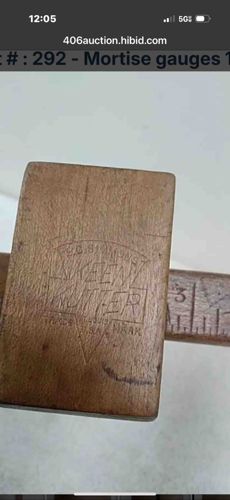
Vintage Wooden Mortise Gauge (Hume & Hear)

Submitted photo of Vintage Wooden Mortise Gauge (Hume & Hear)
Photo submitted by the user — not generated by AI

AI Estimated Value

Not an official valuation

$30 - $50

AI estimate as of August 15, 2025 · verify with a professional before acting

AI-Generated · Verify before acting

Everything on this page is generated by AI for informational purposes only. AI can make mistakes — the AI may misidentify items or misattribute them (artist, maker, brand, designer, origin, era). This is not an official valuation and should not be used for insurance, sale, tax, estate, legal, or lending purposes — or any decision requiring a certified appraisal. It is not an authoritative claim about any person, brand, or rights holder — do not share or rely on it as a factual statement about a third party. Always consult qualified professionals before making financial decisions.

Read the full disclaimer

AI Item Analysis

The item is a vintage wooden mortise gauge, a specialized woodworking tool used for marking parallel lines, particularly for mortise and tenon joints. It features a main body, often called the stock or head, which is a rectangular block of light- to medium-brown wood, likely a hardwood such as boxwood or beech, given its age and typical materials for such tools. The visible grain suggests a solid piece of timber. The face of the stock exhibits a discernible manufacturer's mark, though somewhat worn. The mark appears to be an oval surrounding text that reads "S.W. CO. L.A. CAL." above "HUME & HEAR" and possibly "TRADE MARK" below. There's also what looks like a 'V' shape at the bottom of the visible mark. This impression indicates a specific maker and suggests a period when such tools were commonly branded. The tool shows signs of extensive use and age, with a rich, developed patina across its wooden surfaces, indicating good care despite significant handling. The wood has some minor scuffs, dark spots, and discolored areas consistent with its use in a workshop environment, but no major cracks or structural damage are immediately visible on the stock. A long, proportionally narrower wooden beam, marked with numerical measurements, extends horizontally from the stock. Part of the beam is visible, showing a clear '3' and ruled increments, suggesting it's designed for precise measurements. The overall craftsmanship appears robust, built for utility and durability rather than intricate decoration. The simplicity of its design, combined with the visible wear, highlights its functional history. The period of manufacture is likely late 19th to early 20th century based on the materials and observed tooling marks.

AI Appraisal Report

Upon visual examination of the provided images, this item is identified as a vintage wooden mortise gauge. The tool appears to be constructed from a hardwood, likely beech or boxwood, common for this type of instrument. The condition is assessed as good for its age, displaying a rich patina and signs of honest use, such as scuffs and discoloration, but no apparent major structural damage like cracks or splits in the stock or beam. The manufacturer's mark, though worn, is partially legible and appears to identify the maker as Hume & Hear, likely associated with a Southern California entity (S.W. CO. L.A. CAL). This specific manufacturer is not as widely known as major players like Stanley or Marples, which makes this piece interesting but not exceptionally rare. The market for vintage woodworking tools is steady, with collectors and user-buyers seeking quality, well-preserved examples. Comparable non-descript or common-brand mortise gauges in similar condition typically sell in the $20-$40 range. The specific, less common maker (Hume & Hear) could add a slight premium for a regional collector, but the overall demand for this brand is not high. The primary value determinant is its condition and functionality. The lack of major damage and the presence of a clear, albeit worn, maker's mark are positive factors. However, without a physical inspection, I cannot confirm the beam's straightness, the sharpness and integrity of the pins, or the full functionality of the locking mechanism. Full authentication would require in-person verification of the maker's mark against known examples and a hands-on assessment of the tool's mechanical soundness.

Keep exploring

More woodworking tool appraisals

Get your items appraised

Instant AI-powered appraisal estimates from a photo

Browse More Appraisals