AI estimate as of November 27, 2025 · verify with a professional before acting
AI-Generated · Verify before acting
Everything on this page is generated by AI for informational purposes only. AI can make mistakes — the AI may misidentify items or misattribute them (artist, maker, brand, designer, origin, era). This is not an official valuation and should not be used for insurance, sale, tax, estate, legal, or lending purposes — or any decision requiring a certified appraisal. It is not an authoritative claim about any person, brand, or rights holder — do not share or rely on it as a factual statement about a third party. Always consult qualified professionals before making financial decisions.
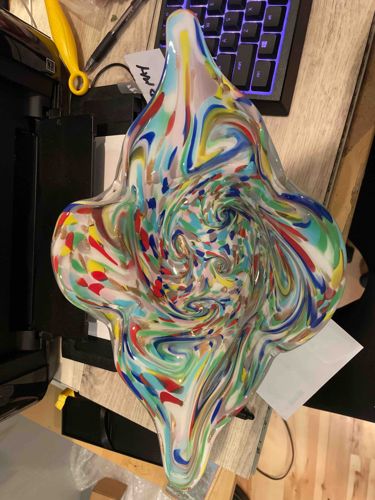
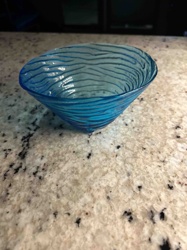
This is a captivating art glass bowl, characterized by its vibrant multi-color swirl pattern. The bowl exhibits a free-form, organic shape with undulating edges that create a dynamic and sculptural presence. It measures roughly 'medium' in size based on its context next to a keyboard, likely designed as a decorative centerpiece or fruit bowl. The primary material is glass, meticulously crafted to achieve a smooth, glossy finish that reflects light beautifully. The color palette is expansive, featuring prominent swirls and flecks of red, blue, green, yellow, white, and various pastel shades, creating a lively and energetic aesthetic. The colors are suspended within the clear glass matrix, giving a sense of depth and movement, particularly in the center where the swirls converge into a more concentrated vortex design. Examining the visible areas, there appear to be no significant chips, cracks, or repairs, indicating good overall condition. The craftsmanship suggests it is a hand-blown or hand-formed piece, given the irregular yet harmonious shape and the intricate color distribution which would be difficult to achieve with automated processes. There are no discernible maker's marks, signatures, or stamps visible in the provided images. The style aligns with contemporary art glass or perhaps mid-20th century studio glass, often inspired by abstract expressionism or natural forms. The quality indicators point to a well-executed piece of decorative art glass, with consistent thickness and a professional finish, showcasing the skill of the artisan. The unique aspect of this piece is its striking color combination and fluid form, making it a focal point in any setting.
AI Appraisal Report
I have virtually examined this Multi-Color Swirl Art Glass Bowl, noting its captivating multi-color swirl pattern and free-form, organic shape. Based on the visual evidence, the condition appears to be good; I observe no significant chips, cracks, or repairs. The craftsmanship suggests a hand-blown or hand-formed piece, indicated by the irregular yet harmonious form and intricate color distribution. The smooth, glossy finish and consistent thickness point to a well-executed decorative art glass item.
Market conditions for contemporary or mid-20th century studio art glass of this nature are generally stable. Similar unsigned decorative art glass bowls with vibrant colors and fluid designs typically retail within the $100-$300 range, dependent on size, exact coloration, and origin. Comparables from known studios or artists would command higher prices, but without attribution, value is based on aesthetic appeal and craftsmanship rather than provenance. Demand for unique, colorful decorative items remains consistent, though this particular style isn't considered rare in the broader art glass market.
Factors impacting its value positively include its striking aesthetic, good condition, and apparent hand-crafted quality. The absence of a maker's mark significantly limits its upper value potential, as attribution to a specific artist or studio is a key driver for higher valuations in art glass.
It is crucial to note the limitations of this appraisal, as it is based solely on visual examination of images. I cannot definitively verify authenticity, material composition beyond general appearance, or detect minute flaws that would only be apparent through in-person inspection. For full authentication and a more precise valuation, a physical examination would be necessary to check for subtle imperfections, assess the weight and feel of the glass, and potentially uncover hidden signatures or details. Additionally, provenance documentation would be invaluable, if available.