Raw Carnelian Agate Nodule
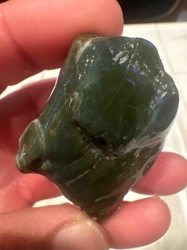
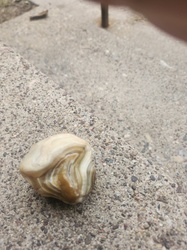
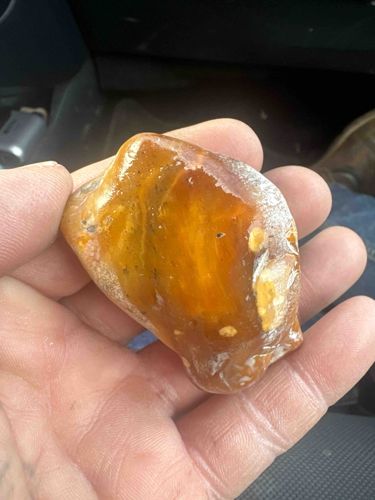
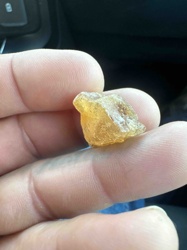
This specimen is a raw, naturally weathered carnelian agate nodule, held in a person's hand for scale, suggesting a size of approximately 2 to 3 inches in length. Its physical characteristics feature a translucent to semi-opaque body with a vibrant amber, honey-orange, and burnt sienna color palette. The stone exhibits a waxy to vitreous luster, characteristic of microcrystalline quartz. The exterior displays a mix of smooth, water-worn surfaces and rougher, frosted white patches likely representing the original host rock or weathering rind. Notable features include subtle internal banding and small dark mineral inclusions that add to its organic visual complexity. In terms of condition, the specimen shows natural pitting, superficial fractures, and external abrasions typical of river-tumbled or glacially deposited stones; these are geological occurrences rather than damage. There are no signs of synthetic treatment or polishing, indicating a high-quality natural lapidary rough. The craftsmanship is entirely natural, dictated by millions of years of silica-rich water deposition within volcanic or sedimentary cavities. Because it is a geologic formation, its age likely spans millions of years, representing a prime candidate for gemstone carving or as a collector's mineral specimen.
AI-Generated Appraisal Disclaimer
Estimated Value
$25.00-$45.00
Basic Information
Category
Minerals and Gemstones
Appraised On
February 25, 2026
Estimated Value
$25.00-$45.00
Item Description
This specimen is a raw, naturally weathered carnelian agate nodule, held in a person's hand for scale, suggesting a size of approximately 2 to 3 inches in length. Its physical characteristics feature a translucent to semi-opaque body with a vibrant amber, honey-orange, and burnt sienna color palette. The stone exhibits a waxy to vitreous luster, characteristic of microcrystalline quartz. The exterior displays a mix of smooth, water-worn surfaces and rougher, frosted white patches likely representing the original host rock or weathering rind. Notable features include subtle internal banding and small dark mineral inclusions that add to its organic visual complexity. In terms of condition, the specimen shows natural pitting, superficial fractures, and external abrasions typical of river-tumbled or glacially deposited stones; these are geological occurrences rather than damage. There are no signs of synthetic treatment or polishing, indicating a high-quality natural lapidary rough. The craftsmanship is entirely natural, dictated by millions of years of silica-rich water deposition within volcanic or sedimentary cavities. Because it is a geologic formation, its age likely spans millions of years, representing a prime candidate for gemstone carving or as a collector's mineral specimen.
Related Tags
Explore similar items and categories:
Get Your Items Appraised
Instant estimates of your treasures with AI-powered instant appraisals