AI estimate as of July 12, 2025 · verify with a professional before acting
AI-Generated · Verify before acting
Everything on this page is generated by AI for informational purposes only. AI can make mistakes — the AI may misidentify items or misattribute them (artist, maker, brand, designer, origin, era). This is not an official valuation and should not be used for insurance, sale, tax, estate, legal, or lending purposes — or any decision requiring a certified appraisal. It is not an authoritative claim about any person, brand, or rights holder — do not share or rely on it as a factual statement about a third party. Always consult qualified professionals before making financial decisions.
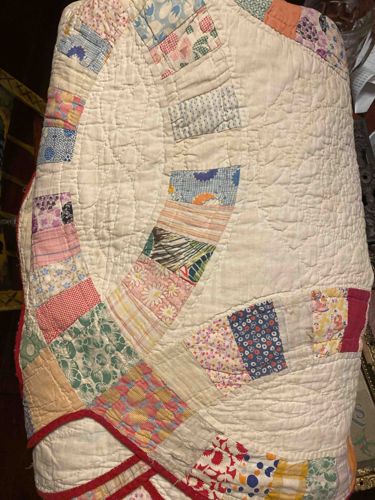
This appears to be a vintage or antique hand-stitched quilt, likely dating from the mid-20th century, possibly the 1930s-1950s, based on the fabric prints. The quilt features a 'Dresden Plate' pattern, characterized by radiating 'petals' made from various fabric scraps, set against a solid cream or off-white background fabric. The 'petals' are composed of numerous small rectangular and trapezoidal fabric pieces in a vibrant array of printed cottons, including florals, geometrics, and abstract patterns, typical of feed sack or scrap bag materials of the era. Colors range from pastel pinks, blues, yellows, and greens to stronger reds and purples. Each Dresden Plate block appears to be appliquéd onto the background fabric, and the central portion of the 'plate' is likely covered by a plain fabric circle, though this is not clearly visible in this partial view. The quilting stitches are visible as a pattern of concentric circles, wavy lines, or grid patterns across the cream background, indicating hand-quilting. The stitching appears relatively consistent, suggesting good craftsmanship for a homemade item. There is visible wear and patina typical of age and use, including some creasing, slight discoloration or yellowing of the background fabric, and what appears to be minor fraying on some of the fabric scraps. The edges, where visible, show a binding, with a prominent red binding along one curved edge, adding a contrasting design element. The overall impression is one of a lovingly made, well-worn, and charming textile, showcasing the recycling and creative spirit often found in Depression-era and post-war homemaking.
AI Appraisal Report
Upon examining the provided image of this Vintage Hand-Quilted Dresden Plate Quilt, I assess its condition as good, considering its age and what appears to be regular use. The fabric prints strongly suggest a mid-20th century origin, likely 1930s-1950s, consistent with the Dresden Plate pattern's popularity during that era. The visible hand-quilting stitches appear relatively even and consistent, indicative of good craftsmanship. Authenticity, based purely on visual inspection, seems high for a period textile; the fabric types, patterns, and construction methods align with historical examples. However, absolute authentication would require in-person examination to verify fiber content, stitch quality under magnification, and to check for hidden repairs or alterations. The 'wear and patina' noted, including slight discoloration and minor fraying, are typical for a textile of this age and do not significantly detract from its value unless extensive. The red binding on the curved edge is a nice touch, adding visual interest.
In terms of market conditions, vintage American quilts, especially those exhibiting popular patterns like Dresden Plate and utilizing feed sack fabrics, maintain consistent demand among collectors and interior designers. Comparables include other hand-quilted Dresden Plate quilts from the same period, typically ranging from good to very good condition. While Dresden Plate quilts are not particularly rare, examples with vibrant, well-preserved colors and consistent hand-quilting like this one are valued. Factors positively impacting value include the clear hand-quilting, the diverse array of period fabrics, and its overall charming aesthetic. The primary limitation in full authentication is the lack of physical access. A hands-on examination would allow for precise assessment of fabric integrity, potential sun-fading not visible in the image, the weight and drape of the quilt, and to confirm the absence of machine stitching masquerading as hand-quilting. Provenance documentation, such as family history or original purchase receipts, would also significantly enhance its verifiable authenticity and value.