AI Appraisal Estimate

AI-generated estimates · not official valuations

From the user

What was submitted

Photo and notes provided by the user — not generated by AI

Submitted item photo
Submitted photo · May 25, 2026

User's notes

No additional notes provided.

AI analysis below

AI appraisal

AI analysis & estimate

AI-Generated · Verify before acting

Everything below is generated by AI for informational purposes only. AI can make mistakes — the AI may misidentify items or misattribute them (artist, maker, brand, designer, origin, era). This is not an official valuation and should not be used for insurance, sale, tax, estate, legal, or lending purposes — or any decision requiring a certified appraisal. It is not an authoritative claim about any person, brand, or rights holder — do not share or rely on it as a factual statement about a third party. Always consult qualified professionals before making financial decisions.

Read the full disclaimer

AI Identification

·Not independently authenticated·Verify before acting

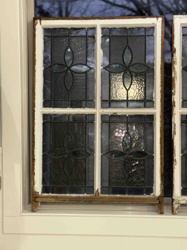
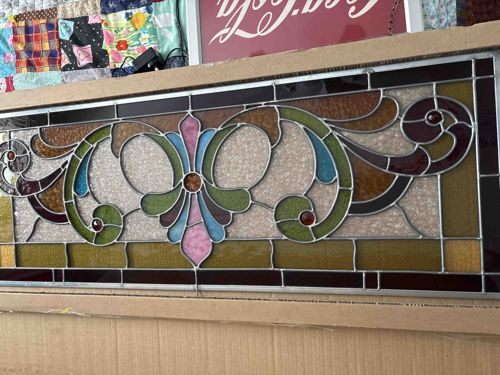
Art Nouveau Style Leaded Stained Glass Transom Window

Architectural Antiques and Glass Art

AI Estimated Value

·Not an official valuation·Verify before acting

$450 - $650

As of May 25, 2026

AI Item Analysis

·AI can make mistakes·Verify before acting
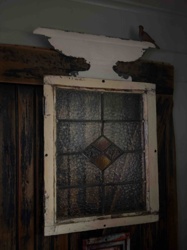
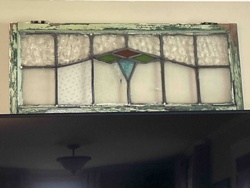
This horizontal rectangular stained glass panel is a decorative architectural transom window featuring a symmetrical Art Nouveau-inspired design. The piece is constructed with lead cames holding together a mixture of textured and colored glass sections. Notable features include a central stylized fleur-de-lis motif flanked by elegant scrolling acanthus-like curves. The color palette is composed of muted earth tones including amber, olive green, and dark burgundy, contrasted by soft pink and cerulean blue accent petals. Multiple textures are present, most notably a 'cathedral' or hammered texture on the clear/translucent background glass which provides privacy while diffusing light. Small circular amber glass cabochon jewels are integrated into the scrolls to add depth and brilliance. The lead lines show a consistent silver-grey patina, suggesting recent vintage or careful indoor storage. This piece appears to be in excellent condition with no visible cracks, bowing, or oxidation on the solder joints. While it mimics early 20th-century craftsmanship, the clean solder lines and vibrant, uniform glass suggest it is a high-quality contemporary revival piece, likely dating from the late 20th to early 21st century. The framing is a simple thin metal zinc or lead border, often intended to be set into a wooden architectural frame.
AI Appraisal Report

·AI can make mistakes·Verify before acting
I have carefully examined the provided images of this Art Nouveau style stained glass transom. My assessment identifies this as a high-quality contemporary revival piece, likely manufactured within the last 30 to 40 years. The condition is excellent; the lead cames are straight, the solder joints are clean and free of oxidation, and there is no evidence of glass bowing or stress fractures commonly found in period-original pieces from the early 1900s. The use of machine-rolled 'cathedral' textured glass and uniform amber cabochons further supports a late 20th-century origin. For the secondary market, value is driven by decorative appeal rather than historical rarity. Pieces of this size and craftsmanship currently command moderate prices in architectural salvage and interior design markets. Comparables for similar revival panels range from $400 to $700 depending on the venue. The symmetrical 'fleur-de-lis' and acanthus motifs are highly desirable for residential restoration projects, maintaining steady demand. However, because this is a revival piece rather than a Louis Comfort Tiffany or John LaFarge original, it lacks the 'blue-chip' investment status of 19th-century masterworks. My valuation is based on visual data alone. A physical inspection would be required to verify the lead's flexibility, check for hidden 'rattle' in the glass seats, and look for maker’s marks on the zinc border. To definitively rule out an earlier date, a spectroscopic analysis of the glass composition or provenance documenting the original installation site would be necessary, though the visual evidence strongly indicates a modern artisanal production.

Get your items appraised

Instant estimates of your treasures with AI-powered appraisals

Browse More Appraisals