Antique Leaded and Stained Glass Transom Window
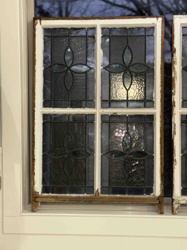
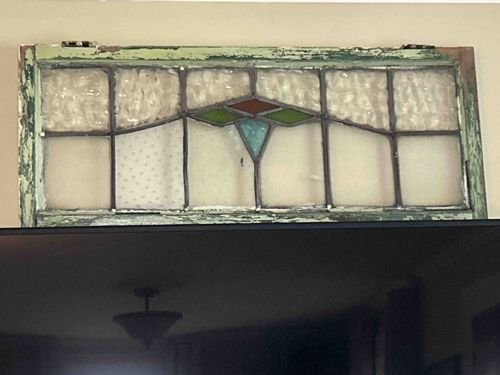
This is an antique rectangular transom window featuring leaded and stained glass set within a heavily distressed wooden sash. The design is geometric and characteristic of the late Victorian to Early 20th Century Craftsman transition, featuring a central diamond-shaped motif. The glass components include two distinct textures: clear hammered or 'pebbled' glass panels and varied colored slag glass in shades of olive green, amber-red, and pale turquoise. The lead cames are dark with age, showing a natural oxidation patina. The wooden frame is painted a sage green color that exhibits significant distress, with substantial paint loss, chipping, and weathering that exposes the underlying wood grain and original primer. This weathered condition is consistent with architectural salvage pieces from the early 1900s. The construction utilizes traditional lead glazing techniques where multiple glass panes are joined together by H-channel lead strips. No specific maker's marks are visible, which is common for residential architectural elements of this era. Overall, the piece displays a rustic, salvaged aesthetic with all glass panels appearing intact, though the frame shows signs of rot or structural wear at the edges.
AI-Generated Appraisal Disclaimer
Estimated Value
$450 - $650
Basic Information
Category
Architectural Antiques
Appraised On
February 1, 2026
Estimated Value
$450 - $650
Item Description
This is an antique rectangular transom window featuring leaded and stained glass set within a heavily distressed wooden sash. The design is geometric and characteristic of the late Victorian to Early 20th Century Craftsman transition, featuring a central diamond-shaped motif. The glass components include two distinct textures: clear hammered or 'pebbled' glass panels and varied colored slag glass in shades of olive green, amber-red, and pale turquoise. The lead cames are dark with age, showing a natural oxidation patina. The wooden frame is painted a sage green color that exhibits significant distress, with substantial paint loss, chipping, and weathering that exposes the underlying wood grain and original primer. This weathered condition is consistent with architectural salvage pieces from the early 1900s. The construction utilizes traditional lead glazing techniques where multiple glass panes are joined together by H-channel lead strips. No specific maker's marks are visible, which is common for residential architectural elements of this era. Overall, the piece displays a rustic, salvaged aesthetic with all glass panels appearing intact, though the frame shows signs of rot or structural wear at the edges.
Get Your Items Appraised
Instant estimates of your treasures with AI-powered instant appraisals