AI Appraisal Estimate

AI-generated estimates · not official valuations

From the user

What was submitted

Photo and notes provided by the user — not generated by AI

Submitted item photo
Submitted photo · June 10, 2026

User's notes

No additional notes provided.

AI analysis below

AI appraisal

AI analysis & estimate

AI-Generated · Verify before acting

Everything below is generated by AI for informational purposes only. AI can make mistakes — the AI may misidentify items or misattribute them (artist, maker, brand, designer, origin, era). This is not an official valuation and should not be used for insurance, sale, tax, estate, legal, or lending purposes — or any decision requiring a certified appraisal. It is not an authoritative claim about any person, brand, or rights holder — do not share or rely on it as a factual statement about a third party. Always consult qualified professionals before making financial decisions.

Read the full disclaimer

AI Identification

·Not independently authenticated·Verify before acting

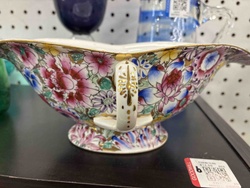
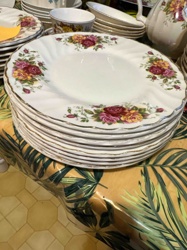
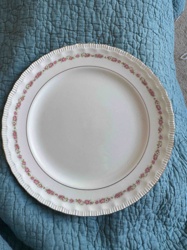
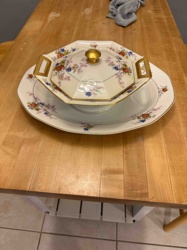
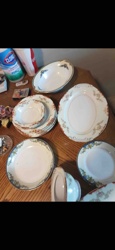
Vintage Oval Porcelain Relish Dish with Floral Motif and Gilt Trim

Antique and Vintage Tableware

AI Estimated Value

·Not an official valuation·Verify before acting

$25.00 - $45.00

As of June 10, 2026

AI Item Analysis

·AI can make mistakes·Verify before acting
This item is an oval-shaped porcelain or fine china celery or relish dish, characterized by its shallow depth and elongated form. The piece features a cream-colored or off-white base glaze with an ornate floral decorative border. The motif consists of delicate clusters of pink and yellow flowers interspersed with soft green foliage, likely applied via a decal process common in middle-to-late 20th-century pottery. A significant design feature is the scalloped or undulating edge, which is heavily accented with hand-painted gold leaf or gilt trim. The handles on either end are slightly raised and integrated into the mold, featuring more concentrated gold application. In terms of condition, there appears to be significant wear to the gold trim on the scalloped edges, consistent with age and regular handling. The central basin shows a glossy finish with no immediately apparent cracks, though fine surface scratches from utensil use may be present upon closer inspection. The style is reminiscent of European or American manufacturers such as Limoges, Noritake, or Homer Laughlin, typically dating from the 1920s to the 1950s. The craftsmanship indicates a production-grade piece intended for formal dining service, showcasing the era's preference for romantic, nature-inspired decorative arts.
AI Appraisal Report

·AI can make mistakes·Verify before acting
I have examined the digital representation of this vintage oval porcelain relish dish. Based on the scalloped edges, floral decals, and integrated handles, I have identified this as a production-grade piece of tableware typically dated between 1930 and 1955. The aesthetic is consistent with mid-market manufacturers such as Noritake or various Bavarian porcelain works. While the central glaze retains a healthy luster, my visual inspection reveals significant 'rubbing' or loss to the gold gilt along the scalloped rim, which is the primary condition issue. This wear suggests frequent manual handling and significantly impacts the secondary market appeal for collectors seeking pristine cabinet pieces. The market for mid-20th-century floral porcelain is currently saturated. Modern lifestyle trends have shifted away from specialized serving vessels like relish or celery dishes, leading to softened demand. Comparable pieces from Homer Laughlin or Nippon currently realize between $15 and $35 at auction, with high-end Limoges examples occasionally reaching $50 if the gilt is intact. There are inherent limitations to this digital appraisal. I cannot verify the presence of a maker's mark on the underside, nor can I check for 'flea bites' or hairline fractures that are often invisible in photos but palpable to the touch. Full authentication would require an in-person examination to assess the weight and translucency of the paste and a loupe inspection of the floral motifs to distinguish between hand-painting and transfer-ware. Provenance documentation or a backstamp would be required to attribute this definitively to a specific manufacturer.

Get your items appraised

Instant estimates of your treasures with AI-powered appraisals

Browse More Appraisals