AI estimate as of September 21, 2025 · verify with a professional before acting
AI-Generated · Verify before acting
Everything on this page is generated by AI for informational purposes only. AI can make mistakes — the AI may misidentify items or misattribute them (artist, maker, brand, designer, origin, era). This is not an official valuation and should not be used for insurance, sale, tax, estate, legal, or lending purposes — or any decision requiring a certified appraisal. It is not an authoritative claim about any person, brand, or rights holder — do not share or rely on it as a factual statement about a third party. Always consult qualified professionals before making financial decisions.
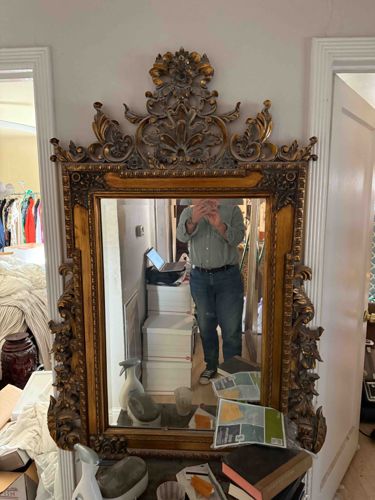
This is an elaborately decorated wall mirror, likely from the Rococo Revival or Baroque Revival period, characterized by its extensive giltwood frame and intricate carvings. The overall dimensions appear substantial, suitable for a prominent placement in a room, though exact measurements are not provided. The primary material is wood, covered in a rich, aged gold leaf or gilding, which exhibits areas of patination, minor wear, and possibly some darkening or tarnishing, particularly in the recesses of the carvings. The frame features deeply carved floral and foliate motifs, prominent scrolling acanthus leaves, and C-scrolls, particularly at the crest and corners. The crest is a focal point, featuring a large, stylized floral cluster flanked by elaborate scrolls and shells. The side rails of the frame are also heavily carved with trailing foliage and possibly small rocaille elements. The mirror glass itself appears to be in good condition, offering a clear reflection. There are no obvious cracks, chips, or significant hazing visible in the glass. The craftsmanship suggests a high level of detail, with the carvings being well-defined and three-dimensional, indicating either a skilled hand-carved piece or a finely cast resin/composition material designed to mimic traditional carving. The style points to a late 19th to early 20th-century aesthetic, drawing inspiration from historical European decorative arts. Visible condition issues include expected age-related wear to the gilding, some minor dust accumulation within the deep crevices, and potentially some small losses to the gesso or gilding, though none are significantly prominent in the image.
AI Appraisal Report
Upon visual examination of this Ornate Giltwood Wall Mirror with Floral Carvings, I assess it to be a fine example of a Rococo or Baroque Revival piece, likely dating from the late 19th to early 20th century. The elaborate giltwood frame, characterized by extensive floral and foliate motifs, scrolling acanthus leaves, and C-scrolls, particularly at the crest and corners, is executed with a high degree of craftsmanship. The deep, three-dimensional carvings suggest either skilled hand-carving or very fine composition molding designed to emulate carved wood.
From the image, the condition appears good, consistent with age. There is expected age-related wear to the gilding, such as patination and minor darkening, especially in the recesses, which contributes to its antique aesthetic rather than detracting from it. I note no significant losses to the gesso or gilding that would require immediate conservation, nor any visible damage to the mirror glass itself. Minor dust accumulation in crevices is typical.
Market conditions for such decorative revival mirrors remain steady, particularly for substantial and well-executed examples. Comparables in auction records and dealer inventories for similar ornate giltwood mirrors of this period typically range from $1,000 to $3,000, depending on size, specific design intricacy, and overall condition. Demand for decorative and impactful mirrors that serve as focal points in interior design is consistent. The size, without specific measurements, appears significant, which generally commands a higher price point.
Important factors impacting value include the overall artistic merit of the carving, the quality of gilding, and the item's condition. The current appeal of 'grand millennial' and traditional aesthetics supports its market presence.
It is crucial to note that this appraisal is based solely on visual examination of the provided image. Limitations in authenticity verification from images alone prevent me from definitively confirming the material as true giltwood versus a highly convincing composition material, or ruling out professional restoration that might affect long-term value. An in-person examination would allow for tactile inspection of the frame's material, closer assessment of gilding and gesso integrity, and detection of any repairs. Provenance documentation, though not typically extensive for these items, could also provide valuable insight into its history. Scientific testing would not typically be warranted unless specific questions about material composition or dating arose beyond initial inspection.