AI Appraisal Estimate

AI-generated estimates · not official valuations

From the user

What was submitted

Photo and notes provided by the user — not generated by AI

Submitted item photo
Submitted photo · May 30, 2026

User's notes

No additional notes provided.

AI analysis below

AI appraisal

AI analysis & estimate

AI-Generated · Verify before acting

Everything below is generated by AI for informational purposes only. AI can make mistakes — the AI may misidentify items or misattribute them (artist, maker, brand, designer, origin, era). This is not an official valuation and should not be used for insurance, sale, tax, estate, legal, or lending purposes — or any decision requiring a certified appraisal. It is not an authoritative claim about any person, brand, or rights holder — do not share or rely on it as a factual statement about a third party. Always consult qualified professionals before making financial decisions.

Read the full disclaimer

AI Identification

·Not independently authenticated·Verify before acting

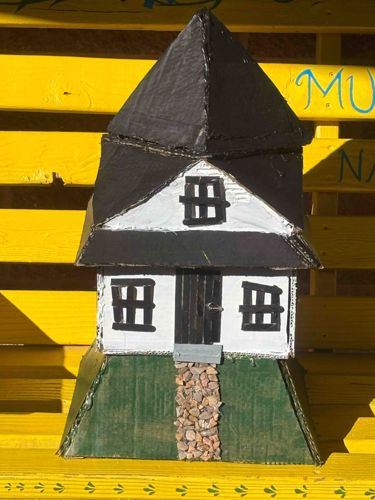
Handmade Cardboard Folk Art House Model

Folk Art / Architectural Models

AI Estimated Value

·Not an official valuation·Verify before acting

$40 - $75

As of May 30, 2026

AI Item Analysis

·AI can make mistakes·Verify before acting
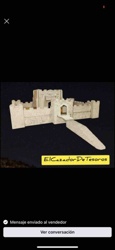
This item is a vernacular folk art architectural model representing a traditional house or cabin, crafted primarily from repurposed corrugated cardboard. The piece features a multi-tiered construction with a prominent black-painted gable roof and a sharply pitched attic peak. The main structure is painted white with hand-rendered black window frames and a central black door. Below the living quarters is a wide, flaring base painted forest green to simulate a grassy hill or plot. A notable feature is the vertically aligned central walkway leading to the door, which is embellished with small natural stone aggregate or pea gravel adhered to the surface. The construction is rudimentary, showing visible corrugated edges, hot glue residue, and hand-cut cardboard panels. The color palette is restricted to high-contrast black, white, and green acrylic or tempera paints. There are visible signs of wear consistent with its fragile material composition, including slight fraying at the cardboard corners and some uneven paint application. Without a signature or maker's mark, it appears to be a contemporary hobbyist or school-level project. The piece stands approximately 12-18 inches tall and reflects a naive aesthetic style with a focus on geometric simplification and reused materials.
AI Appraisal Report

·AI can make mistakes·Verify before acting
I have visually examined this handmade folk art architectural model. The piece is constructed from corrugated cardboard and mixed media, utilizing a naive, vernacular aesthetic. Based on the visible materials—predominantly hot glue, acrylic/tempera paint, and store-bought pea gravel—this appears to be a contemporary hobbyist creation or a secondary school project rather than a historical or 'outsider' masterpiece. The condition shows visible fraying at the joints and exposed corrugation, which is typical for the material but necessitates climate-controlled storage to prevent further degradation. The current market for contemporary cardboard folk art is niche. Without a documented provenance or the signature of a recognized outsider artist (such as James Castle or similar figures who utilized found materials), the value is primarily decorative. Comparable sales for unsigned, contemporary model homes made from repurposed paper materials typically fall within the sub-$100 range at thrift or local estate auctions. The use of natural stone on the walkway adds a tactile element that enhances its shelf appeal, but the lack of architectural scale accuracy limits its value to serious collectors of miniatures. Limitations: My assessment is based solely on the provided description and visual data. A physical inspection would be required to examine for internal structural stability and possible hidden signatures or dates within the base. To increase its marketability, documentation regarding the creator’s history or the era of construction would be necessary. Scientific testing is not required for a piece of this nature, as the materials are clearly modern industrial cardboard; however, verifying the age of the adhesive could further clarify its origin if antiquity was suspected.

Get your items appraised

Instant estimates of your treasures with AI-powered appraisals

Browse More Appraisals