AI identification & appraisal estimate

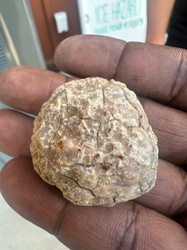
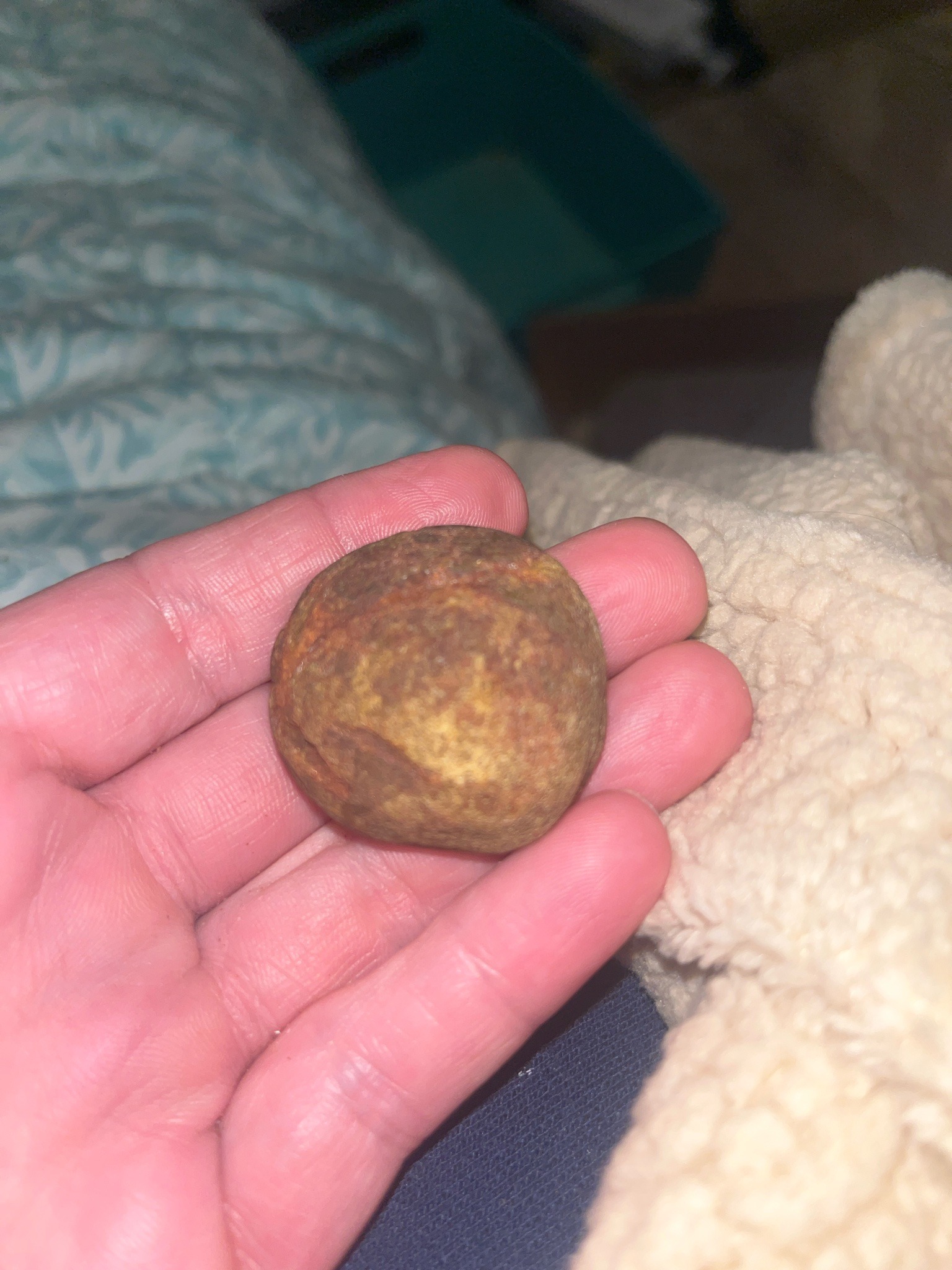
Small spherical rock or geologic concretion

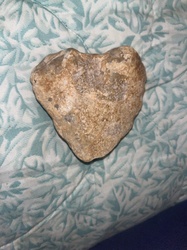
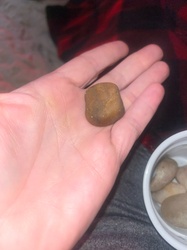
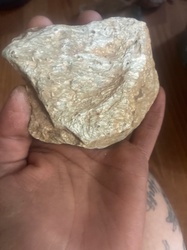
Submitted photo of Small spherical rock or geologic concretion
Photo submitted by the user — not generated by AI

AI Estimated Value

Not an official valuation

$5 - $15

AI estimate as of July 7, 2026 · verify with a professional before acting

AI-Generated · Verify before acting

Everything on this page is generated by AI for informational purposes only. AI can make mistakes — the AI may misidentify items or misattribute them (artist, maker, brand, designer, origin, era). This is not an official valuation and should not be used for insurance, sale, tax, estate, legal, or lending purposes — or any decision requiring a certified appraisal. It is not an authoritative claim about any person, brand, or rights holder — do not share or rely on it as a factual statement about a third party. Always consult qualified professionals before making financial decisions.

Read the full disclaimer

AI Item Analysis

A small, roughly spherical object resting in a person's palm, which appears consistent with a naturally occurring geologic concretion, such as ironstone or a similar sedimentary formation. It measures approximately 3 to 4 centimeters in diameter. The surface exhibits a coarse, matte texture with a variegated color palette consisting of ochre, burnt umber, and muted orange-brown tones, which may be indicative of iron oxide or rust and weathering. The form is somewhat irregular rather than a perfect sphere, with some visible pitting and minor surface abrasions. There are no legible markings, labels, or discernible artisan signatures, suggesting this is a natural specimen rather than a manufactured item. While it bears some resemblance to historical cast-iron munitions or primitive tools, the lack of uniformity and the visible mineral-like surface layers strongly suggest it is a stony concretion formed by geological processes. Because there is no verifiable provenance or maker's mark, the origin remains a hypothesis until subjected to professional mineralogical or archaeological examination.

AI Appraisal Report

Based on my visual examination of the provided image, I have analyzed this small, roughly spherical object. From what I can see, the item possesses physical characteristics—such as a matte, variegated surface and ochre-toned oxidation—that are consistent with a naturally occurring geologic concretion or ironstone nodule. I cannot determine its precise mineral composition or internal structure from a photo alone; a physical inspection, potentially involving a streak test or cross-sectioning, would be required to rule out man-made origins like heavily weathered cast-iron fragments. The value estimate is based on the assumption that this is a common geological specimen. In the current market, such items are typically sold as curiosities or educational samples. Because this specimen lacks a specific provenance, rare crystallization, or aesthetic 'geode' features, its market demand is relatively low. I have valued it as a generic natural find; however, if the item were hypothetically identified through laboratory testing as something rarer, such as a specific type of meteorite or a significant archaeological artifact, the value could increase significantly. Conversely, if it is merely a fragment of modern industrial slag or common iron-rich debris, it would hold negligible secondary market value. To move beyond this hypothesis, I recommend an in-person evaluation by a mineralogist. To provide a more robust valuation, information regarding the exact geographic location of its discovery would be essential. In the absence of documented provenance or scientific verification of a rare origin, the item is priced according to the typical market behavior for unpolished, stony concretions of this size and condition.

Keep exploring

More geological specimens appraisals

Get your items appraised

Instant AI-powered appraisal estimates from a photo

Browse More Appraisals