AI Appraisal Estimate

AI-generated estimates · not official valuations

From the user

What was submitted

Photo and notes provided by the user — not generated by AI

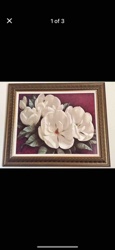
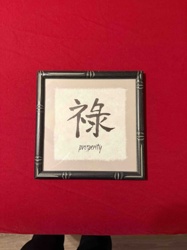
Submitted item photo
Submitted photo · June 17, 2026

User's notes

No additional notes provided.

AI analysis below

AI appraisal

AI analysis & estimate

AI-Generated · Verify before acting

Everything below is generated by AI for informational purposes only. AI can make mistakes — the AI may misidentify items or misattribute them (artist, maker, brand, designer, origin, era). This is not an official valuation and should not be used for insurance, sale, tax, estate, legal, or lending purposes — or any decision requiring a certified appraisal. It is not an authoritative claim about any person, brand, or rights holder — do not share or rely on it as a factual statement about a third party. Always consult qualified professionals before making financial decisions.

Read the full disclaimer

AI Identification

·Not independently authenticated·Verify before acting

Framed Floral Still Life Art Print

Wall Art / Home Decor

AI Estimated Value

·Not an official valuation·Verify before acting

$45.00 - $75.00

As of June 17, 2026

AI Item Analysis

·AI can make mistakes·Verify before acting
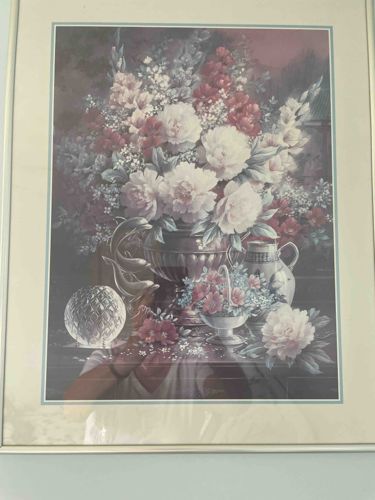
This is a large, vertically oriented framed art print depicting a complex floral still life arrangement. The composition features a lush bouquet of white and red peonies, gladiolus, and delicate baby’s breath presented in a large, fluted silver urn. In the foreground, additional elements include a small white pitcher with floral patterns, a crystal ball or paperweight with a faceted honeycomb pattern, and a small silver compote dish filled with pink flowers. The color palette is dominated by soft pastels, muted reds, and creamy whites set against a moody, dark background, reflective of late 20th-century decorative interior styles, likely the 1980s or 1990s. The artwork is housed under glass and is set within a triple matting—a wide cream outer mat, a thin teal middle accent mat, and a white inner mat. The frame is a slender, metallic gold or champagne-colored finish. Regarding condition, there is a visible reflection in the glass, but the print itself appears well-preserved within its housing. The framing shows standard age-appropriate wear with no obvious structural damage. No visible artist signature is discernable from this distance, indicating it is likely a mass-produced decorative print intended for home decor rather than an original painting or a limited edition lithograph.
AI Appraisal Report

·AI can make mistakes·Verify before acting
I have conducted a visual inspection of the framed floral still life print. The piece is a classic example of late 20th-century mass-market home decor, consistent with the aesthetic trends of the 1980s and 1990s. The composition features a traditional fluted urn with peonies and gladiolus, utilizing a triple-matting technique (cream, teal, and white) housed in a gold-toned metallic frame. Condition and Authenticity: Based on visual analysis, the item is a commercial offset lithograph rather than an original painting or a limited-edition strike. No artist signature is visible, which confirms its status as a high-volume decorative accessory. The frame and mats appear structurally sound, though there is minor surface wear on the metallic finish. Market Conditions: The market for large-scale floral prints of this era is currently saturated. While the quality of the framing is professional, these items typically sell through secondary local markets such as estate sales or thrift shops. Demand is limited as current interior design trends favor contemporary or minimalist art. Limitations: This appraisal is based strictly on photographic evidence. A physical inspection would be required to examine the paper for watermarks, verify if there is acid-burning on the mats, and check the backing for manufacturer labels (e.g., Home Interior & Gifts, Inc.). Because this is a mass-produced decorative print, provenance and scientific testing are unnecessary; however, removing the dust cover to inspect the print's edge could confirm the printing process (e.g., halftone dots vs. continuous tone). The value resides almost entirely in the framing materials rather than the artwork itself.

Get your items appraised

Instant estimates of your treasures with AI-powered appraisals

Browse More Appraisals