AI estimate as of August 1, 2025 · verify with a professional before acting
AI-Generated · Verify before acting
Everything on this page is generated by AI for informational purposes only. AI can make mistakes — the AI may misidentify items or misattribute them (artist, maker, brand, designer, origin, era). This is not an official valuation and should not be used for insurance, sale, tax, estate, legal, or lending purposes — or any decision requiring a certified appraisal. It is not an authoritative claim about any person, brand, or rights holder — do not share or rely on it as a factual statement about a third party. Always consult qualified professionals before making financial decisions.
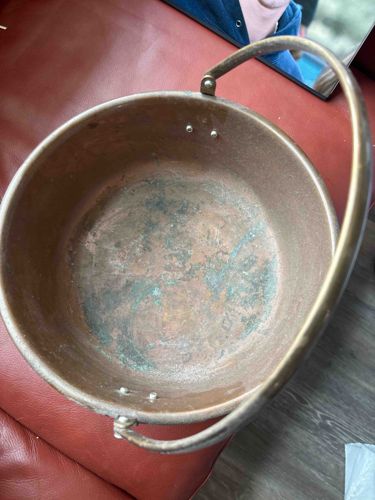
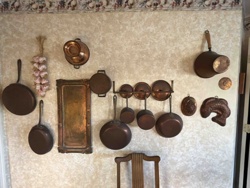
This item is a vintage copper pot or basin, likely used for cooking or general household purposes. It features a rounded, bowl-like shape with a flared rim. The primary material is copper, evident from its characteristic reddish-brown color, which has developed a significant and varied patination. The exterior and interior surfaces show areas of deep reddish-brown, alongside extensive green and blue verdigris, particularly concentrated on the bottom interior. This verdigris indicates a long period of oxidation and exposure to moisture, suggesting considerable age or prolonged use. The pot is equipped with a single, semi-circular brass or bronze handle, attached to the pot body at two points on opposite sides. The handle appears to be solidly riveted in place, with two visible rivets on each side securing the handle mounts to the body of the pot. The handle itself has a smoother, slightly more polished appearance compared to the pot's body, hinting at a different alloy or less severe patination due to handling. The construction appears robust, with visible seams or joints indicating hand-hammered or hand-formed copper, a hallmark of traditional craftsmanship. There are no obvious dents or major structural damages, but the surface exhibits numerous scratches, scuffs, and areas of discoloration consistent with extensive use and age. The quality of craftsmanship appears high, with sturdy riveting and a functional design. While no specific maker's marks or signatures are discernible from the image, the style and heavy patination suggest it could date from the late 19th to early 20th century.
AI Appraisal Report
Upon examining the provided image of this Vintage Copper Pot with Single Handle, I assess its condition as fair to good, exhibiting significant signs of age and use. The extensive verdigris, particularly concentrated on the interior, confirms its vintage nature and long-term exposure to the elements or moisture. While this patination adds to its character and authenticity, some might view it as requiring significant cleaning if intended for display without the rustic charm. The single, semi-circular brass or bronze handle appears securely riveted, indicating robust construction. I observe no major structural damage or significant dents, which speaks to its durability. The visible seams suggest traditional, hand-hammered craftsmanship, consistent with early 20th-century or even late 19th-century production.
Authenticity, based purely on visual inspection, seems high given the consistent wear and material characteristics. However, without physical examination, I cannot definitively verify the exact alloy composition of the copper or handle, nor can I confirm if any repairs or alterations have been made. In-person examination would allow for tactile inspection of the surface, assessment of weight, and clearer identification of manufacturing techniques (e.g., hand-hammering marks). Provenance documentation would be crucial for verifying its age and origin. Scientific testing, like XRF analysis, could confirm metal composition and assist in dating.
Market conditions for vintage copper cookware are generally stable, with a niche but dedicated collector base. Items with strong patination like this appeal to those seeking authentic, rustic decor. Comparables often include similar hand-hammered copper pots, frequently found at antique markets or specialty online retailers. The demand is moderate, driven by interior designers and collectors of early kitchenware. Its rarity is moderate; while many copper pots exist, one with this specific handle style and level of authentic patination is less common than mass-produced pieces. Factors positively impacting value include its presumed age, robust construction, and authentic patination. The lack of discernible maker's marks slightly limits value compared to a signed piece from a renowned artisan. Given these factors, I estimate its appraisal value within the range provided.