Vintage Mechanical Spiral Push Whisk
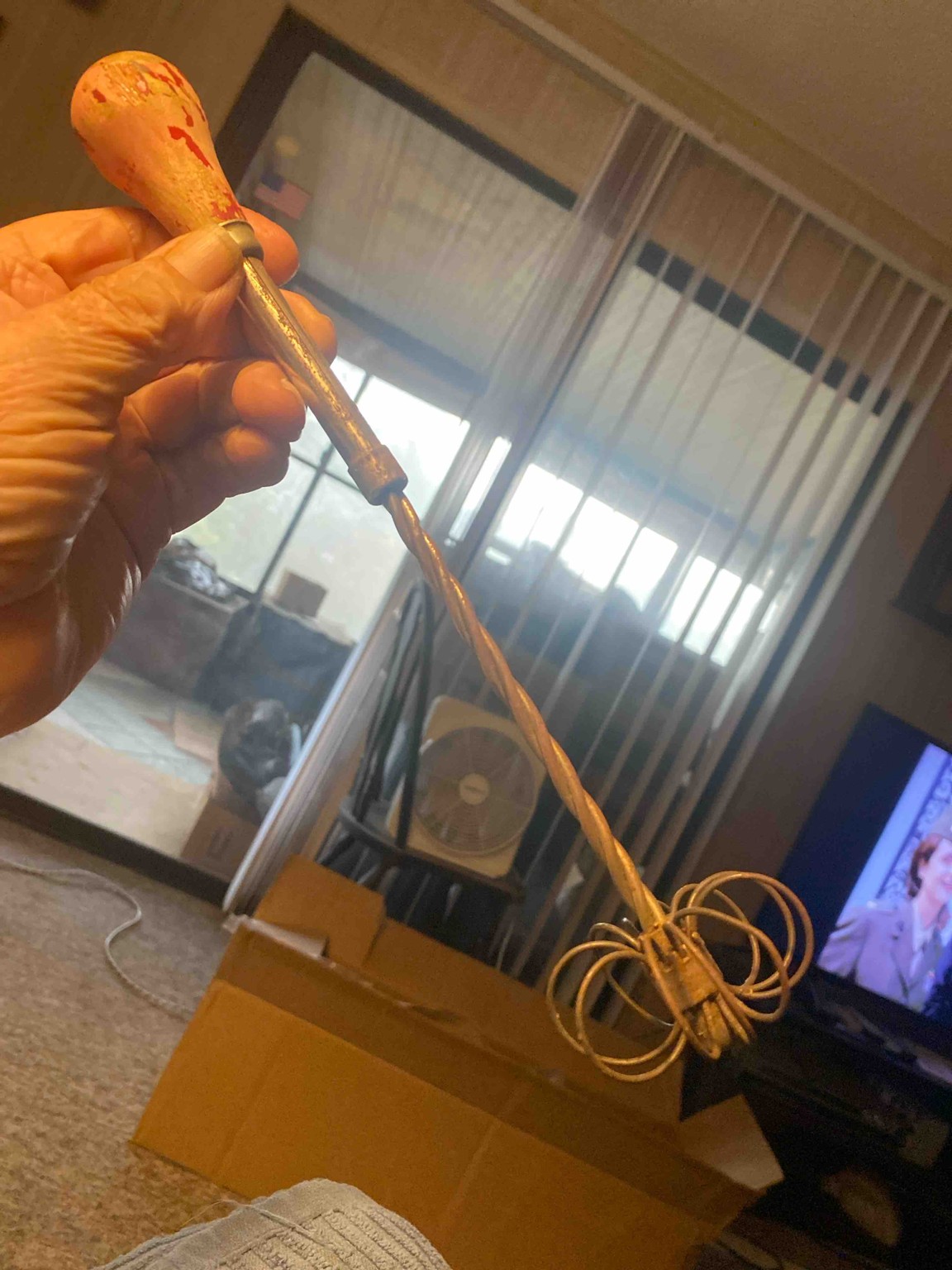
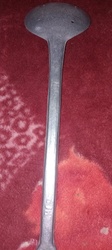
This is a vintage mechanical spiral-action kitchen whisk, approximately 10 to 12 inches in length. It features a bulbous, hand-turned wooden handle that shows remnants of red and pink paint or stain, suggesting a mid-20th-century origins, likely between the 1940s and 1960s. The tool operates using an Archimedes-screw principle; a central metal shaft is twisted into a sharp spiral which, when pushed downwards, causes the whisking head to rotate rapidly. The whisking head consists of multiple interlocking loops of thick steel wire, designed for whipping light liquids or mixing small batches of batter. The metal components show significant age-related patina, including surface tarnish and light oxidation across the shaft and whisk head. The wooden handle exhibits heavy wear, with the finish mostly worn away through use and age, revealing a light-colored natural grain underneath. There are no clearly visible maker's marks or modern stamps, typical of mass-produced housewares of that era. The construction represents a functional, utilitarian design aimed at durability and manual efficiency before electric mixers became ubiquitous in home kitchens.
AI-Generated Appraisal Disclaimer
Estimated Value
$15 - $25
Basic Information
Category
Vintage Kitchenware and Utensils
Appraised On
April 8, 2026
Estimated Value
$15 - $25
Item Description
This is a vintage mechanical spiral-action kitchen whisk, approximately 10 to 12 inches in length. It features a bulbous, hand-turned wooden handle that shows remnants of red and pink paint or stain, suggesting a mid-20th-century origins, likely between the 1940s and 1960s. The tool operates using an Archimedes-screw principle; a central metal shaft is twisted into a sharp spiral which, when pushed downwards, causes the whisking head to rotate rapidly. The whisking head consists of multiple interlocking loops of thick steel wire, designed for whipping light liquids or mixing small batches of batter. The metal components show significant age-related patina, including surface tarnish and light oxidation across the shaft and whisk head. The wooden handle exhibits heavy wear, with the finish mostly worn away through use and age, revealing a light-colored natural grain underneath. There are no clearly visible maker's marks or modern stamps, typical of mass-produced housewares of that era. The construction represents a functional, utilitarian design aimed at durability and manual efficiency before electric mixers became ubiquitous in home kitchens.
Related Tags
Get Your Items Appraised
Instant estimates of your treasures with AI-powered instant appraisals