AI Appraisal Estimate

AI-generated estimates · not official valuations

From the user

What was submitted

Photo and notes provided by the user — not generated by AI

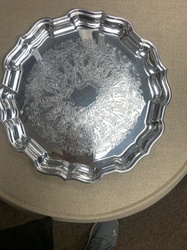
Submitted item photo
Submitted photo · June 15, 2026

User's notes

No additional notes provided.

AI analysis below

AI appraisal

AI analysis & estimate

AI-Generated · Verify before acting

Everything below is generated by AI for informational purposes only. AI can make mistakes — the AI may misidentify items or misattribute them (artist, maker, brand, designer, origin, era). This is not an official valuation and should not be used for insurance, sale, tax, estate, legal, or lending purposes — or any decision requiring a certified appraisal. It is not an authoritative claim about any person, brand, or rights holder — do not share or rely on it as a factual statement about a third party. Always consult qualified professionals before making financial decisions.

Read the full disclaimer

AI Identification

·Not independently authenticated·Verify before acting

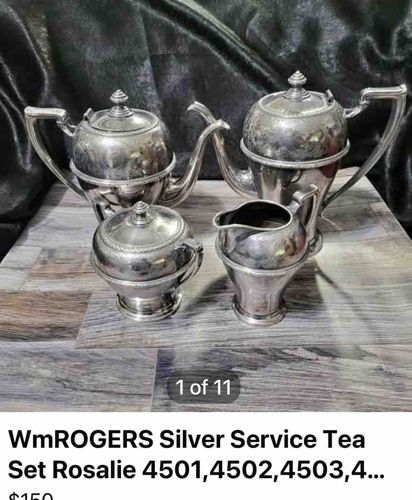
Wm. Rogers Silver Plate Tea and Coffee Service Set, Rosalie Pattern

Antique and Vintage Silver-Plated Holloware

AI Estimated Value

·Not an official valuation·Verify before acting

$100.00 - $175.00

As of June 15, 2026

AI Item Analysis

·AI can make mistakes·Verify before acting
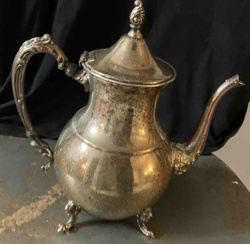
This is a vintage four-piece silver-plated tea and coffee service set manufactured by Wm. Rogers (a brand of International Silver). The set includes a coffee pot, a teapot, a lidded sugar bowl, and a creamer. Each piece is crafted in the 'Rosalie' pattern, characterized by its elegant, rounded forms with a cinched midsection and tapered pedestal bases. The design features decorative chased floral or scrolling bands around the circumference of the bodies and lids. The pot handles are angular with thumb rests, and the spouts are long and gracefully curved. The lids are topped with stepped, tiered finials. Based on the pattern and style, this set likely dates from the mid-20th century, approximately 1940-1960. The construction is silver plate over a base metal, likely brass or copper. Regarding condition, the set exhibits significant surface oxidation and heavy tarnish throughout, particularly visible on the upper portions and lids. There are signs of minor surface scratching and 'silver loss' or pitting where the plating may have worn thin over time. No major dents or structural repairs are immediately visible in the provided image. The craftsmanship represents a mid-tier commercial silver plate production intended for elegant domestic use.
AI Appraisal Report

·AI can make mistakes·Verify before acting
Based on my visual examination of the four-piece Wm. Rogers 'Rosalie' tea and coffee service, I have determined this is a mid-20th-century silver-plated set manufactured under the International Silver Company umbrella. The 'Rosalie' pattern is a classic example of mid-market American holloware, featuring the characteristic chased floral banding and tiered finials typical of the 1940s-1950s aesthetic. The set's condition is a primary factor in its valuation. There is significant atmospheric oxidation and heavy sulfur tarnish. Most concerning are the areas of apparent 'silver loss' or 'bleeding,' where the base metal is beginning to show through the silver electroplate. This deterioration, combined with the lack of a matching serving tray, limits the set to a decorative or 'entry-level collector' tier. In the current secondary market, vintage silver plate is in high supply and low demand compared to sterling silver. High-end collectors typically bypass plated sets unless they are by prestige makers like Christofle or Elkington. Market comparables for complete Rogers sets in similar condition consistently realize between $100 and $175 at provincial auctions or via online marketplaces. This valuation assumes no deep structural pitting or hidden repairs to the handles. Limitations to this appraisal: This assessment is based solely on digital images. I cannot definitively verify the base metal composition or the depth of the plating without physically testing for 'EPBM' or 'EPNS' hallmarks. A physical inspection would be required to check for 'leakers'—pinhole corrosion in the seams—and to determine if the tarnish has reached a level associated with permanent etching of the surface, which would further devalue the set.

Get your items appraised

Instant estimates of your treasures with AI-powered appraisals

Browse More Appraisals