AI estimate as of September 25, 2026 · verify with a professional before acting
AI-Generated · Verify before acting
Everything on this page is generated by AI for informational purposes only. AI can make mistakes — the AI may misidentify items or misattribute them (artist, maker, brand, designer, origin, era). This is not an official valuation and should not be used for insurance, sale, tax, estate, legal, or lending purposes — or any decision requiring a certified appraisal. It is not an authoritative claim about any person, brand, or rights holder — do not share or rely on it as a factual statement about a third party. Always consult qualified professionals before making financial decisions.
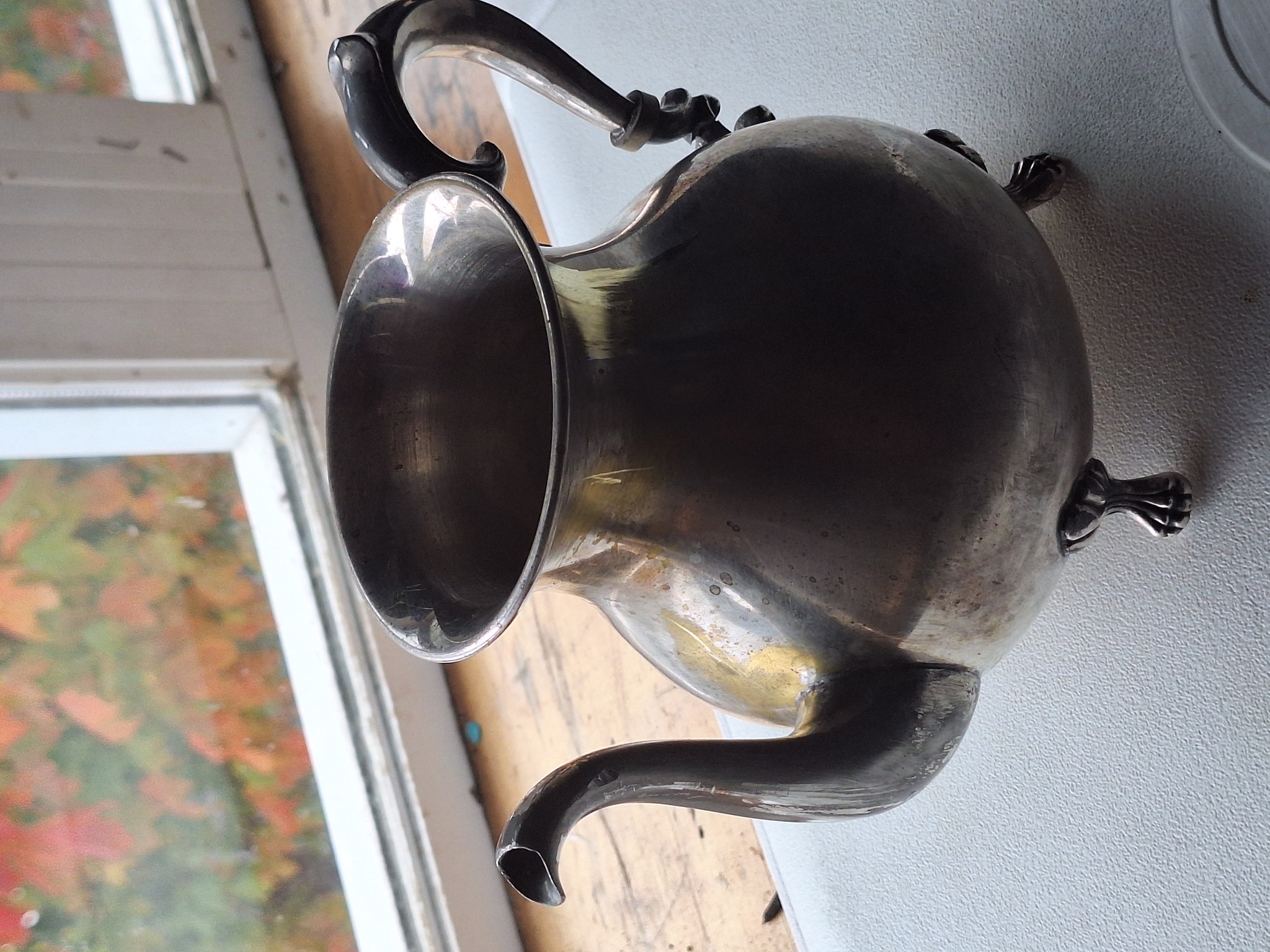
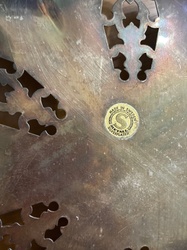
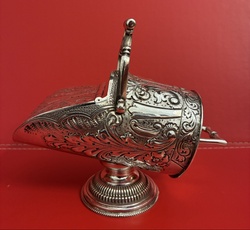
This is a metal hollowware piece, specifically a teapot or hot water pot, featuring a bulbous body, a flared circular rim opening at the top, a curved pouring spout, and an opposing handle that appears to have black insulators or a dark finish. The vessel is supported by three small, ornate cabriole or scroll-shaped feet attached to the rounded lower body. The surface shows a dull, tarnished metallic sheen with visible areas of oxidation, dark tarnish spots, and some yellowish discoloration or wear to the plating, revealing underlying base metal or wear patterns particularly around the spout and handle joints. There are no clearly legible maker's marks, hallmarks, or stamps visible in this angle of the photograph. The design and form display classic Victorian or Edwardian stylistic elements, suggesting it could be a 19th- or early 20th-century piece, though the exact age and manufacturing origin remain unverified without physical inspection or detailed close-ups of any base markings. The identification rests purely on visual form and construction characteristics typical of vintage silver-plated tea service items.
AI Appraisal Report
Based on what I can see in the photograph, this metal hollowware piece exhibits stylistic elements consistent with a 19th- or early 20th-century Victorian or Edwardian silver-plated teapot or hot water pot. The vessel features a bulbous body, a flared circular rim, a curved pouring spout, an opposing handle with dark insulators, and three small cabriole or scroll-shaped feet. The surface displays a dull, tarnished metallic sheen with visible oxidation, tarnish spots, and wear to the plating near the spout and handle joints. I can't verify from a photo whether the underlying metal is silver-plated nickel silver, britannia metal, or another alloy, nor can I read any maker's marks or hallmarks from this angle. My valuation assumes the piece is a vintage silver-plated item of the period. General market demand for unbranded or unauthenticated vintage silver-plated hollowware is relatively modest, as these pieces are typically valued more for decorative appeal than precious metal content, since the silver layer is thin. Comparable silver-plated teapots of this aesthetic generally trade in the $75 to $150 range under normal decorative-antiques market conditions. If physical inspection were to reveal that this is a later reproduction, modern replica, or an unmarked piece 'in the style of' a period antique, the value would likely decrease to the $25 to $50 range, serving purely as domestic or decorative object d'art. To properly assess and confirm the age, manufacturing origin, silver purity, and potential maker, one would need an in-person physical examination, careful hallmark and stamp verification under magnification, and potentially professional metallurgical testing or expert appraisal.