AI estimate as of September 16, 2026 · verify with a professional before acting
AI-Generated · Verify before acting
Everything on this page is generated by AI for informational purposes only. AI can make mistakes — the AI may misidentify items or misattribute them (artist, maker, brand, designer, origin, era). This is not an official valuation and should not be used for insurance, sale, tax, estate, legal, or lending purposes — or any decision requiring a certified appraisal. It is not an authoritative claim about any person, brand, or rights holder — do not share or rely on it as a factual statement about a third party. Always consult qualified professionals before making financial decisions.
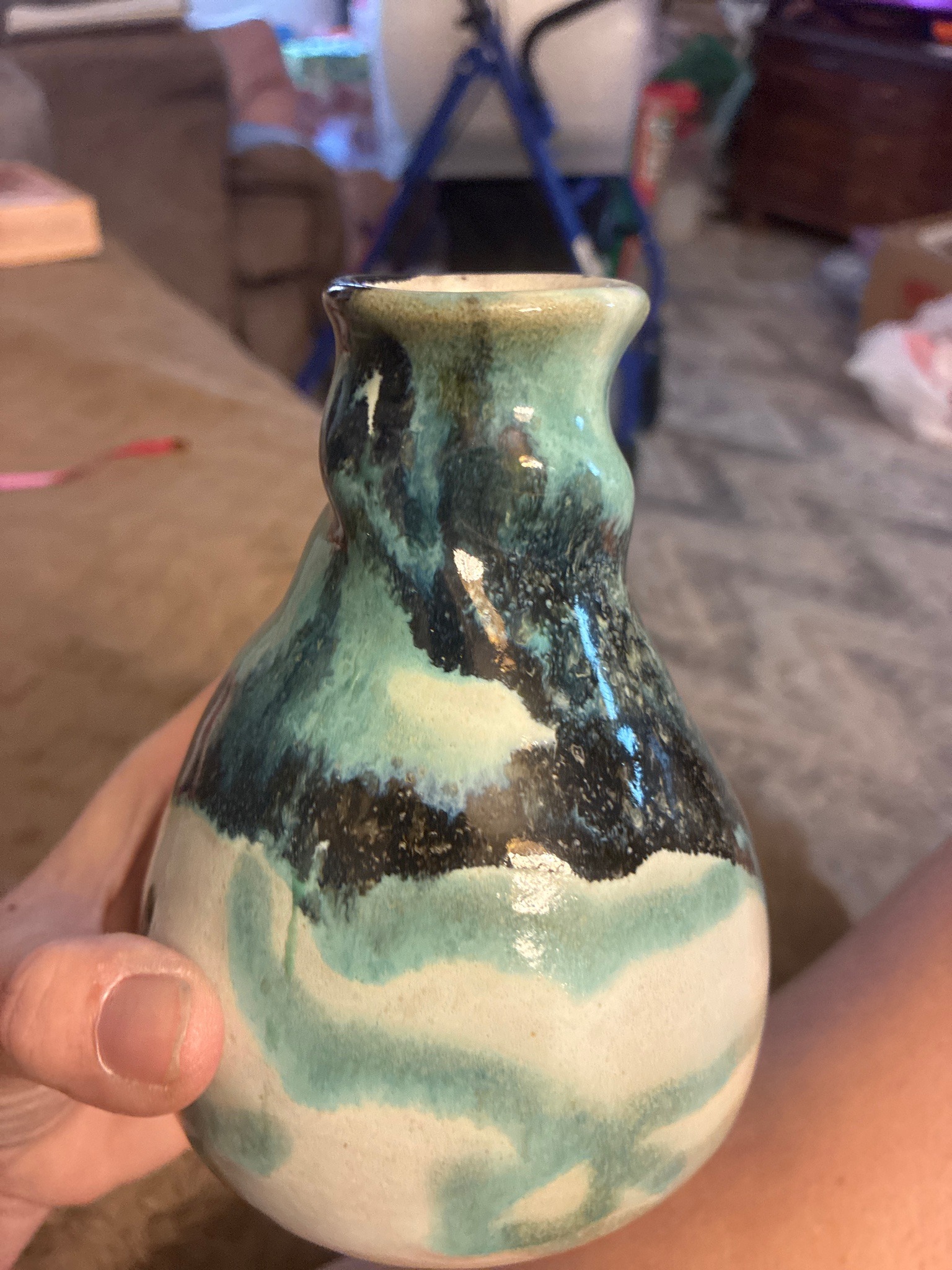
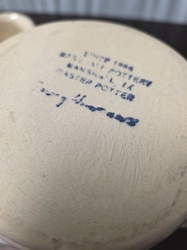
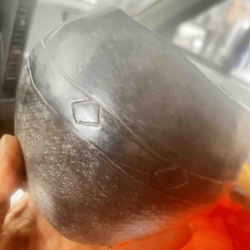
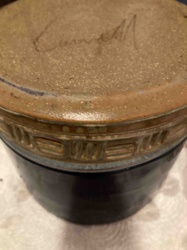
This is a hand-thrown ceramic bud vase featuring an asymmetric, organic bulbous body with an undulating, flared neck. The exterior is coated in a glossy reactive glaze displaying a dynamic palette of mottled turquoise, deep teal, black, and pale cream hues, creating sweeping horizontal and vertical drip patterns reminiscent of mid-century studio pottery. The piece is compact, sized to be comfortably held in one hand, suggesting a miniature vessel or small bud vase format. There are no visible manufacturer stamps, artist signatures, or hallmarks present on the visible portions of the item, and the identification is based entirely on its form and glazing characteristics. The condition appears sound with a high-gloss finish reflecting light evenly across the surface, though minor imperfections inherent to hand-crafted ceramics may be present. The aesthetic strongly aligns with mid-20th-century studio pottery traditions, utilizing expressive earth-toned glazes and unpretentious throwing techniques, though its exact age and origin remain unverified without physical inspection or base markings.
AI Appraisal Report
Based on what I can see in the photograph, this hand-thrown ceramic bud vase exhibits characteristics consistent with mid-20th-century studio pottery, notably its organic form and reactive glaze. However, I cannot verify the exact age, maker, or origin from a photo alone, and I would need physical inspection to confirm the clay body and studio characteristics. There are no visible manufacturer stamps, artist signatures, or hallmarks present on the visible portions of the item, meaning any attribution remains entirely a working assumption based solely on visual style. The surface appears sound with a high-gloss finish reflecting light evenly, though minor hand-crafted imperfections may be present. General market demand for mid-century studio pottery remains steady among collectors of expressive earth-toned ceramics, influencing the estimated value range of $150 to $300 for an item of this type if the assumed mid-century studio attribution is correct. This estimated value depends entirely on authentication; an unauthenticated piece, or one determined to be a later reproduction, replica, copy, or produced merely 'in the style of' mid-century pottery without period provenance, would typically sell for a lower range, closer to $40 to $80. To confirm authenticity, proper attribution, and value, further steps would be needed, including in-person examination by a ceramics specialist, thorough hallmark or base verification, provenance documentation, and potentially scientific testing such as thermoluminescence if age is in question.