AI estimate as of June 8, 2025 · verify with a professional before acting
AI-Generated · Verify before acting
Everything on this page is generated by AI for informational purposes only. AI can make mistakes — the AI may misidentify items or misattribute them (artist, maker, brand, designer, origin, era). This is not an official valuation and should not be used for insurance, sale, tax, estate, legal, or lending purposes — or any decision requiring a certified appraisal. It is not an authoritative claim about any person, brand, or rights holder — do not share or rely on it as a factual statement about a third party. Always consult qualified professionals before making financial decisions.
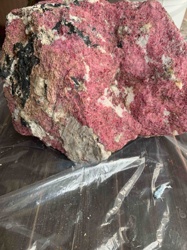
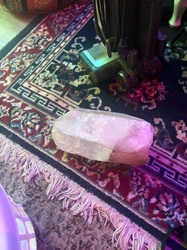
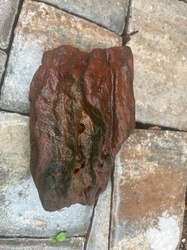
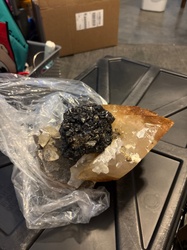
This is an untreated raw specimen of Botryoidal Chalcedony. The specimen is held in a hand, obscuring the full size, but it appears to be a hand-sized piece. The color is predominantly a translucent, milky white to pale yellowish-brown, with areas of opaque white banding. The surface exhibits a distinctive botryoidal texture, characterized by rounded, globular structures resembling bunches of grapes. Some areas show a crystalline or rough texture on the reverse or edges, suggesting it is fresh from a deposit. There are visible inclusions of a darker, possibly reddish-brown mineral, particularly in the rough areas. The luster appears waxy or vitreous in the botryoidal sections. No manufacturing marks, signatures, or specific age beyond its geological formation are discernible. The quality is assessed as good to very good for a natural specimen, showcasing the characteristic botryoidal formation clearly. There are no obvious signs of damage or repair apparent in the image, only natural variations and inclusions. The specimen presents a pleasing aesthetic typical of this mineral form.
AI Appraisal Report
I have examined the provided image of this uncultured, raw Botryoidal Chalcedony specimen. Based on the visual evidence, the specimen appears to be authentic Botryoidal Chalcedony, exhibiting the characteristic globular formations and translucent to opaque banding. Its condition is good to very good for a natural specimen, with the botryoidal texture well-formed and no visible damage or repairs. The presence of rough edges and mineral inclusions suggests it is a natural, untreated find. The size, estimated as hand-sized, is a positive factor, as larger, display-quality specimens are more desirable. Market conditions for attractive, natural mineral specimens like this are generally stable, with demand driven by collectors and enthusiasts. Botryoidal Chalcedony is not exceptionally rare, but well-formed, aesthetically pleasing specimens, particularly in larger sizes, command higher prices. Factors impacting value here include the distinct botryoidal structure, the attractive coloration, and the apparent lack of damage. The inclusions, while natural, slightly detract from overall purity but can also add character. Value assessment based solely on images has limitations; I cannot definitively confirm authenticity, examine the true scale or weight, or identify specific mineral inclusions without physical inspection. Authentication would ideally require in-person examination, potentially provenance documentation if available, and possibly non-destructive scientific testing such as X-ray diffraction to confirm mineral composition and crystallinity. However, based on the visual characteristics as presented, it appears to be a genuine and desirable specimen.