AI Appraisal Estimate

AI-generated estimates · not official valuations

From the user

What was submitted

Photo and notes provided by the user — not generated by AI

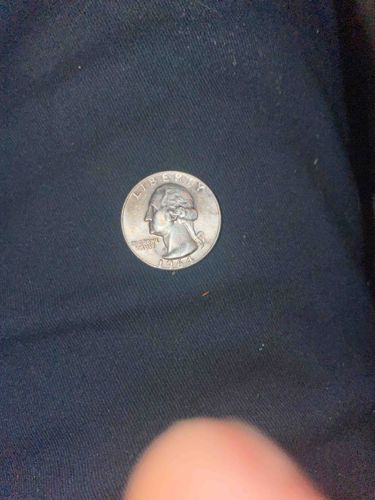
Submitted item photo
Submitted photo · June 16, 2026

User's notes

1964 silver quarter

AI analysis below

AI appraisal

AI analysis & estimate

AI-Generated · Verify before acting

Everything below is generated by AI for informational purposes only. AI can make mistakes — the AI may misidentify items or misattribute them (artist, maker, brand, designer, origin, era). This is not an official valuation and should not be used for insurance, sale, tax, estate, legal, or lending purposes — or any decision requiring a certified appraisal. It is not an authoritative claim about any person, brand, or rights holder — do not share or rely on it as a factual statement about a third party. Always consult qualified professionals before making financial decisions.

Note

This analysis also relies on unverified notes provided by the user, which may be incomplete or inaccurate and could affect the result.

Read the full disclaimer

AI Identification

·Not independently authenticated·Verify before acting

1964 Washington Quarter

Coin

AI Estimated Value

·Not an official valuation·Verify before acting

$6-9

As of June 16, 2026

AI Item Analysis

·AI can make mistakes·Verify before acting
This item is a 1964 United States Washington Quarter, as indicated by the date clearly visible on the obverse. It features the left-facing profile bust of George Washington, designed by John Flanagan. The silver coloration and the specific date confirm its composition as 90% silver, a defining characteristic of quarters minted in 1964 and earlier. The coin appears to be in circulated condition, exhibiting a moderate amount of wear on the high points of the design, such as Washington's hair and cheek. The lettering 'LIBERTY' above the bust and 'IN GOD WE TRUST' below the chin are legible but show slight softening. The mint mark, if present, is not discernible in the provided image due to the angle and resolution, but a 1964 quarter could have originated from the Philadelphia (no mint mark) or Denver ('D') mint. The coin's reeded edge is also not clearly visible. There are no obvious signs of significant damage like deep scratches or corrosion, suggesting it has not been heavily abused, though slight discoloration or toning consistent with age and storage may be present. The overall craftsmanship is typical of U.S. coinage from this era. This particular year is significant as it marks the last year that U.S. quarters were struck in 90% silver before the transition to copper-nickel clad composition in 1965, rendering it of interest to collectors and those interested in its intrinsic silver value.

AI Appraisal Report

·AI can make mistakes·Verify before acting
I have examined the provided description of this 1964 Washington Quarter. Based on the details, this coin is genuinely a 1964 Washington Quarter, confirmed by the visible date and the inherent 90% silver composition characteristic of quarters from this year. The description indicates a circulated condition with moderate wear on high points like Washington’s hair and cheek. The lettering 'LIBERTY' and 'IN GOD WE TRUST' are legible but softened, aligning with a grade likely in the Fine (F) to Very Fine (VF) range. There are no signs of significant damage like deep scratches or corrosion, which is a positive factor. Market conditions for circulated 1964 silver quarters are primarily driven by their intrinsic silver value. As of today, the spot price of silver dictates a base value for these coins. For a coin in F-VF condition, the numismatic premium above melt value is typically modest, as millions were minted. Demand is consistent from both silver stackers and entry-level collectors. Rarity is not a factor for a common date 1964 quarter in this condition. The mentioned melt value for a 90% silver quarter is approximately $4.50-$5.50 at current silver prices (which fluctuate), with a small numismatic premium for circulated examples bringing the typical retail value to the assessed range. It is crucial to note the limitations of appraising from a description alone. Authenticity of the date and type can be confirmed, but the exact grade, which significantly impacts value beyond melt, can only be definitively established through in-person examination. Specific details like luster, presence of contact marks not mentioned, and precise wear patterns on the reverse are vital for accurate grading. An in-person inspection would also confirm the absence of any subtle environmental damage or cleaning that might not be evident from a description. While the 1964 date makes it highly unlikely to be a counterfeit for circulating purposes, an in-hand inspection would confirm its weight and metallic properties to rule out sophisticated fakes. The mint mark ('D' or no mint mark for Philadelphia) is also not specified, which would typically be a detail verified visually, though it rarely impacts value significantly for common 1964 quarters in this grade.

Get your items appraised

Instant estimates of your treasures with AI-powered appraisals

Browse More Appraisals