AI Appraisal Estimate

AI-generated estimates · not official valuations

From the user

What was submitted

Photo and notes provided by the user — not generated by AI

Submitted item photo
Submitted photo · July 10, 2026

User's notes

a. alvarez

AI analysis below

AI appraisal

AI analysis & estimate

AI-Generated · Verify before acting

Everything below is generated by AI for informational purposes only. AI can make mistakes — the AI may misidentify items or misattribute them (artist, maker, brand, designer, origin, era). This is not an official valuation and should not be used for insurance, sale, tax, estate, legal, or lending purposes — or any decision requiring a certified appraisal. It is not an authoritative claim about any person, brand, or rights holder — do not share or rely on it as a factual statement about a third party. Always consult qualified professionals before making financial decisions.

Note

This analysis also relies on unverified notes provided by the user, which may be incomplete or inaccurate and could affect the result.

Read the full disclaimer

AI Identification

·Not independently authenticated·Verify before acting

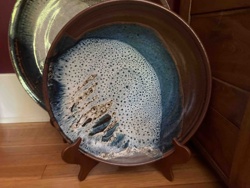
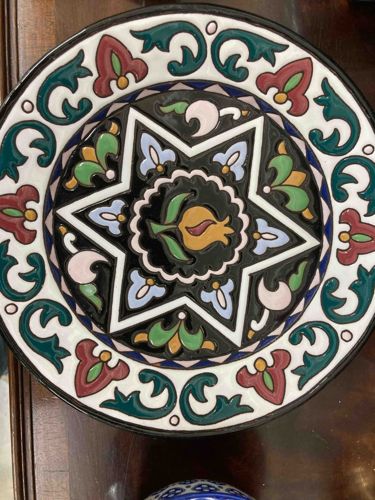
A. Alvarez Cuenca-Style Cuerda Seca Ceramic Plate

Art Pottery / Decorative Ceramics

AI Estimated Value

·Not an official valuation·Verify before acting

$150 - $250

As of July 10, 2026

AI Item Analysis

·AI can make mistakes·Verify before acting
This is a decorative ceramic plate created using the cuerda seca (dry cord) technique, which utilizes raised Manganese or wax lines to separate different colored glazes during firing. The piece is attributed to A. Alvarez, a recognized name in contemporary Spanish art pottery, specifically from the Seville or Toledo regions. Physically, the plate features a central six-pointed star (Star of David) enclosing a stylized pomegranate or floral bud. The color palette is rich and diverse, consisting of emerald green, deep burgundy, mustard yellow, pastel blue, and white, all set against a matte black textured background that mimics the look of traditional Mozarabic or Mudéjar tilework. The craftsmanship is high, evidenced by the precise application of the glazes and the symmetry of the intricate geometric and botanical motifs along the rim. In terms of condition, the plate appears to be in excellent contemporary state with no visible chips, cracks, or crazing. The glossy finish of the colored glazes provides a sharp contrast to the matte black relief, a characteristic hallmark of high-quality Cuenca-style ceramics. The style reflects a neo-Mudéjar influence, drawing on historical Spanish-Islamic architectural and decorative traditions, likely dating from the late 20th century to the early 21st century.
AI Appraisal Report

·AI can make mistakes·Verify before acting
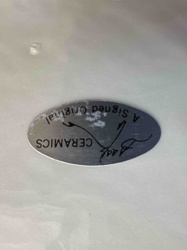
I have virtually examined the A. Alvarez Cuenca-style cuerda seca ceramic plate. The piece demonstrates exceptional technical execution of the 'dry cord' method, characterized by crisp Manganese-line separation and vibrant, well-fired glazes. The condition appears to be excellent, categorized as 'Near Mint,' with no evidence of glaze loss, chips, or thermal crazing that often affects these decorative pieces. The neo-Mudéjar design, specifically the Star of David and pomegranate motif, suggests a specific appeal within the Seville/Toledo souvenir and artisan markets of the late 20th century. Market demand for contemporary Spanish cuerda seca remains steady but is generally capped for specific contemporary makers compared to historical 15th-to-19th-century examples. Comparable sales for A. Alvarez plates range between $125 and $300 depending on size and complexity; this example sits in the middle-to-high end of that range due to its complex geometric symmetry. The value is driven primarily by the high decorative appeal and the signature of a known regional artisan. Limitations: This appraisal is based on photographic evidence only. Visual inspection cannot definitively rule out hairline cracks under the black matte relief or assess the presence of repair. To fully authenticate and finalize this valuation, a physical inspection is required to verify the weight/clay body type and the presence of the incised 'A. Alvarez' mark on the reverse. Provenance documentation, such as the original purchase receipt from a Spanish gallery, would further solidify the valuation. Scientific tests like thermoluminescence are unnecessary for pieces of this era but physical inspection of the foot ring for kiln-spur marks is recommended.

Get your items appraised

Instant estimates of your treasures with AI-powered appraisals

Browse More Appraisals