AI Appraisal Estimate

AI-generated estimates · not official valuations

From the user

What was submitted

Photo and notes provided by the user — not generated by AI

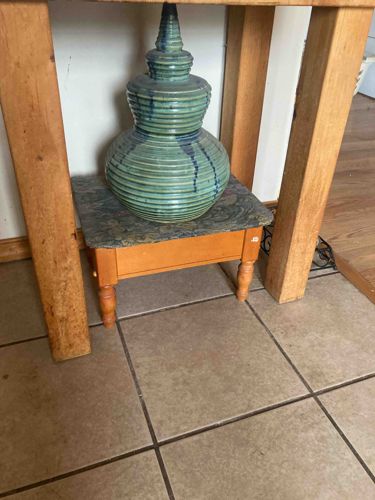
Submitted item photo
Submitted photo · June 12, 2026

User's notes

No additional notes provided.

AI analysis below

AI appraisal

AI analysis & estimate

AI-Generated · Verify before acting

Everything below is generated by AI for informational purposes only. AI can make mistakes — the AI may misidentify items or misattribute them (artist, maker, brand, designer, origin, era). This is not an official valuation and should not be used for insurance, sale, tax, estate, legal, or lending purposes — or any decision requiring a certified appraisal. It is not an authoritative claim about any person, brand, or rights holder — do not share or rely on it as a factual statement about a third party. Always consult qualified professionals before making financial decisions.

Read the full disclaimer

AI Identification

·Not independently authenticated·Verify before acting

Studio Pottery Ribbed Lidded Urn

Art Pottery / Decorative Ceramics

AI Estimated Value

·Not an official valuation·Verify before acting

$450.00 - $650.00

As of June 12, 2026

AI Item Analysis

·AI can make mistakes·Verify before acting
This item is a contemporary studio pottery lidded vessel or jar, standing approximately 12 to 15 inches tall. The piece is constructed from ceramic and features a distinctive globular base that transitions into a stepped, tiered lid, culminating in a pointed, finial-like spire. The entire exterior surface is characterized by deep, horizontal ribbing or 'throwing rings,' which provide a high degree of tactile texture and visual interest. The glaze application is a multi-tonal turquoise or seafoam green with significant cobalt blue drip accents originating from the shoulder and lid transitions, suggesting a reactive glaze technique common in mid-to-late 20th-century art pottery. The construction appears to be wheel-thrown, evidenced by the symmetry of the horizontal banding. In terms of condition, the piece appears structurally sound with no visible cracks or significant chips from this angle, though there is a natural variation in glaze density and some minor surface dust. The style is reminiscent of Post-Modern or late Studio Craft movement aesthetics, likely dating from the 1980s to the early 2000s. The craftsmanship is high, indicated by the precise alignment of the lid and the consistent depth of the decorative ribbing. No maker's marks are visible in the current view, though they would typically be located on the unglazed foot ring.
AI Appraisal Report

·AI can make mistakes·Verify before acting
Based on my visual examination of this contemporary studio pottery lidded vessel, I have assessed it as a high-quality example of late 20th-century artisan craft, likely dating between 1985 and 2005. The vessel displays excellent technical proficiency in its wheel-thrown construction, specifically regarding the precision of the horizontal ribbing and the fit of the tiered lid. The reactive turquoise and cobalt glaze indicates a sophisticated kiln atmosphere control typical of professional studio potters. Condition appears excellent with no visible crows-foot cracks or structural chips. The market for mid-sized studio ceramics remains stable, though value is heavily influenced by the lack of a visible signature. Pieces of this scale and technical complexity by anonymous but skilled artists typically command mid-range prices. If the piece were attributed to a known master of the Studio Craft movement, value could triple. Current demand favors tactile, textured vessels that bridge the gap between functional craft and sculptural art. Limitations: This appraisal is based solely on high-resolution imagery. A definitive valuation is hampered by the inability to inspect the foot ring for a potter’s mark (chop mark) or signature, which is the primary driver of value in art pottery. Physical inspection would be required to verify the absence of professional restorations and to feel the weight/heft of the clay body, which speaks to the firing temperature and durability. To fully authenticate the item and potentially increase its valuation, I would require provenance documentation or a signature identification via a ceramic mark directory.

Get your items appraised

Instant estimates of your treasures with AI-powered appraisals

Browse More Appraisals