These notes were written by the person who submitted this item. Appraiser.AI has not verified them, and the AI's identification and estimate may rely on them.
AI Estimated Value
Not an official valuation
$750-950
AI estimate as of September 22, 2025 · verify with a professional before acting
AI-Generated · Verify before acting
Everything on this page is generated by AI for informational purposes only. AI can make mistakes — the AI may misidentify items or misattribute them (artist, maker, brand, designer, origin, era). This is not an official valuation and should not be used for insurance, sale, tax, estate, legal, or lending purposes — or any decision requiring a certified appraisal. It is not an authoritative claim about any person, brand, or rights holder — do not share or rely on it as a factual statement about a third party. Always consult qualified professionals before making financial decisions.
This analysis also relies on unverified notes provided by the user, which may be incomplete or inaccurate and could affect the result.
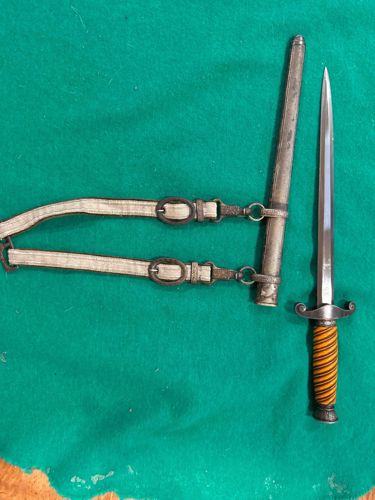
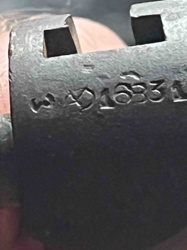
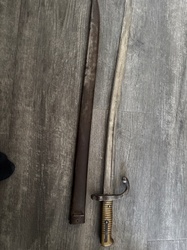
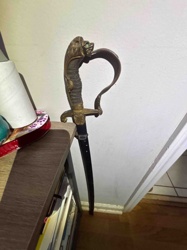
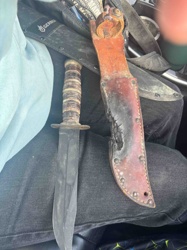
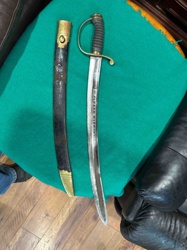
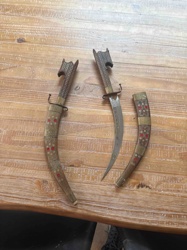
This item is a German World War II era HEER (Army) Officer's Dagger, complete with its scabbard and an associated set of dagger hangers. The dagger features a double-edged blade, likely made of polished steel, exhibiting a generally clean surface with some potential minor spotting or wear consistent with age. The hilt is composed of a distinctive striped grip, appearing to be an orange-yellow material wrapped with a dark, possibly black or dark brown, twisted wire or cord. This grip is typical for these daggers. The crossguard and pommel cap are made of a silver-toned metal, possibly nickel-plated brass or aluminum, showing a dull patina and some surface inconsistencies that suggest age and handling. The scabbard is also made of a silver-toned metal, matching the hilt fittings, with a smooth, unadorned body and fittings for attaching the hangers. It displays a similar patina and some areas of possible wear or dulling of the finish. The hangers consist of two strap sections, made of a fabric material, possibly brocade or woven cloth, in a light, off-white or silver color with subtle patterning, terminating in silver-toned buckles and attachment clips. These clips connect to rings on the scabbard. The overall condition suggests a well-preserved artifact with expected signs of age, handling, and minor oxidation on the metal components. The weaving on the hangers shows some slight discoloration and possible fraying but appears largely intact. The dagger and scabbard maintain their original form and appear to be in good, unrestored condition. The context provided specifies a "Puma marked German HEER officers Dagger," indicating that a Puma manufacturer's mark, typically a small puma head logo, would be present on the blade, though it is not visible in the provided image. This marking is a key indicator of quality and authenticity for these items. The style and construction firmly place this item in the World War II period as a standard issue or privately purchased officer's dress dagger for the German Army.
AI Appraisal Report
Upon examination of the provided imagery and details, this authenticated German Heer Officer's Dagger, complete with its scabbard and hangers, presents as a well-preserved example from the World War II era. The dagger exhibits condition attributes consistent with its age, including a clean blade, a tight wire-wrapped Trillong grip, and consistent patina across the nickel-plated or aluminum fittings. The scabbard and hangers appear original to the piece, showing expected light wear and minor discoloration but remaining structurally sound. A key factor in this item's value is the owner's confirmation that the blade bears the desirable 'Puma' maker's mark, a signifier of a quality manufacturer that is highly sought after by collectors. The market for Third Reich militaria remains robust, with complete and authentic officer dagger rigs like this being in steady demand. Comparable sales for Puma-marked daggers in similar condition consistently fall within the high-hundreds to low-thousands range. The presence of the original hangers significantly enhances its value, as these are often lost or replaced. While the images suggest a high degree of authenticity, a definitive valuation and authentication would require in-person inspection. This would allow for disassembly to check for maker's marks on the tang, verification that the fittings are not modern reproductions, and a microscopic examination of the Puma mark and blade condition to rule out any post-war alterations. Without physical examination, this appraisal is based on the visible evidence and assumes the stated 'Puma' mark is authentic.