AI Appraisal Estimate

AI-generated estimates · not official valuations

From the user

What was submitted

Photo and notes provided by the user — not generated by AI

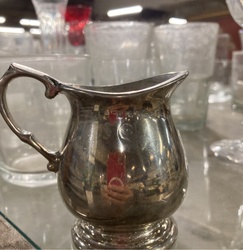
Submitted item photo
Submitted photo · June 20, 2026

User's notes

No additional notes provided.

AI analysis below

AI appraisal

AI analysis & estimate

AI-Generated · Verify before acting

Everything below is generated by AI for informational purposes only. AI can make mistakes — the AI may misidentify items or misattribute them (artist, maker, brand, designer, origin, era). This is not an official valuation and should not be used for insurance, sale, tax, estate, legal, or lending purposes — or any decision requiring a certified appraisal. It is not an authoritative claim about any person, brand, or rights holder — do not share or rely on it as a factual statement about a third party. Always consult qualified professionals before making financial decisions.

Read the full disclaimer

AI Identification

·Not independently authenticated·Verify before acting

Vintage Silver-Plated Pedestal Champagne Bucket / Trophy Urn

Antique/Vintage Silverplate Holloware

AI Estimated Value

·Not an official valuation·Verify before acting

$45.00 - $75.00

As of June 20, 2026

AI Item Analysis

·AI can make mistakes·Verify before acting
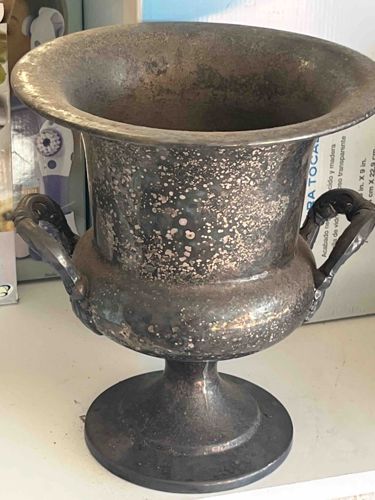
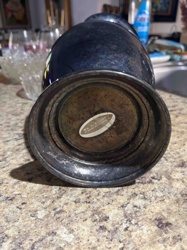
This item is a vintage silver-plated champagne or ice bucket designed in a classic urn or trophy style with a flared rim and a pedestal base. The body features a bulbous lower section that tapers into a wide, cylindrical neck ending in a significant outward flare. It is equipped with two decorative scrolled handles attached to the sides, which appear to have cast or embossed leaf-like detailing at the attachment points. The piece is constructed from a base metal, likely brass or copper, which has been silver-plated. The condition shows significant heavy oxidation and tarnish across the entire exterior and interior surfaces, resulting in a dark, mottled patina and loss of the original bright silver finish. There is evidence of pitting and 'bleed through' where the base metal is beginning to show through the silver layer, particularly on the neck and body. The base is circular and stepped, providing stability for the vessel. While no specific maker's marks are visible in the provided image (typically found on the base), the style is characteristic of late 19th-century to mid-20th-century decorative holloware. The overall craftsmanship suggests a mass-produced but formal utilitarian piece designed for high-end dining or service environments. There are no structural dents or deep scratches visible, but the surface degradation is extensive, requiring professional cleaning if a high-shine finish is desired.
AI Appraisal Report

·AI can make mistakes·Verify before acting
Based on my visual examination of this vintage silver-plated trophy-style vessel, the item exhibits classic late 19th to mid-20th-century silhouettes common in hospitality and domestic service. Upon inspection, the condition is the primary factor impacting its current market value. I observe heavy oxidation, significant tarnishing, and 'bleeding'—where the silver plating has worn thin to reveal the base metal substrate. This suggests a history of frequent polishing or prolonged exposure to moisture. The market for silver-plated holloware of this type is currently saturated. Unlike sterling silver, which retains intrinsic bullion value, silver-plated items rely entirely on aesthetic appeal and utility. In its current 'as-is' state, the item appeals primarily to buyers seeking a 'shabby chic' or distressed antique look. If professionally replated, the cost of service would likely exceed the final market value of the piece. Comparables for mass-produced silver-plate urns from makers like Sheridan, Reed & Barton, or International Silver in similar weathered condition typically sell within the $40 to $80 range at estate auctions or secondary markets. Limitations: This appraisal is based solely on digital imagery. I cannot verify the presence of a maker's mark or confirm the absence of structural repairs hidden by tarnish. A physical inspection is required to determine the base metal (brass vs. white metal) and to check for lead-solder repairs. To fully authenticate the period and origin, I would need to examine the underside for hallmarks and obtain any available provenance documentation regarding its manufacture or original service environment.

Get your items appraised

Instant estimates of your treasures with AI-powered appraisals

Browse More Appraisals