AI Appraisal Estimate

AI-generated estimates · not official valuations

From the user

What was submitted

Photo and notes provided by the user — not generated by AI

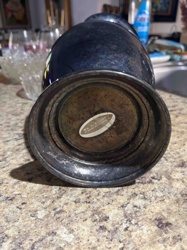
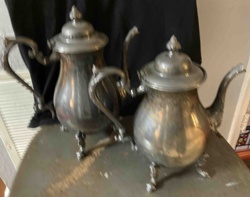
Submitted item photo
Submitted photo · June 15, 2026

User's notes

Van Bergh quadruple plate silver

AI analysis below

AI appraisal

AI analysis & estimate

AI-Generated · Verify before acting

Everything below is generated by AI for informational purposes only. AI can make mistakes — the AI may misidentify items or misattribute them (artist, maker, brand, designer, origin, era). This is not an official valuation and should not be used for insurance, sale, tax, estate, legal, or lending purposes — or any decision requiring a certified appraisal. It is not an authoritative claim about any person, brand, or rights holder — do not share or rely on it as a factual statement about a third party. Always consult qualified professionals before making financial decisions.

Note

This analysis also relies on unverified notes provided by the user, which may be incomplete or inaccurate and could affect the result.

Read the full disclaimer

AI Identification

·Not independently authenticated·Verify before acting

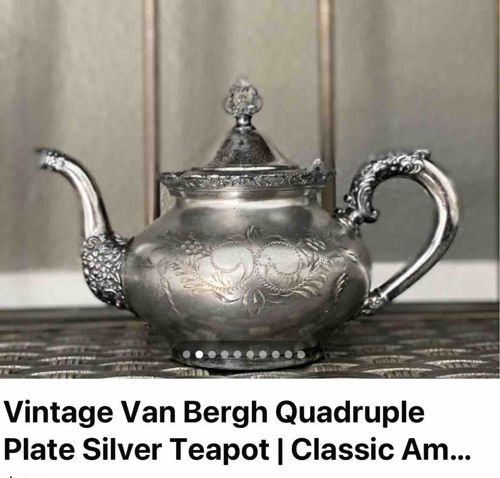
Van Bergh Quadruple Plate Silver Teapot

Antique Silverware / Silverplate Holloware

AI Estimated Value

·Not an official valuation·Verify before acting

$45.00 - $75.00

As of June 15, 2026

AI Item Analysis

·AI can make mistakes·Verify before acting
This is a vintage teapot produced by the Van Bergh Silver Plate Co. of Rochester, New York, likely dating from the late 19th to early 20th century. The piece is constructed from base metal with a 'quadruple plate' silver finish, a high-quality process during the Victorian and Edwardian eras that involved applying four times the standard amount of silver. The teapot features a globular, compressed body with a pedestal base. It is heavily ornamented with Victorian-style aesthetic elements including repoussé and chased floral scrolls on the main body. The spout and C-scroll handle are adorned with high-relief acanthus and floral motifs. The hinged lid is topped with an ornate finial consistent with the period's taste for decorative excess. Regarding condition, the piece displays a heavy surface tarnish and significant patina throughout, with some visible 'bleeding' where the base metal may be showing through the silver plating (common in quadruple-plated items of this age). There are visible surface scratches and minor pitting, but the structural integrity appears sound with the handle and spout securely attached. The craftsmanship is typical of American silverplate manufacturing of the 1890-1910 period, emphasizing elaborate ornamentation and durable construction.
AI Appraisal Report

·AI can make mistakes·Verify before acting
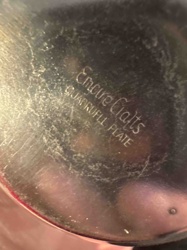
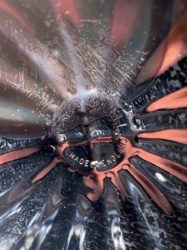
I have examined the digital representation of the Van Bergh Quadruple Plate Silver Teapot. Based on the manufacturer’s mark from Rochester, NY, and the high-relief floral ornamentation, I estimate the piece was manufactured between 1892 and 1915. The 'quadruple plate' designation confirms this is a base metal item (likely Britannia metal) coated in silver, not solid sterling. Visually, the piece is authentic to its period, displaying the 'bleeding' characteristic where the base metal is visible through the worn silver. This wear significantly impacts the retail value, as silverplate collectors generally seek items with the plating intact. The current market for late Victorian silverplate holloware is soft. These items were mass-produced in large quantities at the turn of the century, and modern buyer preferences have shifted away from high-maintenance plated items toward minimalist styles or solid sterling. Similar Van Bergh teapots in polished condition typically sell for under $100. The heavy oxidation and pitting observed here further limit the range, as professional replating costs would far exceed the market value of the object. Limitations of this appraisal: Because I am observing this through a digital image, I cannot verify the presence of lead-solder repairs or internal corrosion. A full authentication would require an in-person physical inspection to verify the weight/density, a professional polish to determine the extent of the base metal exposure, and an examination of the interior for leaks. No scientific testing is required for silverplate, but a provenance check (bills of sale or family journals) could potentially link it to a specific household, though this rarely increases value for non-sterling plated ware.

Get your items appraised

Instant estimates of your treasures with AI-powered appraisals

Browse More Appraisals