AI Appraisal Estimate

AI-generated estimates · not official valuations

From the user

What was submitted

Photo and notes provided by the user — not generated by AI

Submitted item photo
Submitted photo · June 10, 2026

User's notes

No additional notes provided.

AI analysis below

AI appraisal

AI analysis & estimate

AI-Generated · Verify before acting

Everything below is generated by AI for informational purposes only. AI can make mistakes — the AI may misidentify items or misattribute them (artist, maker, brand, designer, origin, era). This is not an official valuation and should not be used for insurance, sale, tax, estate, legal, or lending purposes — or any decision requiring a certified appraisal. It is not an authoritative claim about any person, brand, or rights holder — do not share or rely on it as a factual statement about a third party. Always consult qualified professionals before making financial decisions.

Read the full disclaimer

AI Identification

·Not independently authenticated·Verify before acting

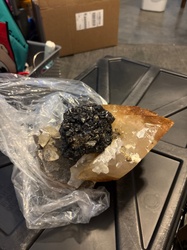
Pyrite Cluster

Mineral Specimen

AI Estimated Value

·Not an official valuation·Verify before acting

$40 - $70

As of June 10, 2026

AI Item Analysis

·AI can make mistakes·Verify before acting
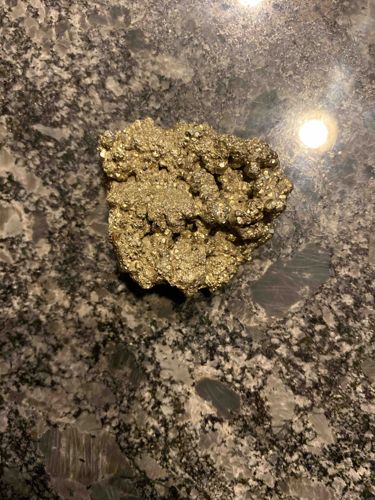
The item is a natural mineral specimen identified as a pyrite cluster. It presents as an irregularly shaped, rugged mass composed of numerous small, interlocking pyrite crystals. The overall color is a bright, metallic brassy yellow, characteristic of iron pyrite (FeS2), often referred to as 'fool's gold.' The surface is highly textured, with a granular, crystalline aggregate appearance. Individual crystals appear to be rather small, likely cubic or pyritohedral forms, but the resolution of the image does not permit precise identification of crystal habits. Many individual crystal faces reflect light, creating a sparkling and lustrous effect, though some areas appear slightly dulled or oxidized, suggesting a natural patina consistent with pyrite. There are visible crevices and depressions within the cluster, indicating its natural formation and unrefined state. The specimen does not show any signs of artificial polishing or shaping. No discernible maker's marks, signatures, or stamps are present, as expected for a natural mineral specimen. The item's estimated age is geological, having formed over millions of years. It appears to be generally intact with no obvious signs of recent damage like chipping or breakage, though the natural rough texture could obscure minor flaws. The piece is a fine example of a raw mineral formation, valued for its aesthetic appeal and geological interest rather than its intrinsic material value.

AI Appraisal Report

·AI can make mistakes·Verify before acting
I have examined the provided image of this pyrite cluster. Based on the visual evidence, the specimen appears to be an authentic, natural pyrite cluster, commonly known as 'fool's gold.' The characteristic brassy-yellow metallic luster, granular crystalline aggregate, and irregular form are all consistent with naturally occurring iron pyrite. The condition appears to be good, displaying no obvious signs of recent damage such as chipping or breakage; the rough texture is inherent to its natural formation. From a market perspective, pyrite clusters of this apparent size and quality are quite common. While aesthetically pleasing due to its sparkling luster, individual crystals appear to be small and somewhat indistinct in the aggregate. Larger, well-formed individual crystals or more aesthetically appealing geometric clusters typically command higher values. This piece lacks significant rarity, as pyrite is a widely distributed mineral. Factors impacting value for this specific specimen include its natural beauty and decorative appeal, which drive demand from mineral collectors and general enthusiasts. However, its commonality and lack of exceptional crystal formation keep the value modest. There are no maker's marks or historical provenance that would add significant value. My assessment of authenticity is based solely on visual characteristics seen in the image. To fully authenticate and assess without doubt, an in-person examination would allow for tactile inspection, precise measurement, and confirmation of specific gravity and hardness. Petrographic analysis or X-ray diffraction (XRD) could definitively confirm mineral composition if there were any unusual aspects, though not typically necessary for common pyrite. Provenance documentation would generally not apply to a natural specimen of this type unless it represented a significant historical find, which is not indicated here.

Get your items appraised

Instant estimates of your treasures with AI-powered appraisals

Browse More Appraisals