AI Appraisal Estimate

AI-generated estimates · not official valuations

From the user

What was submitted

Photo and notes provided by the user — not generated by AI

Submitted item photo
Submitted photo · June 20, 2026

User's notes

No additional notes provided.

AI analysis below

AI appraisal

AI analysis & estimate

AI-Generated · Verify before acting

Everything below is generated by AI for informational purposes only. AI can make mistakes — the AI may misidentify items or misattribute them (artist, maker, brand, designer, origin, era). This is not an official valuation and should not be used for insurance, sale, tax, estate, legal, or lending purposes — or any decision requiring a certified appraisal. It is not an authoritative claim about any person, brand, or rights holder — do not share or rely on it as a factual statement about a third party. Always consult qualified professionals before making financial decisions.

Read the full disclaimer

AI Identification

·Not independently authenticated·Verify before acting

Antique Tarnish-Patinated Silverplate Lidded Pitcher

Antique Silver & Hollowware

AI Estimated Value

·Not an official valuation·Verify before acting

$150-350

As of June 20, 2026

AI Item Analysis

·AI can make mistakes·Verify before acting
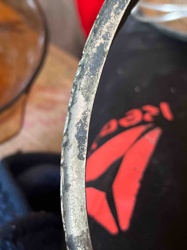
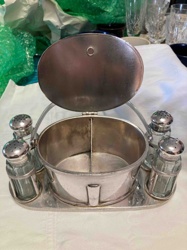
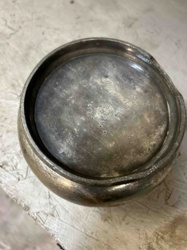
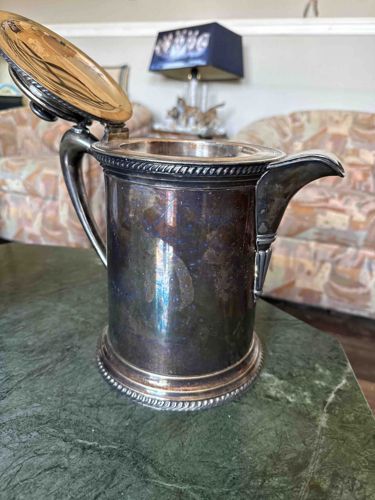
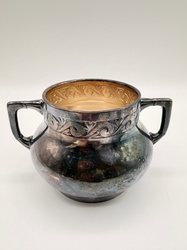
This is a cylindrical lidded pitcher, likely a claret jug or hot water pot, crafted from silver or silver-plated metal. The vessel features a straight-walled body with a flared, weighted base and a matching hinged lid. The decorative detailing includes a classic rope-twist or gadrooned border along the top rim and the base, indicating a Neoclassical or Georgian style influence, likely dating to the late 19th or early 20th century. The spout is short and angled, attached with a stylized drop-point motif, while the handle is a simple curved loop. A notable physical characteristic is the heavy, dark iridescent blue and purple tarnish covering the majority of the exterior, which suggests a high silver content if it is plated, or solid sterling silver. The interior of the lid and the rim show the original bright silver color, providing a stark contrast to the exterior oxidation. Condition-wise, the piece appears structurally sound with no major dents visible, though the heavy tarnish masks potential surface scratches. The gilding or finish inside the lid appears well-preserved. There are no maker's marks visible in this exterior view, but they would typically be found on the underside of the base or inside the lid. The craftsmanship is refined, evidenced by the clean hinges and uniform decorative borders.
AI Appraisal Report

·AI can make mistakes·Verify before acting
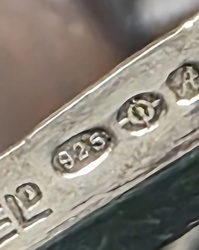
I have conducted a preliminary visual examination of this lidded pitcher, which exhibits characteristics of late Victorian or Edwardian silverplate. The cylindrical silhouette and gadrooned borders suggest a production date between 1890 and 1915. While the heavy iridescent tarnish is visually striking, it is indicative of prolonged exposure to sulfur-rich environments rather than intrinsic value; in the current market, collectors often view such extreme oxidation as a maintenance liability rather than a desirable patina. The market for silver-plated hollowware remains soft, with high supply and limited demand for non-sterling pieces. Comparable silverplate claret jugs or hot water pots of this era typically realize between $150 and $250. However, if an in-person inspection reveals a 'Sterling' mark or a prestigious maker like Elkington & Co. or Tiffany & Co., the value could pivot sharply to $600-$900. Condition appears structurally sound, though the 'bleeding' of base metal through the plate (copper or nickel) cannot be assessed until the tarnish is professionally removed. The contrast between the bright interior and oxidized exterior suggests the plating remains thick. Limitations: This appraisal is based solely on visual analysis of images. A definitive valuation is impossible without verifying hallmarks. To finalize this report, I would require an in-person inspection to weigh the piece (to determine if it is solid sterling), check for maker's marks on the underside of the base, and test for 'EPNS' (Electroplated Nickel Silver) signatures. Provenance documentation regarding previous ownership would also be required to elevate its status from a functional object to a historical collectible.

Get your items appraised

Instant estimates of your treasures with AI-powered appraisals

Browse More Appraisals