Antique English Silver Topped Rim fragment
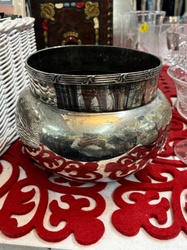
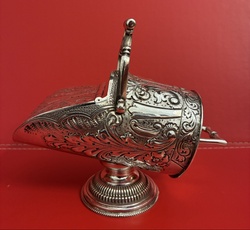
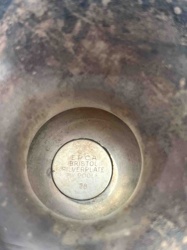
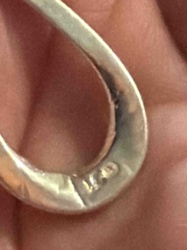
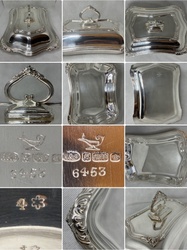
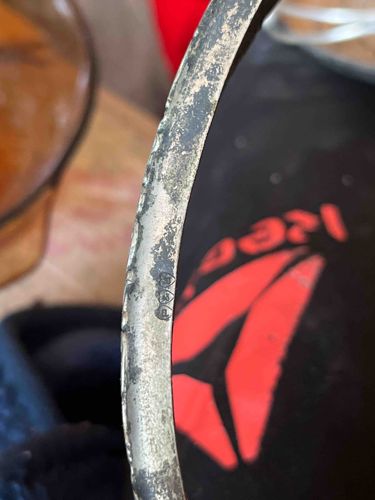
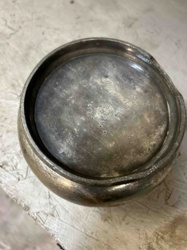
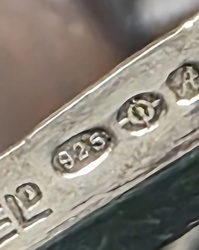
This item is a circular rim or banding, likely the top mount for a glass jar, decanter, or ceramic vessel. It is constructed from sterling silver, indicated by the visible English hallmarks. The hallmarks include a Maker's Mark (partially obscured), the Lion Passant (the standard mark for sterling silver), and a date letter 'R' in a shield, suggesting a production date in the late 19th or early 20th century (approximately 1890-1910). The item exhibits significant physical wear, including heavy tarnish, surface oxidation, and numerous small dents and nicks along the edges. The construction is a thin-walled, folded metal design typical of period mounts. The interior surface shows a distinct patina and crusting, likely from the original adhesive or content residue. The craftsmanship shows professional silversmithing techniques of the late Victorian or Edwardian periods, though the current condition is poor, showing signs of heavy usage and structural distortion.
AI-Generated Appraisal Disclaimer
Estimated Value
$25 - $45
Basic Information
Category
Antique Silver / Hollowware Components
Appraised On
February 26, 2026
Estimated Value
$25 - $45
Item Description
This item is a circular rim or banding, likely the top mount for a glass jar, decanter, or ceramic vessel. It is constructed from sterling silver, indicated by the visible English hallmarks. The hallmarks include a Maker's Mark (partially obscured), the Lion Passant (the standard mark for sterling silver), and a date letter 'R' in a shield, suggesting a production date in the late 19th or early 20th century (approximately 1890-1910). The item exhibits significant physical wear, including heavy tarnish, surface oxidation, and numerous small dents and nicks along the edges. The construction is a thin-walled, folded metal design typical of period mounts. The interior surface shows a distinct patina and crusting, likely from the original adhesive or content residue. The craftsmanship shows professional silversmithing techniques of the late Victorian or Edwardian periods, though the current condition is poor, showing signs of heavy usage and structural distortion.
Get Your Items Appraised
Instant estimates of your treasures with AI-powered instant appraisals