AI Appraisal Estimate

AI-generated estimates · not official valuations

From the user

What was submitted

Photo and notes provided by the user — not generated by AI

Submitted item photo
Submitted photo · May 25, 2026

User's notes

No additional notes provided.

AI analysis below

AI appraisal

AI analysis & estimate

AI-Generated · Verify before acting

Everything below is generated by AI for informational purposes only. AI can make mistakes — the AI may misidentify items or misattribute them (artist, maker, brand, designer, origin, era). This is not an official valuation and should not be used for insurance, sale, tax, estate, legal, or lending purposes — or any decision requiring a certified appraisal. It is not an authoritative claim about any person, brand, or rights holder — do not share or rely on it as a factual statement about a third party. Always consult qualified professionals before making financial decisions.

Read the full disclaimer

AI Identification

·Not independently authenticated·Verify before acting

Oxidized circular metal disc

Metal Objects

AI Estimated Value

·Not an official valuation·Verify before acting

$5 - $25

As of May 25, 2026

AI Item Analysis

·AI can make mistakes·Verify before acting
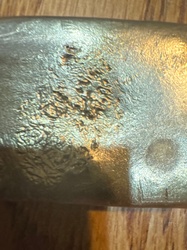
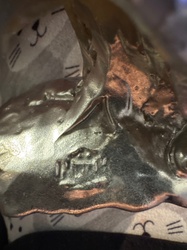
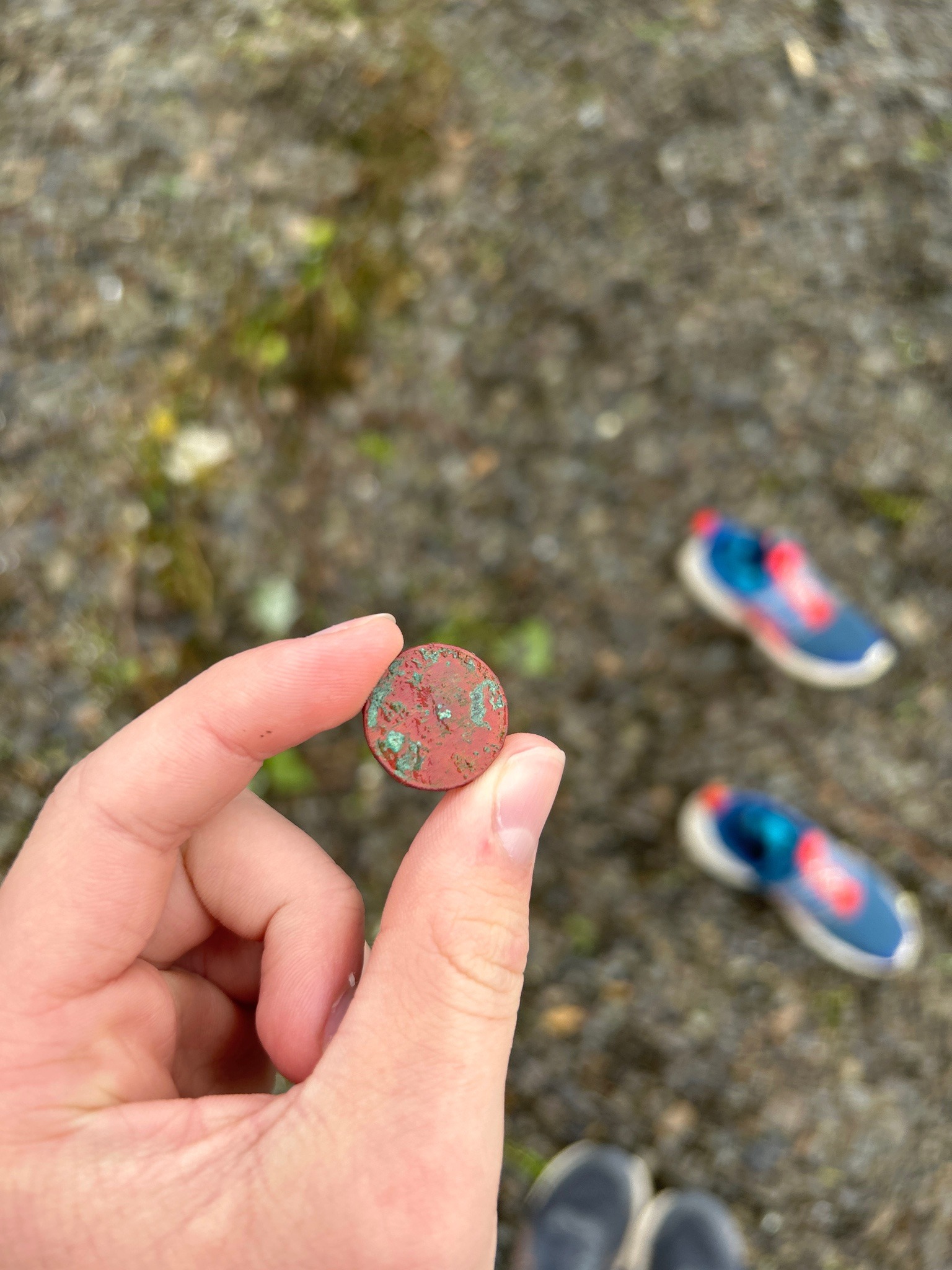
This object is a small, circular metal disc held between two fingers for scale, appearing to be roughly 15 to 20 millimeters in diameter. The item is heavily weathered and exhibits significant environmental degradation. The surface is covered in a thick layer of reddish-brown oxidation, suggesting a ferrous base or a copper-alloy with high impurity, interspersed with distinct patches of bright turquoise-green verdigris. This green corrosion is typically consistent with the oxidation of copper or bronze when exposed to moisture and soil. The face of the disc is extremely obscured, though there appear to be faint, raised circular geometric patterns or perhaps a heavily eroded profile, which is consistent with the appearance of a deeply weathered ancient or historical coin. However, due to the extreme surface loss and crusting, no specific inscriptions, dates, or mint marks are legible in the provided image. The edges appear somewhat irregular and worn. Without professional cleaning or X-ray imaging, it is impossible to determine its exact origin, though it is stylistically consistent with a dug archaeological find or a long-lost metal token. The item name is kept generic because the level of corrosion prevents the identification of any definitive numismatic features or maker's marks.
AI Appraisal Report

·AI can make mistakes·Verify before acting
I have examined the image provided of the circular metal disc. Based on what I can see, the object appears to be a small historical coin or token measuring approximately 15-20mm. The item exhibits heavy oxidation and significant verdigris, which suggests it may be a copper-alloy archaeological find. While there are faint circular patterns on the surface, the extreme environmental degradation prevents a specific identification of the era, mint, or culture of origin. I cannot determine the underlying metal composition or the presence of a legible strike from the photo alone. The value of $5-$25 is estimated for an unidentified, heavily corroded 'slug' or metal detector find of this type. If the item were to be identified through professional cleaning or X-ray imaging as a common Roman bronze or a colonial-era token, the value would likely remain in this modest range due to the poor state of preservation. However, if it were found to be a rare numismatic specimen, the value could increase, though the lack of surface detail significantly limits its market appeal to collectors who prioritize legibility. Conversely, if this is a modern reproduction artificially aged to look like an archaeological find, the value would be negligible. To determine a more precise identification and value, an in-person examination by a numismatist and possible conservation cleaning would be required. General market demand for 'uncleaned' or heavily weathered metal finds is stable but low, typically sold in bulk lots unless a rare type is hypothesized. Without documentation of its find-site or a clearer surface, it remains a low-value historical curiosity.

Get your items appraised

Instant estimates of your treasures with AI-powered appraisals

Browse More Appraisals