AI estimate as of September 30, 2025 · verify with a professional before acting
AI-Generated · Verify before acting
Everything on this page is generated by AI for informational purposes only. AI can make mistakes — the AI may misidentify items or misattribute them (artist, maker, brand, designer, origin, era). This is not an official valuation and should not be used for insurance, sale, tax, estate, legal, or lending purposes — or any decision requiring a certified appraisal. It is not an authoritative claim about any person, brand, or rights holder — do not share or rely on it as a factual statement about a third party. Always consult qualified professionals before making financial decisions.
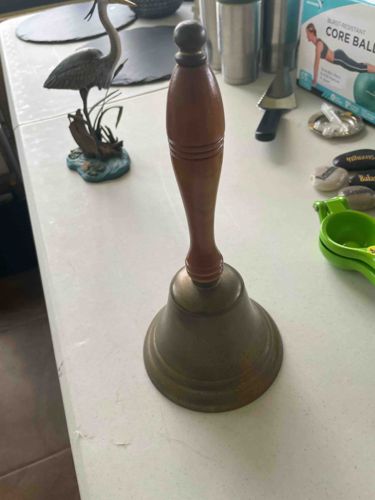
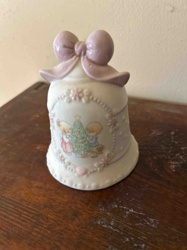
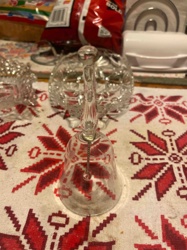
This item is a traditional handheld bell, approximately 8-10 inches in height. It features a bell portion crafted from brass, exhibiting a classic flared, conical shape. The brass surface shows a considerable degree of natural patina, indicative of age and exposure, with areas of darker discoloration and some lighter, possibly polished or rubbed, sections. There are no obvious dents or significant structural damage visible on the bell itself, but surface scratching and minor abrasions consistent with use are likely present beneath the patina. The bell is attached to a turned wooden handle, which appears to be made from a light to medium-toned hardwood, possibly birch or maple, with a clear varnish or oil finish. The handle features a comfortable, ergonomic design, tapering upwards from the bell and then flaring slightly before narrowing to a rounded finial at the top. Two distinct, incised ring details are visible near the base of the handle, adding a decorative touch. The wood shows some minor wear and possibly light scratching or scuffing, but no major cracks or breaks are discernible. The overall construction appears solid, suggesting a functional piece. There are no visible maker's marks or signatures, suggesting it might be a common utilitarian item or an older piece prior to prevalent branding. The style suggests it could date from the mid-20th century, retaining a vintage aesthetic.
AI Appraisal Report
Based on my visual examination of the provided description for this Brass Bell with Turned Wooden Handle, I assess its authenticity as likely a genuine mid-20th century decorative or service bell. The described natural patina on the brass and the minor wear on the wooden handle are consistent with an item of that age and use, rather than a modern reproduction designed to look old. The construction appears solid, indicating a functional piece. There are no visible maker's marks, which is common for utilitarian items or older pieces before widespread branding.
In terms of market conditions, similar vintage brass bells with wooden handles are generally considered decorative home decor or collectible items. They typically do not command high prices unless associated with a significant event, a renowned maker, or exceptional artistry, neither of which appears to be the case here. Comparables on online marketplaces and antique shops typically range from $20 to $70, depending on condition, size, and specific design elements. The "two distinct, incised ring details" on the handle add a nice touch but don't elevate it into a rare category.
While there is a steady demand for vintage home decor, these bells are not particularly rare. Factors impacting value include the lack of maker's marks, which prevents attribution to a more valuable manufacturer, and its general utilitarian aesthetic. The described "considerable degree of natural patina" is a positive, as it suggests age, but without being able to physically inspect, I cannot confirm there is no significant structural damage or repair beneath. The "minor wear and possibly light scratching or scuffing" on the wood is expected for an item of this age.
Limitations in authenticity verification are significant based solely on the description. A physical inspection would allow me to:
1. **Examine the patina firsthand:** Distinguish true age-related patina from artificially applied finishes.
2. **Assess the structural integrity:** Check for hairline cracks, repairs, or loose components on both the brass and wood.
3. **Inspect joinery and materials:** Determine precision of craftsmanship and confirm wood type.
4. **Listen to the bell's tone:** This can sometimes offer clues to metal quality and age.
Without an in-person examination, I cannot definitively rule out that it could be a more recent item seeking to emulate a vintage look. Provenance documentation, such as original sales receipts or family history, would also be invaluable for confirming age and origin, but are likely unavailable for an item of this nature and value.