AI estimate as of July 25, 2025 · verify with a professional before acting
AI-Generated · Verify before acting
Everything on this page is generated by AI for informational purposes only. AI can make mistakes — the AI may misidentify items or misattribute them (artist, maker, brand, designer, origin, era). This is not an official valuation and should not be used for insurance, sale, tax, estate, legal, or lending purposes — or any decision requiring a certified appraisal. It is not an authoritative claim about any person, brand, or rights holder — do not share or rely on it as a factual statement about a third party. Always consult qualified professionals before making financial decisions.
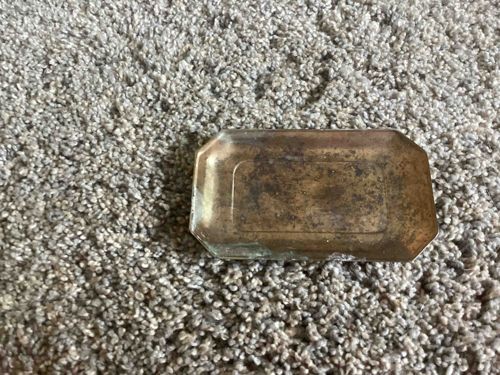
The item appears to be a small, rectangular metal tray or dish, possibly made of brass or bronze given its visible color and significant patination. It features an octagonal shape, meaning the four corners are truncated, creating eight sides in total (four long and four short). The tray has a raised rim, forming a shallow depression in the center. The visible surface is heavily discolored with a dark, mottled brown and greenish patina, consistent with aged and unpolished brass or bronze. There are areas where the original metallic luster might be hinted at, particularly along the edges and some raised portions, suggesting wear or previous handling. The interior of the tray features a slightly raised, rectangular border, creating a secondary recessed area within the main depression. This design element adds a subtle decorative touch and might have served to contain smaller items more effectively. There are no clear maker's marks or signatures discernible from the image, but the overall craftsmanship suggests a utilitarian piece, possibly from the late 19th or early 20th century, given the observed style and level of patina typically acquired over many decades. The item exhibits signs of significant wear and age, including surface scratching, pitting, and oxidation, indicating prolonged use and exposure to elements. Despite the extensive patination, there are no apparent major structural damages, such as cracks or significant dents, making it a robust 'survivor' piece.
AI Appraisal Report
Based on my visual examination of the image, this Small Octagonal Patinated Metal Tray appears to be an authentic antique piece, likely dating from the late 19th to early 20th century. The significant, natural-looking patina, including dark mottling and greenish oxidation, is consistent with aged brass or bronze, indicating prolonged exposure and lack of aggressive cleaning, which is a desirable characteristic for collectors. The condition, while showing extensive wear, scratching, and pitting, is good for its age, with no apparent major structural damage like cracks or significant dents. This suggests a robust 'survivor' piece.
My valuation is based on current market conditions for utilitarian household objects of this type. While not exceedingly rare, octagonal trays with natural patination like this are sought after by collectors of decorative arts and period home furnishings. Comparables in online antique markets and auction results for similar patinated brass or bronze trays of this period typically range from $75 to $150, depending on size, specific design, and condition of patina. The lack of identifiable maker's marks or signatures limits the value, as marked pieces often command higher prices due to established provenance or artistic significance.
Demand for such decorative and functional antiques remains steady, particularly for pieces that present well and offer versatility in modern decor. The primary factor impacting value positively is the authentic, undisturbed patina. Factors limiting value include the commonality of the object type and the absence of any unique decorative elements or historical associations.
It is crucial to note that this appraisal is based solely on visual inspection of the provided image. For full authentication and a more precise valuation, a direct, in-person examination would be necessary to assess the metal composition, feel the weight and tactile quality, and more closely inspect for any subtle repairs or alterations. Provenance documentation, if available, could significantly enhance its value by confirming its history and origin. Scientific testing, such as X-ray fluorescence (XRF) analysis, could definitively confirm the metal composition without damaging the piece.