AI estimate as of October 5, 2025 · verify with a professional before acting
AI-Generated · Verify before acting
Everything on this page is generated by AI for informational purposes only. AI can make mistakes — the AI may misidentify items or misattribute them (artist, maker, brand, designer, origin, era). This is not an official valuation and should not be used for insurance, sale, tax, estate, legal, or lending purposes — or any decision requiring a certified appraisal. It is not an authoritative claim about any person, brand, or rights holder — do not share or rely on it as a factual statement about a third party. Always consult qualified professionals before making financial decisions.
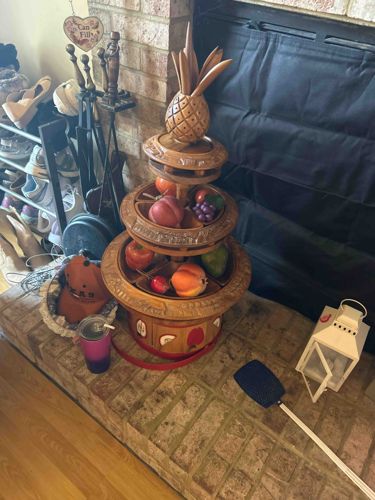
This is a three-tiered revolving fruit server, crafted primarily from wood with a warm, medium-brown stain, possibly oak or a similar hardwood. The server features intricate carving and turned elements, indicative of skilled craftsmanship. Each of the three circular tiers is designed to hold fruit and is divided into sections, with the top tier supporting a prominent, finely carved wooden pineapple finial. The pineapple itself exhibits detailed cross-hatching to represent its texture and a cluster of spiky leaves at its crown. The edges of each tier are adorned with a repeating carved pattern, possibly a rope or bead-and-reel motif, adding to its decorative appeal. The base of the server is a solid wooden drum-like section, featuring carved representations of fruit (apples, grapes) in relief, painted in various colors like red and green, against the natural wood tone. A red fabric strap or ribbon is tied around the base, which appears to be a later addition or a functional element for portability. The item shows some signs of use and age, including minor scuffs or scratches on the wooden surfaces typical of household items. The carved fruit within the tiers appears to be artificial, likely for decorative display rather than real produce. There are no discernible maker's marks or signatures visible in the provided image. Based on its style and apparent construction, it likely dates from the mid-20th century, possibly as a decorative and functional centerpiece for dining or kitchen use. The craftsmanship, particularly the detailed carving of the pineapple and the tiered structure, suggests a piece of reasonable quality, designed for both utility and aesthetic appeal.
AI Appraisal Report
Upon visual examination of the provided image of the Carved Wooden Tiered Revolving Fruit Server with Pineapple Finial, I note its primary construction from a medium-brown stained wood, likely a common hardwood, with intricate carving. The three circular tiers, sectioned for fruit, culminate in a finely carved pineapple finial, showcasing detailed cross-hatching and spiky leaves. The repetitive carved pattern on the tier edges and the relief carving of painted fruit on the base add to its decorative appeal. The red fabric strap appears to be a later addition or a functional, non-original element.
Condition-wise, the item shows expected signs of use and age, including minor scuffs and scratches typical for a household item of its type and probable age. This wear is consistent with a decorative and functional piece from the mid-20th century. Authenticity, based solely on the image, appears consistent with a period decorative piece, likely mass-produced or by a regional craftsman, rather than a unique artisan work. The carved fruit within the tiers are clearly artificial and do not contribute to the server's intrinsic value.
In terms of market conditions, tiered fruit servers are generally not highly sought after unless they possess exceptional artistry, provenance, or are made from rare materials. Comparables are readily available in online marketplaces and antique shops, often ranging from $50 to $150 depending on condition, size, and carving detail. Demand for such items is moderate; they appeal to those furnishing retro or traditional interiors. Rarity is low as similar items were common household decorative objects during the mid-20th century. Factors impacting value negatively include the absence of maker's marks, generic design elements, and the commonality of similar items. Its functionality as a revolving server adds some appeal, but does not significantly elevate its value.
Limitations in authenticity verification are significant based on images alone. I cannot definitively assess wood type, the quality of joinery, the revolving mechanism’s functionality, or detect repairs/restorations under the current finish. A physical inspection would allow for examination of the wood grain, assessment of the carving depth and precision, and verification of the revolving mechanism's smooth operation. Provenance documentation (e.g., original sales receipts, family history) could offer insights into its origin, but is unlikely for an item of this nature. Scientific testing is not typically warranted for pieces of this perceived value.