AI Appraisal Estimate

AI-generated estimates · not official valuations

From the user

What was submitted

Photo and notes provided by the user — not generated by AI

Submitted item photo
Submitted photo · June 13, 2026

User's notes

No additional notes provided.

AI analysis below

AI appraisal

AI analysis & estimate

AI-Generated · Verify before acting

Everything below is generated by AI for informational purposes only. AI can make mistakes — the AI may misidentify items or misattribute them (artist, maker, brand, designer, origin, era). This is not an official valuation and should not be used for insurance, sale, tax, estate, legal, or lending purposes — or any decision requiring a certified appraisal. It is not an authoritative claim about any person, brand, or rights holder — do not share or rely on it as a factual statement about a third party. Always consult qualified professionals before making financial decisions.

Read the full disclaimer

AI Identification

·Not independently authenticated·Verify before acting

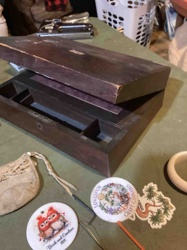
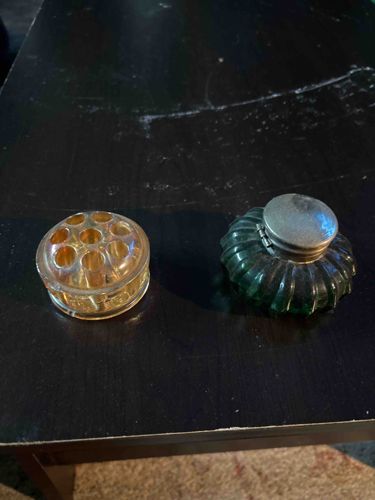
Victorian Era Pressed Glass Inkwell with Flower Frog Insert

Antiques & Collectibles / Writing Instruments

AI Estimated Value

·Not an official valuation·Verify before acting

$125 - $185

As of June 13, 2026

AI Item Analysis

·AI can make mistakes·Verify before acting
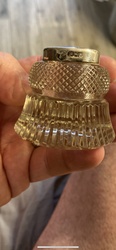
This item consists of two distinct components typically associated with a Victorian-era desk set or vanity. The primary piece is a green-toned, pressed glass inkwell featuring a heavily ribbed or gadrooned 'squat' circular body. It is topped with a metal hinged lid, likely made of pewter or a silver-toned alloy, showing a significant matte patina and surface oxidation characteristic of age. The glass exhibits a rich emerald or forest green hue. Accompanying the inkwell is a secondary clear glass insert, known as a flower frog or potentially a pen holder, featuring a series of circular cylindrical apertures. This secondary piece shows a warm, amber-toned discoloration, which may be a result of aged ink staining or the chemical composition of the glass reacting to light over time. The craftsmanship is indicative of mass-produced glass from the late 19th to early 20th century, where mold lines are often visible. Condition-wise, the metal hinge appears intact but weathered, and the glass surfaces show minor abrasions consistent with regular use. No specific maker's marks are visible in the image, but the style is consistent with American or European glassworks of the 1880-1910 period. The set displays a charming historical character with authentic wear patterns.
AI Appraisal Report

·AI can make mistakes·Verify before acting
After a visual examination of this Victorian-era glass inkwell set, I find it to be a charming example of late 19th-century utilitarian deskware. The forest green gadrooned body is characteristic of the 1880–1910 period, likely of American manufacture such as Bryce, Higbee & Co. or similar EAPG (Early American Pattern Glass) makers. The metal lid shows a genuine oxidation layer, though the lack of a hallmark suggests a base metal alloy rather than sterling silver. The clear insert, despite showing significant amber discoloration likely from tannin-heavy ink deposits, is a desirable complete-set feature. The condition appears fair to good. While the glass lacks major chips, the visible surface abrasions and internal staining on the frog insert do detract from the 'mint' value. In the current market, collector demand for Victorian writing instruments remains steady but selective; collectors prioritize vibrant colors, like this emerald green, over standard clear versions. Comparable sets in this condition typically realize between $120 and $195 at boutique auctions or specialty antique venues. Important Limitations: This appraisal is based solely on photographic evidence. A definitive authentication would require an in-person inspection to verify the presence of 'straw marks' versus modern cracks and to check for hidden damage under the metal collar. I would also need to test the metal with an acid stone to rule out silver plate over brass. Provenance documentation or a maker's mark located on the bottom of the glass (often obscured by wear) would be necessary to attribute this to a specific glasshouse, which could potentially increase the value by 20-30%.

Get your items appraised

Instant estimates of your treasures with AI-powered appraisals

Browse More Appraisals