AI Appraisal Estimate

AI-generated estimates · not official valuations

From the user

What was submitted

Photo and notes provided by the user — not generated by AI

Submitted item photo
Submitted photo · June 28, 2026

User's notes

No additional notes provided.

AI analysis below

AI appraisal

AI analysis & estimate

AI-Generated · Verify before acting

Everything below is generated by AI for informational purposes only. AI can make mistakes — the AI may misidentify items or misattribute them (artist, maker, brand, designer, origin, era). This is not an official valuation and should not be used for insurance, sale, tax, estate, legal, or lending purposes — or any decision requiring a certified appraisal. It is not an authoritative claim about any person, brand, or rights holder — do not share or rely on it as a factual statement about a third party. Always consult qualified professionals before making financial decisions.

Read the full disclaimer

AI Identification

·Not independently authenticated·Verify before acting

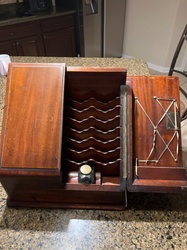
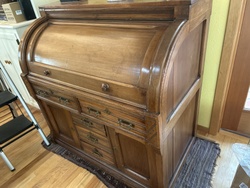
Vintage Wooden Desktop Writing Slope or Lap Desk

Antiques & Collectibles - Furniture / Writing Instruments

AI Estimated Value

·Not an official valuation·Verify before acting

$40–$80

As of June 28, 2026

AI Item Analysis

·AI can make mistakes·Verify before acting
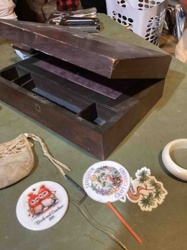
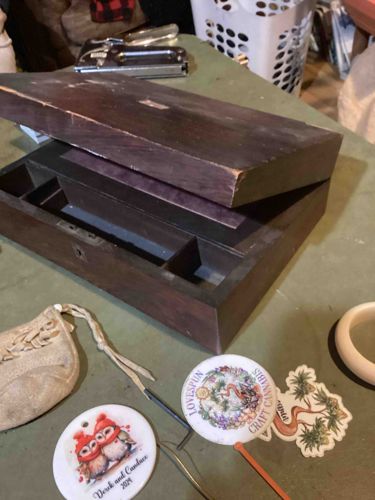
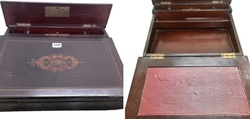
This is a rectangular wooden writing slope, also known as a lap desk, likely dating from the mid-to-late 19th century or early 20th century. The item is constructed from a dark-toned hardwood, possibly mahogany or walnut, featuring a hinged lid that opens to reveal a slanted writing surface. The interior layout includes several small, partitioned compartments at the top, traditionally used for holding inkwells, pens, and nibs. The exterior displays a significant aged patina with visible wear along the edges and corners, including scuffing, minor wood loss on the bottom right of the lid, and overall surface abrasions. A small, inset brass escutcheon is visible on the front face, indicating a lock mechanism for securing personal documents, although the key is absent. There is a small rectangular inlay on the center of the lid, likely made of mother-of-pearl or light-colored wood, though it appears worn. The craftsmanship suggests a functional, mass-produced Victorian or Edwardian style piece designed for portability and organization. The construction uses thin veneer or solid wood panels that show signs of drying and potential warping commensurate with age and storage in a non-climate-controlled environment.
AI Appraisal Report

·AI can make mistakes·Verify before acting
Based on my visual examination of this vintage wooden writing slope, I assess it to be a mass-produced example from the late Victorian to Edwardian era (approx. 1880–1910). The piece is likely constructed of a pine or secondary wood carcass with a mahogany or walnut veneer, a common practice for middle-market goods of this period. The small, centered brass escutcheon and simple rectangular inlay on the lid indicate a modest, utilitarian design rather than a high-end bespoke piece. Condition is the primary limiting factor for this item's value. There is significant visible wear, including surface abrasions, scuffing along the extremities, and noticeable wood loss on the lower right corner of the lid. The description of drying and warping suggests structural instability, which often requires costly restoration that would exceed the item's market value. The absence of the original key and potential interior accessories (like original glass inkwells or the velvet writing surface) further diminishes its collectibility. The market for general antique writing slopes is heavily saturated. While pristine examples with complex secret drawers or brass strapping command higher prices, 'project pieces' like this are generally sought only for parts or aggressive restoration practice. Similar unrestored examples frequently sell at auction or online marketplaces in the $40 to $80 range. **Limitations of Analysis:** This appraisal is based solely on the provided description and visual evidence. An in-person inspection would be required to confirm the specific wood species (solid vs. veneer) and the integrity of the hinges and joinery. Additionally, verifying the maker would require searching for stamped marks often hidden on the underside or behind the lock mechanism.

Get your items appraised

Instant estimates of your treasures with AI-powered appraisals

Browse More Appraisals