AI Appraisal Estimate

AI-generated estimates · not official valuations

From the user

What was submitted

Photo and notes provided by the user — not generated by AI

Submitted item photo
Submitted photo · June 27, 2026

User's notes

No additional notes provided.

AI analysis below

AI appraisal

AI analysis & estimate

AI-Generated · Verify before acting

Everything below is generated by AI for informational purposes only. AI can make mistakes — the AI may misidentify items or misattribute them (artist, maker, brand, designer, origin, era). This is not an official valuation and should not be used for insurance, sale, tax, estate, legal, or lending purposes — or any decision requiring a certified appraisal. It is not an authoritative claim about any person, brand, or rights holder — do not share or rely on it as a factual statement about a third party. Always consult qualified professionals before making financial decisions.

Read the full disclaimer

AI Identification

·Not independently authenticated·Verify before acting

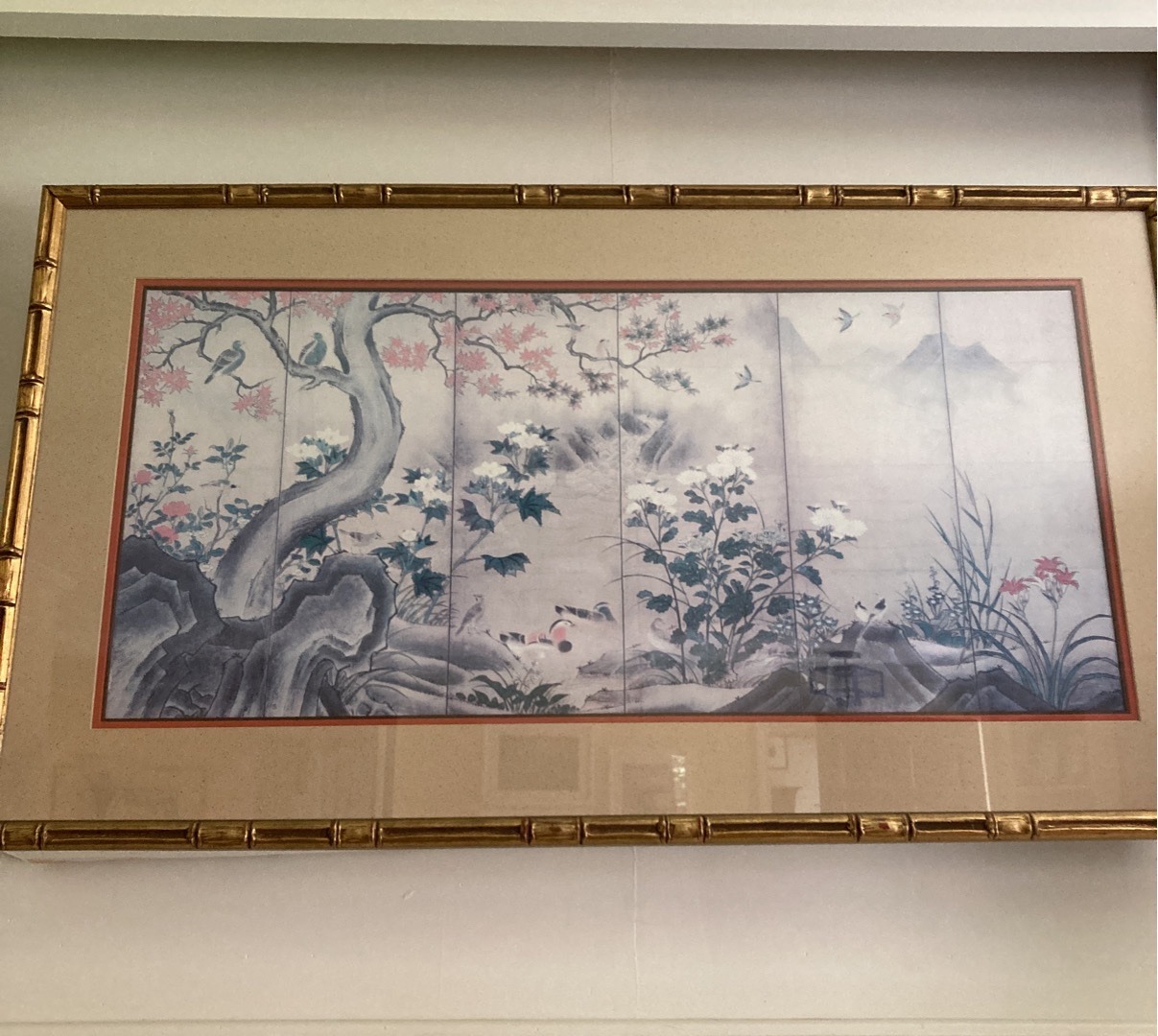
Framed Six-Panel Lithograph of a Chinese Landscape Screen

Decorative Arts / Wall Decor

AI Estimated Value

·Not an official valuation·Verify before acting

$150 - $250

As of June 27, 2026

AI Item Analysis

·AI can make mistakes·Verify before acting
This item is a framed decorative print, specifically a lithographic reproduction of a traditional Chinese or East Asian multi-panel folding screen. The composition is divided into six vertical panels across a single horizontal plane, depicting a serene landscape with a central gnarled tree, blooming white chrysanthemums, and a family of ducks in a stream. The color palette is muted, featuring soft grays, dusty pinks, and greens against a parchment-style background, suggesting an aged silk or paper appearance. The artwork is housed in a mid-to-late 20th-century Hollywood Regency style frame made of wood or resin with a gold-leaf finish, designed to simulate the segmented look of natural bamboo. The piece is set within a wide, neutral-toned mat with a thin reddish-brown inner border. The overall construction indicates a decorative piece likely produced between 1960 and 1980, aimed at integrating Asian aesthetic themes into Western interior design. The condition appears fair to good; there is some light reflection on the glazing, suggesting it is glass-covered, and the frame shows minor signs of aging consistent with its era, though no significant chips or structural damage are visible. The brushwork, as presented in the print, mimics the 'gongbi' or 'xieyi' styles found in classical Chinese painting, emphasizing delicate linework and a balanced, atmospheric perspective with mountains fading into the background.

AI Appraisal Report

·AI can make mistakes·Verify before acting
I have virtually examined this framed six-panel lithograph reproduction of a Chinese landscape scene. The piece is a mid-to-late 20th-century decorative work designed to evoke the aesthetic of an antique silk folding screen. The bamboo-style frame and matting indicate it was likely manufactured between 1960 and 1980, catering to the popular 'Chinoiserie' trend in Western interior design. The artwork uses a muted color palette to simulate aged parchment/silk, though the uniform surface quality confirms it is a lithographic print rather than an original hand-painted ink-on-silk work. The condition appears consistent with its age, showing minor wear on the gold-leaf finished resin/wood frame and no visible foxing on the paper. The market for mid-century decorative Asian-style prints remains stable for interior design purposes, but these items are mass-produced and lack the rarity of original period scrolls or screens. Current auction and retail comparables for similar scale Hollywood Regency bamboo-framed lithographs typically fall within the $150 to $250 range. Limitations: This appraisal is based solely on digital images. A physical inspection is required to confirm the substrate material and ensure the frame is not hiding structural damage or acidity in the matting. Scientific testing of the pigments or paper fibers would be necessary to definitively rule out a hand-painted origin, though pixel distribution and layering suggests a commercial printing process. No provenance was provided to suggest historical significance.

Get your items appraised

Instant estimates of your treasures with AI-powered appraisals

Browse More Appraisals