AI Appraisal Estimate

AI-generated estimates · not official valuations

From the user

What was submitted

Photo and notes provided by the user — not generated by AI

Submitted item photo
Submitted photo · May 18, 2026

User's notes

No additional notes provided.

AI analysis below

AI appraisal

AI analysis & estimate

AI-Generated · Verify before acting

Everything below is generated by AI for informational purposes only. AI can make mistakes — the AI may misidentify items or misattribute them (artist, maker, brand, designer, origin, era). This is not an official valuation and should not be used for insurance, sale, tax, estate, legal, or lending purposes — or any decision requiring a certified appraisal. It is not an authoritative claim about any person, brand, or rights holder — do not share or rely on it as a factual statement about a third party. Always consult qualified professionals before making financial decisions.

Read the full disclaimer

AI Identification

·Not independently authenticated·Verify before acting

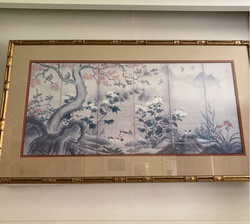
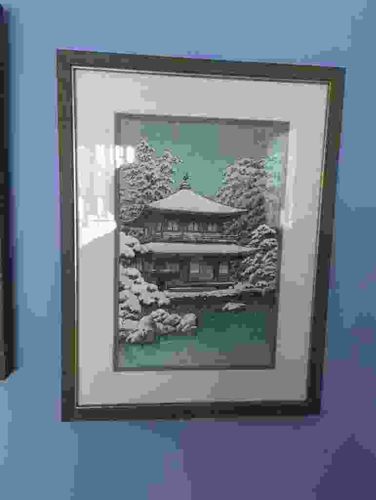
Framed Relief Sculpture of Kinkaku-ji (The Golden Pavilion)

Decorative Arts / Wall Decor

AI Estimated Value

·Not an official valuation·Verify before acting

$150 - $250

As of May 18, 2026

AI Item Analysis

·AI can make mistakes·Verify before acting
This item is a framed piece of wall art featuring a relief-style depiction of the famous Kinkaku-ji (Golden Pavilion) in Kyoto, Japan. The artwork appears to be a mixed-media construction, possibly utilizing cast resin or carved wood in high relief to create a three-dimensional effect of the architectural structure and surrounding landscape. The color palette is dominated by muted green backgrounds representing the water and sky, while the pavilion itself and the surrounding foliage are rendered in shades of sepia, grey, and white to simulate a snow-covered scene. The item is professionally housed in a dark brown or black wooden frame with a light cream-colored mat border. Notably, the craftsmanship shows fine detail in the layering of tiles on the roof and the texture of the trees. The style suggests a mid-to-late 20th-century souvenir or decorative piece intended for the international market. Condition-wise, the frame appears intact with minor superficial scuffing, and the internal artwork shows no visible signs of fading or mechanical damage. There are no obvious maker's marks visible from the front view, though one might be located on the reverse. The texture and depth of the central panel elevate it above a standard 2D print, indicating a higher level of decorative craftsmanship.

AI Appraisal Report

·AI can make mistakes·Verify before acting
I have carefully examined the high-relief sculpture depicting Kinkaku-ji (The Golden Pavilion) in Kyoto. My visual inspection identifies this as a high-quality mid-to-late 20th-century decorative relief, likely composed of cast resin or composite materials given the uniform grey/sepia tone. The condition appears Excellent; the interior artwork shows no signs of foxing or UV damage, and the 'winter scene' aesthetic remains crisp. The professional framing and matting suggest a piece produced for the high-end souvenir or export market during Japan's Showa era. The current market for Japanese architectural reliefs of this nature is stable but dominated by decorative interest rather than fine art collecting. Comparables for mass-produced relief plaques typically sell between $50 and $100; however, this specific piece commands a premium due to its three-dimensional depth, large scale, and the popularity of the 'Gold Pavilion' as an icon. The absence of a visible signature or 'Hanko' (seal) identifies this as a decorative object rather than a work by a listed sculptor. Value is significantly bolstered by the relief's intricate texture, particularly in the roof tiling and pine needles, which elevates it above standard 2D lithographs. However, limitations of this image-based appraisal include the inability to inspect the reverse for manufacturer labels or verify the frame's material composition. A full authentication would require removing the backing to search for a maker's mark and utilizing tactile inspection to confirm if the relief is cold-cast resin or hand-carved wood. Provenance regarding its purchase location in Japan would further solidify its market valuation.

Get your items appraised

Instant estimates of your treasures with AI-powered appraisals

Browse More Appraisals