AI estimate as of August 25, 2025 · verify with a professional before acting
AI-Generated · Verify before acting
Everything on this page is generated by AI for informational purposes only. AI can make mistakes — the AI may misidentify items or misattribute them (artist, maker, brand, designer, origin, era). This is not an official valuation and should not be used for insurance, sale, tax, estate, legal, or lending purposes — or any decision requiring a certified appraisal. It is not an authoritative claim about any person, brand, or rights holder — do not share or rely on it as a factual statement about a third party. Always consult qualified professionals before making financial decisions.
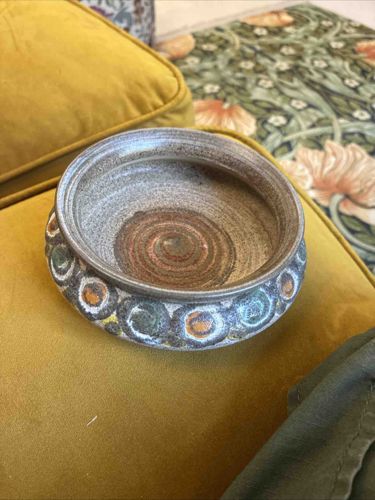
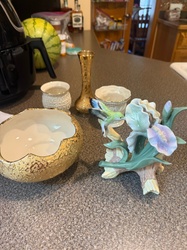
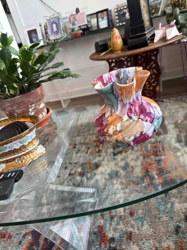
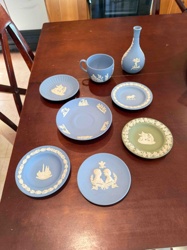
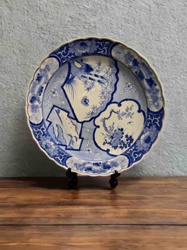
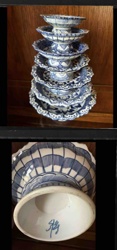
The item is a small, heavy ceramic bowl or dish, likely hand-thrown or molded, exhibiting an earthen or rustic aesthetic. Its primary coloration consists of variegated shades of gray, white, and brown on both the interior and exterior, suggesting a natural stoneware or primitive firing technique. The interior base features a prominent concentric spiral design in shades of dark brown and orange-brown, adding a dynamic focal point. The exterior rim is adorned with a band of raised, circular motifs, each individually decorated with a central dot or swirl of orange and surrounded by varying shades of greenish-blue, teal, and darker gray, giving them somewhat of an 'eye' or 'target' appearance. These relief decorations suggest a folk art influence or a Studio Pottery style, emphasizing texture and organic forms. The overall construction appears robust, though minor surface irregularities and a slightly uneven rim are visible, consistent with handcrafted pottery. There are no readily apparent cracks, chips, or significant damage, suggesting a relatively good preserved condition, considering its likely age and material. The glazes or finishes appear matte to satin, not highly glossy, allowing the natural texture of the clay to show through. The visible 'patina' or surface variations contribute to its aged character rather than indicating wear or damage.
AI Appraisal Report
Upon visual examination of the provided image, this Studio Pottery Bowl presents as a compelling piece of Decorative Arts – Ceramics. The condition appears to be relatively good; I observe no overt cracks, chips, or significant repairs from the image. The surface irregularities and uneven rim are consistent with handcrafted pottery and contribute to its authenticity as a unique, artisanal piece rather than indicating damage. The matte to satin glazes showcase the natural texture, and the perceived 'patina' enhances its aged character.
Authenticity, based solely on this image, points strongly towards a Studio Pottery origin, likely mid-to-late 20th century. The unique concentric and raised circular motifs, along with the earthy color palette, align with characteristics often found in the Studio Pottery movement. However, a definitive authenticity verification regarding a specific artist or workshop cannot be made without further examination. For full authentication, I would need to physically inspect the piece for maker's marks, assess the clay body and glazes firsthand, and ideally review provenance documentation. Scientific testing, such as thermoluminescence dating, could provide further insight into its age.
In terms of market conditions, there is a consistent demand for unique, well-executed studio pottery. Comparables in this aesthetic style, especially those with distinctive surface treatments, fetch moderate prices. While not exceedingly rare, the individuality of this piece contributes to its appeal. Factors significantly impacting value include its unique design, good apparent condition, and the overall aesthetic appeal. Should a notable artist be attributed, the value could increase substantially. Without such attribution, its value is driven by its decorative quality as a unique art object.