AI identification & appraisal estimate

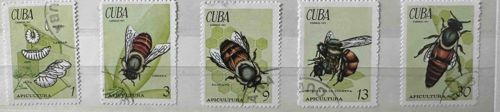
Cuba 1971 Apicultura (Beekeeping) Postage Stamp Set

Submitted photo of Cuba 1971 Apicultura (Beekeeping) Postage Stamp Set
Photo submitted by the user — not generated by AI

AI Estimated Value

Not an official valuation

$1 - $3

AI estimate as of February 7, 2026 · verify with a professional before acting

AI-Generated · Verify before acting

Everything on this page is generated by AI for informational purposes only. AI can make mistakes — the AI may misidentify items or misattribute them (artist, maker, brand, designer, origin, era). This is not an official valuation and should not be used for insurance, sale, tax, estate, legal, or lending purposes — or any decision requiring a certified appraisal. It is not an authoritative claim about any person, brand, or rights holder — do not share or rely on it as a factual statement about a third party. Always consult qualified professionals before making financial decisions.

Read the full disclaimer

AI Item Analysis

This is a set of five vertical postage stamps from Cuba, issued in 1971 as part of a series dedicated to Apicultura (Beekeeping). Each stamp is printed on paper with a distinctive light sage green background and features detailed anatomical or behavioral illustrations related to honey bees. The denominations visible represent the 1c, 3c, 9c, 13c, and 30c values. The 1c stamp illustrates the bee life cycle from egg to pupa; the 3c and 9c show worker bees; the 13c depicts a mating pair or swarming behavior; and the 30c features the queen bee. Each stamp includes the country name 'CUBA' and 'CORREOS 1971' at the top, 'APICULTURA' at the bottom left, and the numeric denomination at the bottom right. The stamps are perforated on all four sides. The condition appears to be 'Used' or 'Canceled-to-Order' (CTO), as several stamps exhibit visible circular postal cancellations in black ink, most notably across the 9c, 13c, and 30c examples. The printing quality is characteristic of mid-20th-century Cuban commemorative issues, utilizing a multi-color lithographic process to achieve scientific accuracy in the bee's stripes and wing venation. No significant tears are visible, though some minor edge softening is present on the perforations.

AI Appraisal Report

Based on my visual examination of this 1971 Cuban stamp set, I observe a complete series of five stamps commemorating Apicultura (Beekeeping), specifically Scott catalog numbers 1618–1622 (or equivalent Minkus/Michel listings). The stamps feature detailed educational illustrations of bee anatomy and life cycles on a sage green background. All specimens appear to be authentic issues from the Cuban postal service of that era. Condition-wise, these are clearly 'used' or, more likely, 'Cancelled-to-Order' (CTO). The cancellations are clean and corner-placed, a hallmark of CTO issues produced by socialist nations in the 1970s specifically for the collector market. The perforations appear intact, though centering is average, typical for mass-produced thematic sets of this period. There are no obvious tears or heavy creases visible in the image, although I note some minor softening on the perforation tips. Historically, Cuban stamps from the 1970s were printed in large quantities to generate revenue from international philatelists. Consequently, while this set is aesthetically pleasing and popular among topical 'insects on stamps' collectors, it is extremely common. Market comparables for similar CTO sets consistently fall in the range of loose change to a few dollars. These hold sentimental or thematic value rather than investment potential. Limitation Note: I cannot inspect the gum condition on the reverse or check for thins and watermarks without physical handling, though for low-value CTO material, these factors rarely impact the market price significantly.

Keep exploring

More philately / postage stamps appraisals

Get your items appraised

Instant AI-powered appraisal estimates from a photo

Browse More Appraisals